
Proper mixing of chemical fertilizers is essential for timely and balanced supply of nutrients required by plants, increasing yield and improving the quality of agricultural products (Products). If fertilizers are not mixed correctly, their effectiveness may decrease or even cause damage to the plant.
In this article, we discuss the most important principles and considerations related to fertilizer mixing and examine which combinations are beneficial and which should not be mixed together.
Benefits of mixing fertilizers
Using multiple types of fertilizers simultaneously, when compatible, offers several advantages:
– Saving time, energy, and labor costs
– Providing balanced nutrition with multiple essential elements at the same time
– Increasing fertilizer effectiveness through synergistic effects
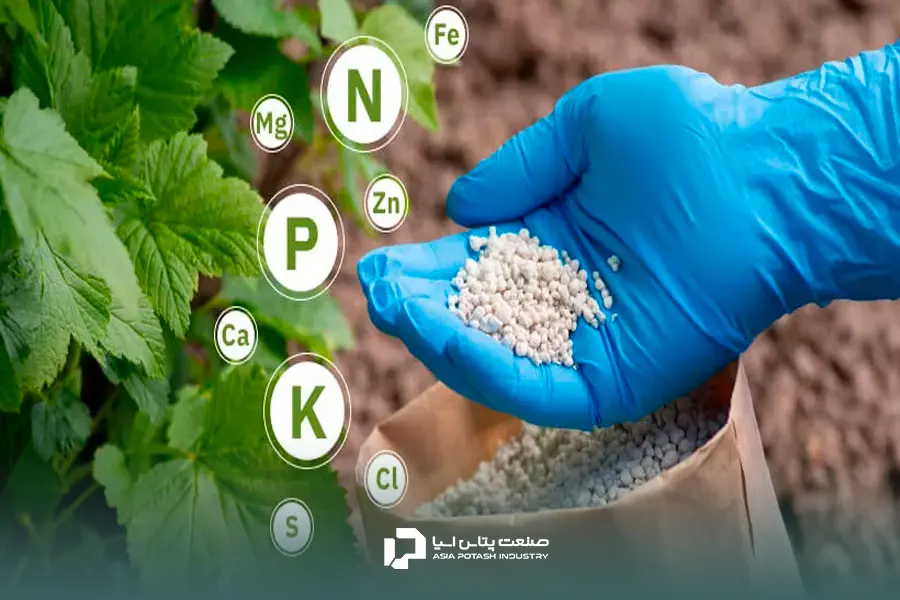
Evaluation of fertilizer compatibility based on type
During fertilization, many farmers prefer to mix several fertilizers to save time and cost. However, not all fertilizers are compatible, and some combinations can reduce nutrient absorption, cause precipitation, or even damage plant roots.
Therefore, understanding which fertilizers can be mixed and which should not be combined plays an important role in successful crop nutrition management.
In this section, we categorize fertilizers (nitrogen, phosphorus, potassium, etc.) and explain which can be mixed and which should be avoided. This information helps farmers fertilize more confidently and achieve better results.
1. Nitrogen fertilizers
Fertilizers such as urea or ammonium sulfate, which contain nitrogen, are generally compatible with most other fertilizers. However, pH differences must be considered, as large pH variations may cause undesirable reactions.
2. Phosphorus fertilizers
Phosphorus fertilizers such as diammonium phosphate (DAP) and triple superphosphate are highly reactive, especially with calcium. Mixing them with calcium fertilizers leads to calcium phosphate precipitation and reduced absorption.
Therefore, phosphorus should not be mixed with calcium.
3. Potassium fertilizers
Potassium fertilizers such as Potassium Sulfate are generally compatible with most fertilizers. However, due to their high pH, they should not be mixed with acidic fertilizers or calcium-containing fertilizers. Mixing Potassium Sulfate with calcium leads to gypsum formation and precipitation.
4. Calcium fertilizers
Calcium-containing fertilizers such as calcium nitrate easily react with phosphorus and sulfur, forming insoluble compounds. To maintain fertilizer efficiency, they should not be mixed with these elements.
5. Micronutrient fertilizers
Micronutrients such as iron, zinc, manganese, and copper are generally compatible with most fertilizers due to their low application rates. However, in highly concentrated solutions or unsuitable pH conditions, they may precipitate.
6. Chemical and microbial fertilizers
Microbial fertilizers contain living organisms that are sensitive to salinity. Mixing them with chemical fertilizers in the same tank is not recommended, but their simultaneous application in soil is acceptable.
7. Humic acid
This organic substance improves nutrient uptake and is generally compatible with most fertilizers. However, mixing it with calcium fertilizers may cause calcium humate precipitation, reducing the availability of both calcium and humic acid.
8. Potassium silicate
Due to its high alkaline pH, this fertilizer is incompatible with most fertilizers. Adding it to a tank containing acidic fertilizers leads to reactions and precipitation, so it should be used separately.
9. Sulfur
Sulfur significantly lowers solution pH and should not be mixed with calcium or phosphorus fertilizers. Such combinations lead to insoluble precipitates that reduce nutrient availability.

Essential principles when mixing fertilizers
- Avoid mixing fertilizers with large pH differences.
- Biological fertilizers should only be mixed with other biological fertilizers.
- Always thoroughly clean the tank and use non-saline water before mixing.
- Each fertilizer should be dissolved separately and added step by step.
- Avoid mixing fertilizers with pesticides.
Using incompatible fertilizers in the same irrigation system
If two fertilizers are not compatible, you can:
1. Inject one fertilizer first, then flush the system and apply the second separately.
2. Use two separate tanks for simultaneous injection.
In foliar spraying, there is no alternative—mixing must be avoided.
How to mix chemical fertilizers
Proper mixing of chemical fertilizers is a key step in plant nutrition. Incorrect mixing may lead to precipitation, reduced efficiency, unwanted chemical reactions, and plant damage.
Step-by-step fertilizer mixing process
1. Compatibility test
Before full mixing, combine small amounts of each fertilizer in a separate container and observe for 24 hours. If foam, precipitation, color change, or unusual odor appears, the mixture is not recommended.
2. Proper order of adding materials to the tank
To avoid unwanted reactions, follow this order:
1. Fill half the tank with water
2. Add nitrogen fertilizers (urea, ammonium nitrate, calcium nitrate)
3. Add phosphorus fertilizers (e.g., monoammonium phosphate)
4. Add potassium fertilizers (potassium nitrate, Potassium Sulfate)
5. Add micronutrients (zinc, iron, manganese – preferably chelated forms)
6. Adjust pH if necessary
7. Fill the tank completely with water
Note: Some fertilizers must not be mixed together.
Common incompatible fertilizer combinations
| Combination | Reaction result |
| Calcium nitrate + monoammonium phosphate | Calcium phosphate precipitation |
| Calcium nitrate + magnesium sulfate | Gypsum (calcium sulfate) precipitation |
| Zinc sulfate + phosphates | Insoluble metal precipitate |
| Chelated iron + high pH solution | Breakdown of chelate and reduced iron uptake |
Important notes
- Use high-quality water (low EC, low hardness).
- Continuous and uniform mixing during preparation is essential.
- In pressurized irrigation systems (fertigation), use separate tanks for incompatible fertilizers.
- Never mix fertilizers with pesticides without a compatibility test.
Fertilizer compatibility chart
Using a fertilizer compatibility table helps prevent crop damage and maximize fertilizer efficiency:
| Fertilizer group | Compatible with | Incompatible with |
| Nitrogen fertilizers (urea, ammonium nitrate) | Phosphorus, potassium, micronutrients | Humic acid at low pH |
| Phosphorus fertilizers (MAP, DAP) | Nitrogen, micronutrients | Calcium, sulfur |
| Potassium fertilizers (Ca(NO₃)₂, K₂SO₄) | Nitrogen, micronutrients | Calcium at high pH |
| Calcium fertilizers (Ca(NO₃)₂) | Nitrogen | Phosphorus, sulfur, humic acid |
| Micronutrients | Most fertilizers | High pH fertilizers |
| Humic acid | Nitrogen, potassium | Calcium |
| Potassium silicate | None (best used separately) | Almost all fertilizers |
| Sulfur | Nitrogen | Phosphorus, calcium |
Main benefits of using a fertilizer compatibility chart
- Prevents harmful chemical reactions: incompatible mixing can create precipitates that reduce nutrient availability and damage irrigation systems.
- Improves nutrient uptake: ensures nutrients remain in plant-available forms.
- Saves cost and time: reduces fertilizer waste and application frequency.
- Protects plant health: prevents root burn and toxicity issues.
Best fertilizers for improved growth and higher crop quality
To achieve the best agricultural results, selecting high-quality fertilizers is essential.
Asia Potash Industry produces Potassium Sulfate, Potassium Chloride, and Hydrochloric Acid using high-quality raw materials and advanced technology, offering reliable products for farmers and growers.
For more information and orders, please contact our consultants.
Final remarks
Fertilizer mixing, when done with knowledge and precision, can improve plant nutrition efficiency and save resources. However, ignoring compatibility rules and chemical interactions may lead to reduced absorption, precipitation, and plant damage.
By following principles such as pH evaluation, correct composition selection, proper injection methods, and precise fertilization planning, fertilizer mixing can become a powerful tool in crop nutrition management. Scientific practices are key to sustainable and high-yield agriculture.
Comments (0)
Be the first to comment!