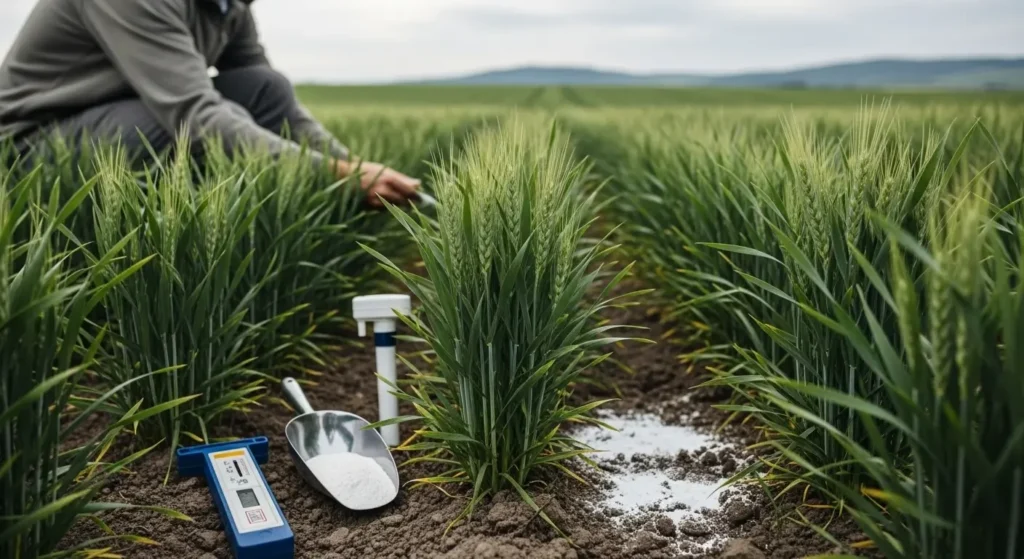
Increasing wheat yield is one of the main goals of farmers, as it improves both the quality and quantity of the product. To achieve this goal, selecting appropriate fertilizers and using them correctly is of great importance.
In this article, we will examine the nutritional requirements of wheat, common fertilization methods, and the best fertilizers for increasing wheat yield.
Nutritional Requirements of Wheat and Different Fertilization Methods
Wheat is one of the most important crop products that requires various nutrients for optimal growth and high yield. The nutrients required by the plant are divided into the following two categories:
-
Macro nutrients: nitrogen, phosphorus, potassium, sulfur, magnesium, calcium.
-
Micro nutrients: iron, manganese, boron, copper.
-
They are classified into categories.
Each of these elements plays a vital role at different growth stages of wheat, and providing them in the right amount and at the right time is essential for optimal plant development. To supply these nutrients, different fertilization methods are used for wheat. These include the use of chemical fertilizers, which typically contain nitrogen, phosphorus, and potassium.
Compost and organic fertilizers also help improve soil structure and maintain soil health. Since soil conditions and wheat requirements vary from farm to farm, conducting a soil test to determine the status of nutrients present in the soil is recommended before any fertilization.

Key Points for Using Fertilizers to Increase Wheat Yield
Proper fertilization can significantly improve wheat growth and increase yield. Farmers should pay attention to the following points:
1. Soil type and cropping pattern: Soil type and cultivation method greatly influence fertilizer selection and dosage. For example, sandy soils require more nitrogen due to lower nutrient retention capacity, while clay soils can store higher amounts of nutrients.
2. Soil characteristics: Before using any fertilizer, a soil test is recommended to evaluate nutrient levels, soil pH, salinity (EC), and other soil properties.
3. Planting time and rainfall: Wheat planting time and seasonal rainfall can affect nutrient requirements. In drought conditions, fertilization must be carried out more carefully.
4. Fertilizer amount and timing: Splitting nitrogen application into multiple stages and applying it at different growth phases can greatly improve yield quality and quantity.
Best Fertilizers for Increasing Wheat Yield
To increase wheat yield, fertilizers should be used that meet the plant’s needs at different growth stages. Some of the best fertilizers include:
1. Nitrogen fertilizer (N)
Nitrogen is essential for rapid plant growth and protein formation in grains. The required amount varies depending on wheat type (spring or winter wheat) and soil status. Generally, about 25 kg of nitrogen is needed per ton of wheat yield per hectare. Nitrogen is typically applied in several stages.
2. Potassium fertilizer (K)
Potassium plays a key role in strengthening stems, improving plant resistance to diseases, and enhancing grain quality. One of the best potassium sources for wheat is Potassium Sulfate fertilizer.
Potassium Sulfate not only supplies potassium in a plant-available form but also contains sulfur, which improves grain protein quality and increases resistance to environmental stresses such as drought. It is especially recommended for saline soils or regions with sulfur deficiency.
3. Phosphorus fertilizer (P)
Phosphorus helps in the formation of starch and carbohydrates and plays a key role in photosynthesis. It is essential for grain filling. For maximum yield, 20 to 40 kg of phosphorus per hectare is usually required.
4. Sulfur (S)
Sulfur improves nitrogen uptake and plays an important role in protein production and grain quality. Its deficiency can reduce nitrogen absorption, so it must be included in the fertilization program.
5. Magnesium (Mg) and Calcium (Ca)
Magnesium is essential for photosynthesis, and calcium strengthens plant cell structure. These elements improve both plant growth and grain quality.
Nutritional Needs at Different Growth Stages
Wheat requires different amounts of nutrients at each growth stage:
-
Germination and emergence: nitrogen and phosphorus are essential for initial growth.
-
Tillering stage: nitrogen and magnesium are most important.
-
Stem growth: nitrogen, phosphorus, potassium, sulfur, magnesium, and zinc are required.
-
Flowering and pollination: nitrogen, phosphorus, magnesium, and boron are important for grain filling and quality.
Best Fertilizer Timing for Increasing Wheat Yield
Proper and timely fertilization is a key factor in increasing wheat yield. Timing and fertilizer type significantly affect crop performance.
1. Autumn or spring fertilization
Amount: 100 to 150 kg per hectare (depending on soil test results)
Time: Usually during soil preparation and before plowing, Potassium Sulfate is applied to ensure potassium and sulfur availability during early growth.
2. Tillering stage fertilization
Amount: 50 to 70 kg per hectare as top dressing if needed.
Time: After emergence and during early tillering. This supports root and stem development.
3. Grain filling stage fertilization
Amount: 30 to 50 kg per hectare as top dressing if required.
Time: Late growth stage when grains are filling; potassium is crucial for nutrient transfer and grain quality.
Why Use Fertilizer to Increase Wheat Yield?
There are several reasons for using fertilizers to increase wheat production:
1. Providing plant nutrition: Wheat requires nutrients such as nitrogen, phosphorus, potassium, and others for optimal growth.
2. Improving yield quality and quantity: Proper fertilization leads to higher-quality grains and increased yield per hectare.
3. Correcting soil deficiencies: Continuous cultivation can deplete soil nutrients, which fertilizers help restore.
4. Strengthening plant structure: Elements like sulfur, magnesium, and potassium improve cell structure and stress resistance.
5. Increasing stress tolerance: Fertilizers improve resistance to drought, cold, and diseases.
Best Fertilizer for Irrigated Wheat Yield Increase
If you are looking for the best liquid fertilizer for irrigated wheat, a fertilizer containing fulvic acid is recommended. Fulvic acid acts similarly to humic acid but directly enhances nutrient absorption in plants.
This compound improves nutrient uptake and enhances wheat strength and quality.

Boost Your Wheat Yield with Asia Potash Industry High-Quality Fertilizers!
If you are looking to increase your wheat farm productivity and achieve higher-quality crops, choosing the right fertilizer is essential.
Asia Potash Industry is a trusted partner for farmers nationwide with years of experience in producing Potassium Sulfate fertilizer. Its products are manufactured to the highest quality standards and designed to meet wheat nutritional needs at all growth stages.
Visit Asia Potash Industry Products page to learn more about our products. You may also read our article on the impact of high-potassium fertilizers on wheat yield increase.
Conclusion
Proper use of fertilizers and accurate timing can significantly improve wheat yield. By considering crop nutritional needs at each stage and soil characteristics, farmers can effectively use nitrogen, phosphorus, potassium, and other nutrients to enhance both yield and quality.
Consulting with agronomy experts and conducting soil tests helps optimize fertilization programs.
Comments (0)
Be the first to comment!