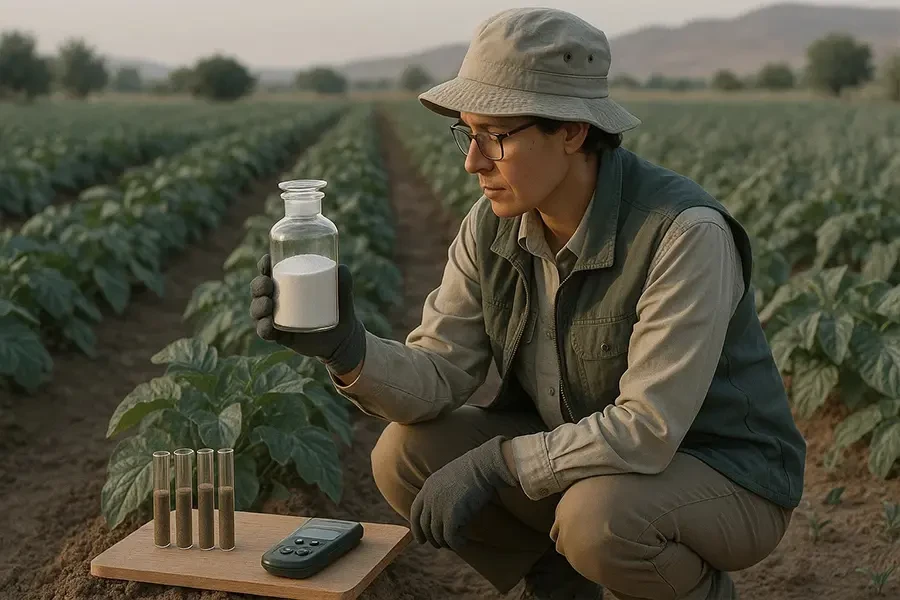
Potash fertilizer is one of the most important nutrients required by plants and plays a very significant role in their growth and development. This element, along with nitrogen and phosphorus, forms the three main components of chemical fertilizers. In this article, we will take a complete look at potash fertilizer, its types, applications, and benefits. For reading specialized content in the field of fertilizers, plant nutrition, and agricultural products, be sure to visit Asia Potash Industry Magazine.
What is potash?
Potash is a general term referring to various salts containing the element potassium (chemical symbol K). In agriculture, this term is mostly used to refer to potassium-based fertilizers. Potassium, alongside nitrogen and phosphorus, is one of the three essential macronutrients required for plant growth and health.
The word potash is derived from “pot ash,” meaning “pot ash,” because in the past, potassium carbonate was obtained by soaking wood ash in a pot and evaporating the water.
Vital role of potassium in plants
Potassium is known as the “quality element” because it directly improves the final quality of agricultural products. Its main functions include:
- Enzyme activation: Potassium activates more than 60 different enzymes in plants involved in vital processes such as photosynthesis and cellular respiration.
- Water regulation: It plays a key role in opening and closing stomata, helping plants maintain water balance and improving drought resistance.
- Nutrient transport: Potassium helps transport sugars, starches, and other nutrients from leaves to fruits, seeds, and roots. This process is essential for kernel filling in products such as pistachios and walnuts and for fruit enlargement.
- Increased resistance: Plants with sufficient potassium develop stronger stems and show higher resistance to lodging, pests, and diseases.
- Improved product quality: Potassium enhances color, taste, size, and shelf life of fruits and vegetables.
Due to potassium’s impact on plants, it is widely used in various fertilizers, known as potash fertilizers. These are discussed in more detail below.
What is potash fertilizer?
Potash fertilizer is a fertilizer that contains potassium. This element plays a major role in many physiological processes in plants, including protein synthesis, water balance, enzymatic activity, and many others. A deficiency of potassium leads to growth and visual disorders in plants, such as yellowing leaf margins and reduced growth rate.
Chemical processes induced by potash fertilizer
Potassium, as a cation, plays an important role in regulating osmotic pressure in plant cells. It helps plants absorb water more efficiently and reduces water loss. It also activates many enzymes involved in photosynthesis, respiration, and protein synthesis.
-
Osmotic pressure regulation: Potassium increases solute concentration in plant cells, promoting water uptake and cell turgor, helping plants resist water stress.
-
Enzyme activation: Potassium acts as a cofactor for many enzymes and increases their activity.
-
Protein synthesis: Potassium is involved in the synthesis of essential proteins required for plant growth and development.
-
Carbohydrate transport: Potassium plays a role in transporting carbohydrates from leaves to other parts of the plant.
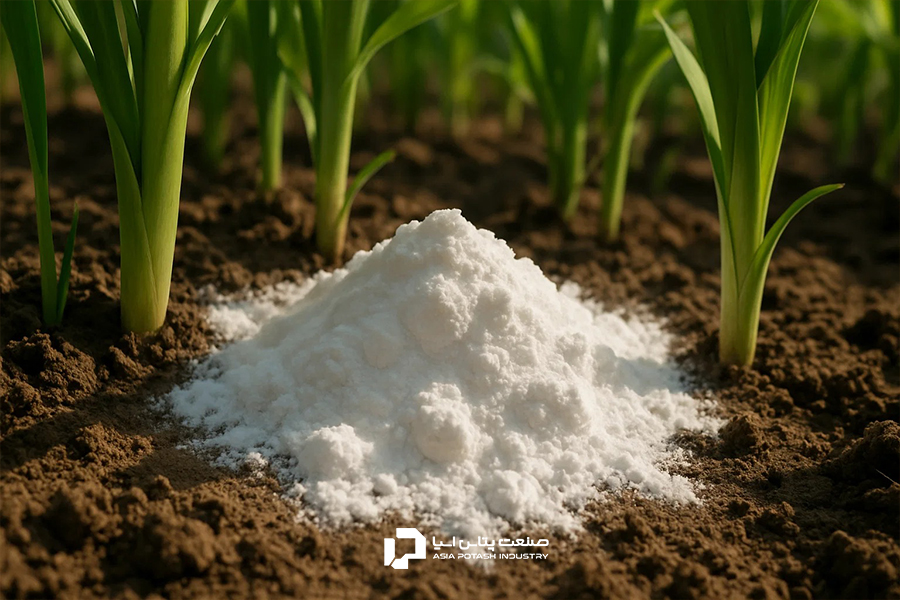
Types of potash fertilizers
Potash fertilizers exist in different forms, each with specific characteristics:
- Potassium Sulfate (K₂SO₄): In addition to potassium, this fertilizer contains sulfur, which is beneficial for many plants. Potassium sulfate is chloride-free and is the best option for chloride-sensitive crops (such as potatoes, strawberries, and some fruit trees). To learn more about its benefits and application methods, refer to the article What is Potassium Sulfate?.
- Potassium Chloride (KCl): This is the most common and cheapest potash fertilizer. It is economical due to its high potassium content, but its chlorine content may make it unsuitable for sensitive plants or saline soils. For buying potassium chloride fertilizer, you can contact Asia Potash Industry sales agents or contact us.
- Potassium Nitrate (KNO₃): An excellent source of both nitrogen (nitrate form) and potassium. Due to its high solubility, it is ideal for drip irrigation systems and foliar spraying.
- Monopotassium Phosphate (MKP – KH₂PO₄): This fertilizer provides both phosphorus and potassium and is commonly used in early growth stages to enhance root development and flowering.
Potassium sulfate is one of the most important potash fertilizers and is produced in various forms, each with specific characteristics. Some of the main types include:
-
Rock potash fertilizer: This type is extracted from natural sources and contains high amounts of potassium chloride. Due to its lower price, it is widely used. However, its high chlorine content limits its use for sensitive crops and saline soils.
-
Sulphate of potash (SOP): Also known as potassium sulfate, this fertilizer contains sulfur and is suitable for sulfur-demanding plants.
-
Liquid potash: A water-soluble form of potassium fertilizer that is quickly absorbed by plants and is widely used by farmers.
Buying Potassium Sulfate from reputable manufacturers is very important for plant growth.
Which Iranian crops benefit from potash fertilizer?
Most native Iranian agricultural and horticultural crops require potash fertilizer. Some potassium-sensitive crops include:
-
Field crops: wheat, barley, rice, cotton, sugar beet, potato, and sunflower
-
Horticultural crops: fruit trees (apple, pear, cherry, sour cherry), grapevine, citrus, and vegetables (tomato, cucumber, eggplant)
When should potash fertilizer be used?
-
Potassium deficiency in soil: can be diagnosed through soil testing.
-
Symptoms of potassium deficiency: include yellowing leaf margins, leaf tip burn, and reduced yield.
-
Improving yield quality and quantity: proper use of potash fertilizer increases both quality and yield.
-
Increasing resistance to environmental stress: potassium helps plants withstand drought, salinity, and cold stress.
Timing of potash fertilizer application
The timing depends on soil type, crop type, climate, and growth stage. Generally, it is best applied at planting, before flowering, and during fruit formation. For better flowering and fruit development, plants may require higher potassium levels. In this stage, the use of high potassium fertilizer can meet plant demands.
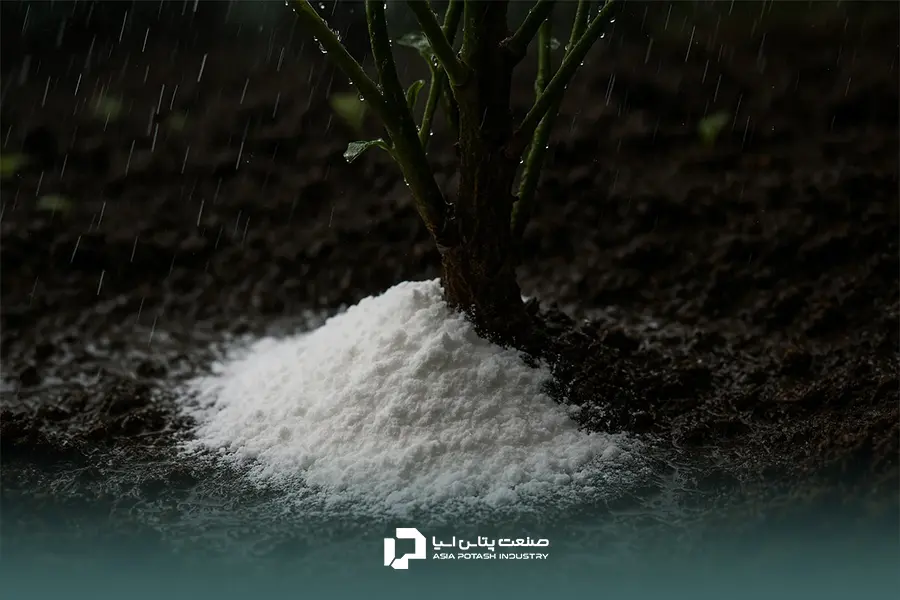
Applications of potash fertilizer
-
Root development: improves root system strength and enhances nutrient and water uptake.
-
Increased disease resistance: strengthens plant immune response against pests and diseases.
-
Improved product quality: enhances the quality of fruits, vegetables, and grains.
-
Osmotic pressure regulation: improves plant performance under stress conditions.
Note: Along with potash fertilizer, materials such as Mineral Mulch can significantly reduce water evaporation, retain soil moisture, and suppress weeds, especially in dry and semi-dry regions.
Benefits of potash fertilizer
The use of potash fertilizer offers many benefits to farmers, including:
-
Increased yield: improves production and farmer income.
-
Improved product quality: increases market value of agricultural products.
-
Reduced production costs: efficient use can lower input costs.
⚠️Note: Excessive use of potash fertilizer can cause environmental problems and reduce product quality. Therefore, it should be used properly and under expert supervision.
Potassium Sulfate Asia Potash Industry
If you aim to improve the quality of your agricultural products, Potassium Sulfate can be an effective solution. This essential fertilizer enhances plant resistance to environmental stress and improves growth, leading to higher-quality products. Asia Potash Industry’s Potassium Sulfate products offer guaranteed quality and competitive pricing, making them a reliable choice for farmers and growers. With this fertilizer, you can increase productivity and observe tangible improvements in your fields and orchards.
Final Words
Potash fertilizer is one of the most important nutrients required for plant growth and development. Proper use of this fertilizer can significantly improve crop yield and quality, helping farmers increase their income.
Comments (0)
Be the first to comment!