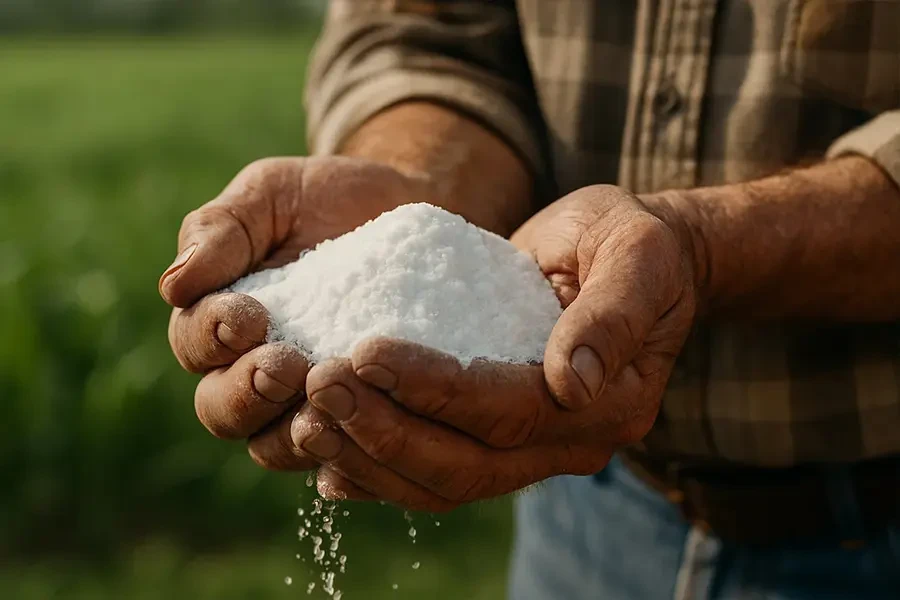
High potassium fertilizer is a type of chemical fertilizer that, due to its high potassium content, plays a very important role in plant growth and development. Potassium is an essential element for plants and is involved in many vital processes, including photosynthesis, transport of water and nutrients, resistance to environmental stress, and improving product quality.
In previous articles, we have fully explained potassium fertilizer, its types, applications, and benefits, which you can refer to for more information.
The role of potassium in plants
Potassium is one of the three main nutrients (NPK) required by plants and is known as the element K. The key roles of potassium in plants include the following:
-
Regulation of water in plants: Potassium helps plants use water more efficiently and contributes to resistance against drought and environmental stress.
-
Strengthening cell walls: Potassium plays an important role in producing stronger cells, which increases plant resistance to diseases and pests.
-
Improving photosynthesis: Potassium is involved in the production of sugars and starch in plants and helps increase food production.
-
Improving product quality: high potassium fertilizers help improve the quality of agricultural products and increase their shelf life.
Benefits of high potassium fertilizer
The use of high potassium fertilizer offers many benefits for plants and agricultural products. Some of the most important benefits include:
-
Increased plant resistance to diseases and pests: Potassium strengthens plant cell walls, thereby increasing resistance to diseases and pests.
-
Improving product quality: the use of high potassium fertilizer increases the size, weight, and quality of agricultural products. It also improves their taste, color, and shelf life.
-
Increased resistance to environmental stress: Potassium helps plants withstand environmental stresses such as drought, soil salinity, and high temperatures.
-
Improved absorption of other nutrients: Potassium helps the uptake of other nutrients such as nitrogen and phosphorus.
-
Increased plant productivity: the use of high potassium fertilizer increases plant performance and overall yield.
Types of high potassium fertilizers
High potassium fertilizers are produced in different types, each with specific characteristics and applications. Some of the common types include:
-
Potassium Sulfate: due to its sulfur content in addition to potassium, this fertilizer is suitable for acidic soils. High-quality Potassium Sulfate purchase from manufacturers is very important.
-
Potassium nitrate: this fertilizer contains both potassium and nitrogen and is suitable for plants that require high levels of nitrogen.
-
Potassium chloride: due to its chlorine content, this fertilizer may cause sensitivity in some plants. Therefore, it should be used with caution.
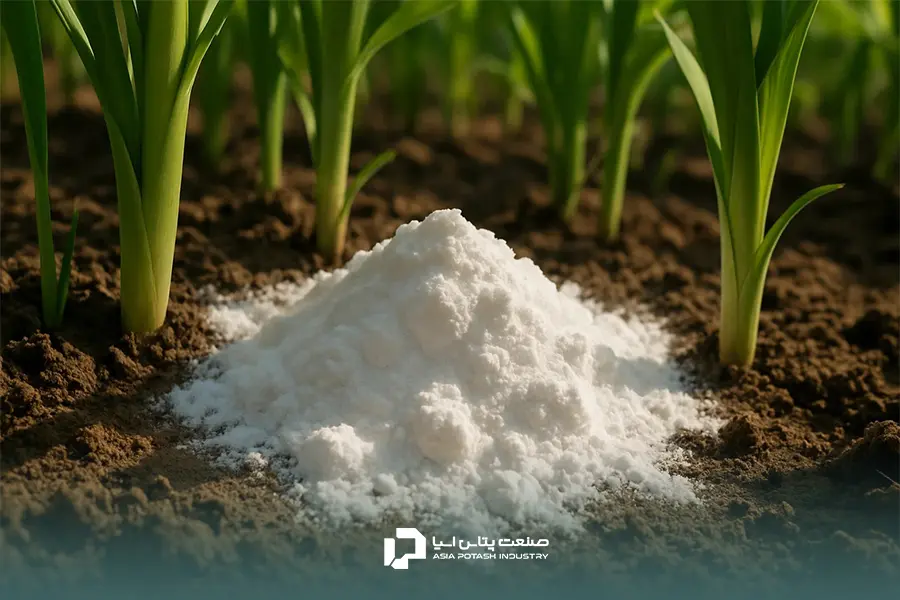
Best time to use high potassium fertilizer
Choosing the right time to apply high potassium fertilizer is very important and depends on the type of crop and environmental conditions. In general, the following can be considered the best times to apply high potassium fertilizer:
-
Before flowering: in many agricultural products, applying potassium fertilizer before the flowering stage is very effective. At this stage, the plant has a higher demand for potassium to ensure proper flowering and fruit formation.
-
After fruit set: after fruit formation, the plant requires a large amount of potassium for proper fruit development and high quality. At this stage, high potassium fertilizer increases fruit size and quality.
-
During drought or environmental stress: under drought or environmental stress conditions such as cold or heat, the use of high potassium fertilizer can increase plant resistance. Simultaneous use of high potassium fertilizers and Mineral Mulch can help retain soil moisture and improve fertilizer efficiency.
How to apply high potassium fertilizer
When applying high potassium fertilizer, two important factors must be considered: the type of fertilizer and the application method. Generally, high potassium fertilizers are available in liquid and powder forms. Depending on plant needs and soil type, either can be used.
-
Foliar application: liquid high potassium fertilizers can be sprayed on leaves and stems. This allows faster absorption of potassium and is very effective when plants require rapid nutrient supply.
-
Soil application: powdered high potassium fertilizers can be mixed with soil or applied as surface broadcasting. This method is suitable for early planting stages or when long-term potassium supply is needed. It improves root development and nutrient uptake.
-
Fertigation (trench application): this method is mainly used for perennial plants and trees. Holes are dug around the root zone, and fertilizer is placed inside them, then covered with soil. This allows gradual and direct delivery of nutrients to the roots, improving efficiency.
Uses of high potassium fertilizer
High potassium fertilizer can be used for a wide range of agricultural, horticultural, and ornamental plants. Some of the most important applications include:
-
Field crops: wheat, barley, rice, corn, cotton, soybean, etc.
-
Vegetable crops: tomato, cucumber, potato, onion, cabbage, etc.
-
Fruit trees: apple, pear, quince, pistachio, pomegranate, citrus, grape, olive, etc.
-
Ornamental plants: rose, tulip, narcissus, chrysanthemum, etc.
Important note: the amount and timing of high potassium fertilizer application depend on plant type, soil conditions, and climate. Therefore, it is recommended to consult agricultural experts before use.
For more information about high potassium fertilizers and free consultation with our experts, please contact us. Asia Potash Industry supports you by providing high-quality high potassium fertilizers.
Conclusion
In this article from Asia Potash Industry Magazine, we reviewed the benefits, types, and applications of high potassium fertilizer. Due to its many advantages, this fertilizer is one of the most important chemical fertilizers used in agriculture. It helps improve plant growth and development, increase product quality, and enhance resistance to environmental stress. However, its use must be based on plant requirements and soil conditions. If you want a more comprehensive understanding of fertilizers and want to learn about other types, compositions, and applications, we recommend reading the article Introduction to Types of Agricultural Fertilizers: Composition and Uses.
Comments (0)
Be the first to comment!