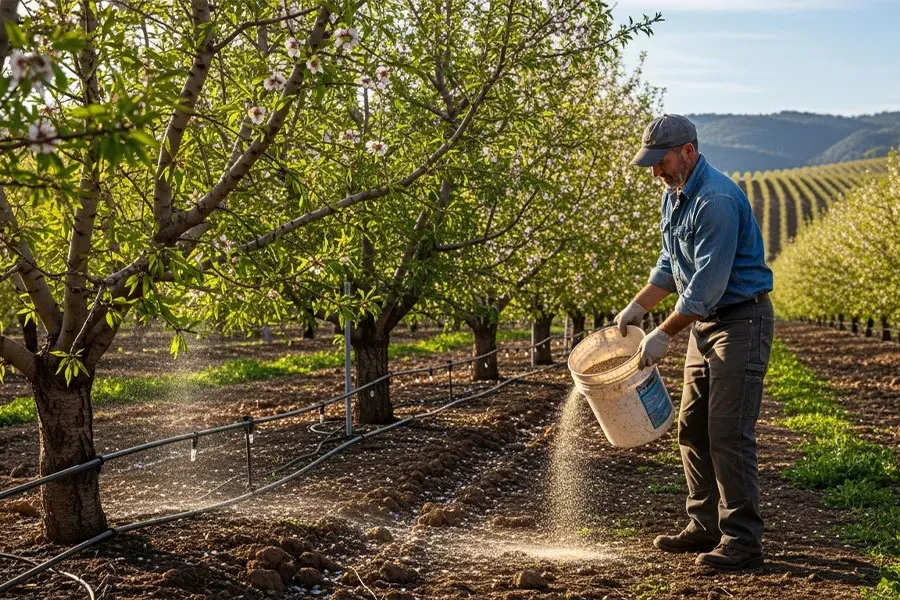
The almond tree is one of the valuable orchard trees that requires precise nutrition and fertilization management to achieve high performance and quality production. Fertilization plays a key role in the growth of branches, leaves, flowering, and kernel filling, and deficiencies or improper use of nutrients can reduce orchard productivity.
In this article from Asia Potash Industry Agriculture Magazine, we comprehensively review almond tree fertilization, required nutrients, the best timing for fertilizing almond trees, and practical application methods so that growers can achieve a scientific and effective program for high-quality and productive yields.
Why is fertilization important for almond trees?
Fertilization not only increases vegetative growth and healthy fruit formation but also improves the tree’s resistance to environmental stresses. Almond trees have deep root systems, and even in fertile soils, regular fertilization becomes necessary after a few years.
Proper nutrition improves photosynthesis, strengthens roots and branches, and increases resistance to diseases and drought. Without a proper almond fertilization program, trees may suffer from weakness, flower drop, and reduced fruit quality.
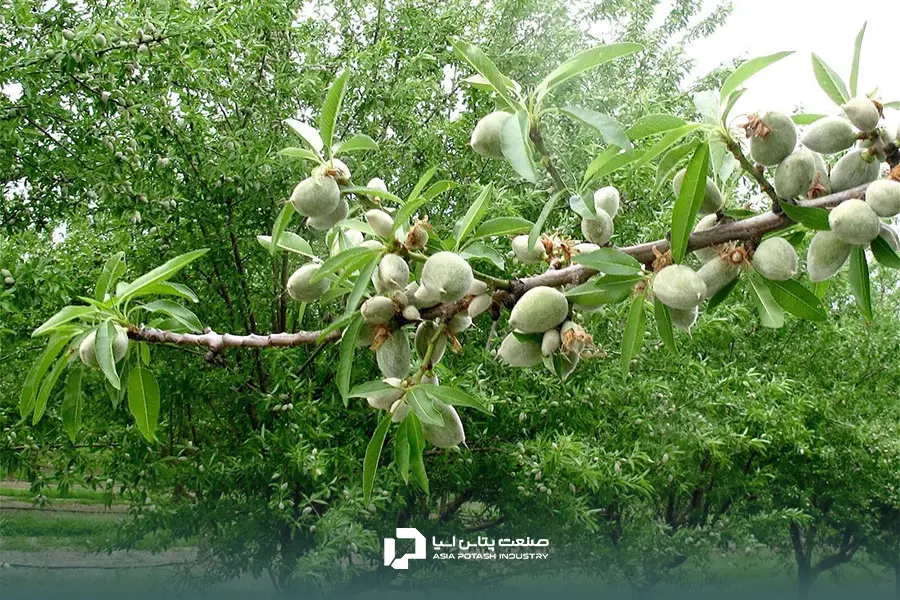
Nutrient requirements of almond trees
Understanding key nutrients is essential for proper almond nutrition. Each of these elements plays a specific role in growth, flowering, fruit formation, and tree resilience. Nutrient supply must be targeted and timely.
Macronutrients
Macronutrients are essential elements required in relatively large amounts. Deficiency in any of these elements can significantly affect yield and kernel quality:
- Potassium (K): Increases resistance to environmental stresses such as drought and heat. It improves kernel quality, oil content, and taste.
- Nitrogen (N): Essential for vegetative growth, leaf and shoot development, and overall tree vigor. Deficiency leads to poor growth and yellowing leaves.
- Phosphorus (P): Supports root development, flower bud formation, and kernel growth. Deficiency results in weak roots and poor yield.
- Calcium (Ca): Strengthens cell walls and prevents kernel defects such as hollow or cracked nuts.
- Magnesium (Mg): Essential for photosynthesis and chlorophyll formation, directly affecting tree productivity.
- Sulfur (S): Required for protein synthesis and enzyme formation, improving overall yield and quality.
Micronutrients
Micronutrients are required in small quantities but are essential for tree health and fruit quality:
- Iron (Fe): Necessary for chlorophyll production; deficiency causes leaf chlorosis.
- Zinc (Zn): Important for flower bud formation and shoot development. Soil pH measurement and adjustment can improve zinc availability.
- Manganese (Mn): Activates photosynthetic enzymes and improves leaf function.
- Copper (Cu): Enhances disease resistance and supports enzyme activity.
- Boron (B): Critical for fruit set and kernel development; deficiency reduces nut weight and quality.
- Molybdenum (Mo): Supports nitrogen metabolism, especially in acidic soils.
Best fertilizers for almond trees
Selecting the right fertilizer is essential for tree growth, fruit quality, and economic productivity. Fertilizers not only provide nutrients but also enhance stress resistance.
Best fertilizer for rapid growth
Balanced fertilizers containing nitrogen, phosphorus, and potassium stimulate vegetative growth and improve early development. Nitrogen promotes shoot growth, phosphorus enhances root development and flowering, and potassium increases stress resistance.
Iron fertilizer for almond trees
Iron is essential for chlorophyll synthesis and prevents leaf yellowing. In calcareous or high pH soils, iron availability is limited, making foliar or soil application necessary for proper growth and yield improvement.
Wood ash for almond trees
Wood ash is a natural source of potassium, calcium, magnesium, and small amounts of phosphorus. However, excessive use increases soil pH and reduces availability of iron, zinc, and manganese. Its use should be based on soil testing.
Best animal manure for almond trees
Animal manure improves soil structure, microbial activity, and nutrient availability.
Sheep manure
Rich in nitrogen and nutrients, it improves soil fertility and enhances yield when fully decomposed.
Poultry manure
High in nitrogen and micronutrients, it significantly improves vegetative growth and kernel quality. However, it must be fully composted before use to avoid root damage and weed growth.
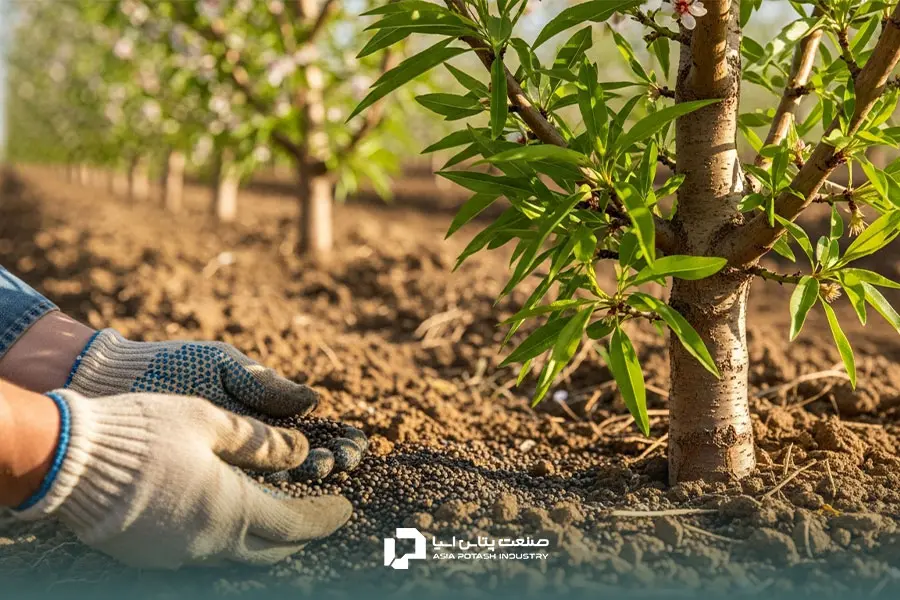
Best timing for almond tree fertilization
Fertilization should follow the annual growth cycle of the almond tree. Each season has a specific nutritional goal, and selecting the right fertilizer and method is essential.
Spring fertilization
Spring is the period of active growth. Nitrogen is essential for shoot and leaf development. Micronutrients like boron and zinc are important for flowering and fruit set.
Summer fertilization
Summer is the kernel filling stage. Potassium fertilizers such as high-potash fertilizers improve kernel weight, taste, and quality. Calcium and magnesium strengthen fruit structure.
Autumn fertilization
After harvest, trees need nutrient replenishment. Phosphorus and potassium, along with organic matter, help strengthen roots and prepare the tree for winter.
Almond tree fertilization schedule
Proper planning based on soil and leaf analysis is essential for balanced nutrition. Testing soil and leaves helps determine exact nutrient requirements.
| Season | Time period | Main nutritional needs | Recommended fertilizers | Application method | Approx. dosage (mature tree) |
| Spring | Late winter to mid-spring | Vegetative growth, flowering, fruit set | Urea or ammonium nitrate + Zn & B fertilizers | Foliar spray and fertigation every 20 days | 100–200 g nitrogen per tree |
| Summer | June to August | Kernel filling and quality improvement | Potassium Sulfate + calcium nitrate + magnesium | Fertigation or foliar spraying | 2–3 kg solution per tree |
| Autumn | After harvest | Root strengthening and recovery | Phosphate + Potassium Sulfate + amino acids | Soil application (trenching) | One application per season |
| Winter | December to January | Soil improvement and preparation | Well-rotted manure + sulfur + micronutrients | Trenching or surface application | Once per year |
Methods of fertilizing almond trees
Choosing the correct fertilization method is as important as selecting the fertilizer itself. The goal is efficient nutrient delivery and reduced losses.
Fertigation
Water-soluble fertilizers such as Potassium Sulfate or urea are applied through irrigation systems for efficient root absorption.
Soil application (trenching)
Nutrient mixtures are placed in pits around the tree canopy. This method is effective in heavy soils and cold regions.
Foliar spraying
Micronutrients such as zinc, iron, and boron are applied directly to leaves, especially during flowering. Application is best done early morning or late evening.

Key points in fertilization programs
- Always use soil and leaf analysis before fertilization.
- Adjust fertilizer dosage based on tree age.
- Avoid excessive nitrogen use in summer.
- Use potassium fertilizers in dry regions to improve stress tolerance.
Improve almond yield with Asia Potash Industry
Asia Potash Industry is a leading supplier of agricultural inputs offering high-purity and fully soluble Potassium Sulfate fertilizer for almond nutrition. Its use during kernel filling and post-harvest stages improves kernel quality, fruit weight, and storage life, contributing to higher productivity and profitability.
Conclusion
Almond fertilization must be based on actual soil and tree requirements. A precise fertilization schedule, combined with soil and leaf analysis, ensures optimal growth and productivity. Proper fertilization, irrigation, and pruning form the foundation of successful almond orchard management.
Comments (0)
Be the first to comment!