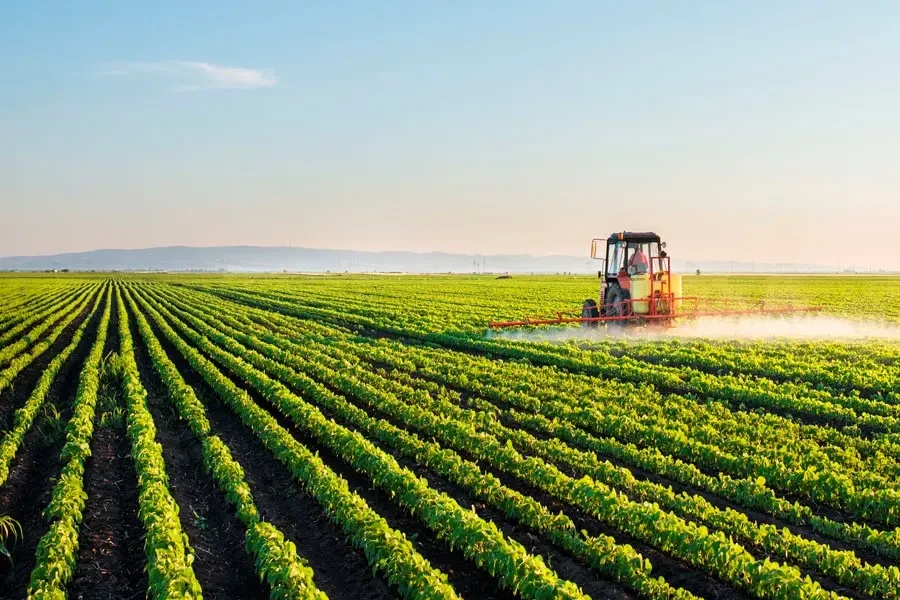
Different types of fertilization methods in agriculture are used to supply the nutrients required by plants and to increase the productivity of Products. The choice of the appropriate method depends on soil characteristics, crop type, and climatic conditions.
Some methods, such as fertigation and surface broadcasting, are widely used in fields, while more specialized techniques such as pit fertilization and foliar spraying are mostly applied in orchards and for specific plants.
In this article, we examine the different types of these methods and analyze the advantages and disadvantages of each so that farmers can choose the best way to apply fertilizers in their fields or gardens.
1. Fertilization through irrigation
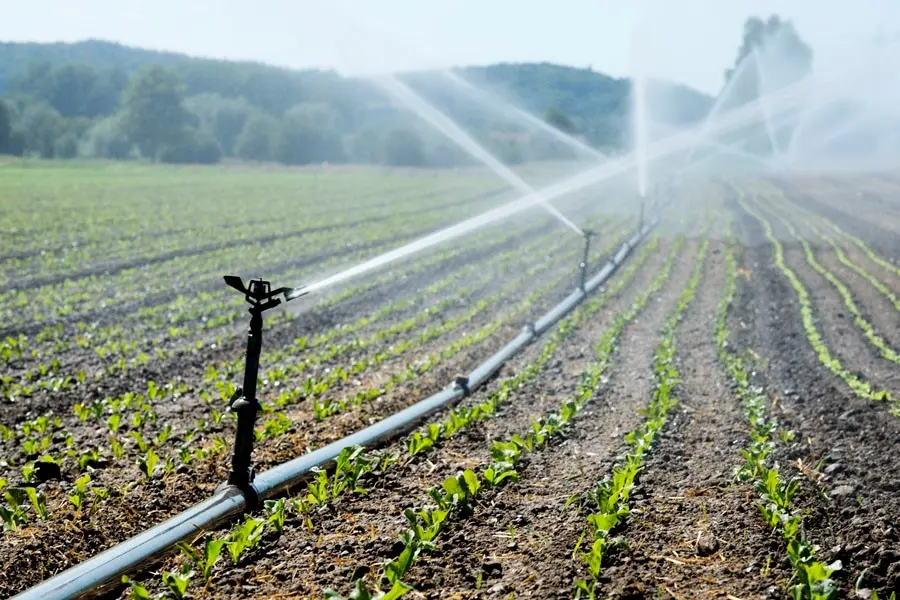
Fertigation is an advanced plant nutrition method in which water-soluble fertilizers are delivered directly to plant roots along with irrigation water through systems such as drip or sprinkler irrigation.
This method improves nutrient uptake, saves time and cost, and increases uniformity in plant nutrition. It also helps prevent resource loss and plant damage by precisely controlling fertilizer amounts, effectively increasing the quality and productivity of Products.
2. Surface broadcasting method
One of the simplest fertilization methods is surface broadcasting. In this method, fertilizer is spread manually or by machine over the soil surface and then incorporated into the soil through irrigation or plowing.
This method does not require special equipment and is suitable for large fields, but it may lead to fertilizer loss since not all of it reaches the plant roots or it may be washed away by water.
What is high-potassium fertilizer?
Surface broadcasting fertilization; suitable for nitrogen fertilizers
After applying fertilizer on the soil surface, it is usually mixed with the soil through plowing or disc harrowing. This method is mostly used for nitrogen fertilizers that are soluble in water.
However, in alkaline soils and especially in hot weather, the risk of ammonia volatilization is high, and under such conditions, this method is not recommended.
Also, surface broadcasting is not very effective for phosphorus and potassium fertilizers, because these elements move very slowly in clay soils and cannot reach plant roots in time.
For effective absorption of phosphorus and potassium, these nutrients must be incorporated into the soil using plowing or deep discing. In surface broadcasting, a large amount of fertilizer is used, which is not economically efficient. This method is usually applied when seeds are also broadcast on the soil surface.
Types of surface broadcasting methods in agriculture
Fertilizer broadcasting in agriculture is mainly done in 2 ways:
1. Fertilization at planting time (basal fertilization)
In this method, fertilizers are applied at the same time as seed planting and mixed with the soil to provide initial plant nutrition. This is especially important for crops such as wheat and rice, as these plants require nitrogen in the early growth stages.
The goal of this method is the Distribution of nutrients uniformly across the field. However, disadvantages include incomplete nutrient uptake by roots and unwanted weed growth in the field.
2. Band or row fertilization
In this method, fertilizer is placed in strips alongside seed rows and slightly below them (about 2 to 5 cm). This method reduces the limitations of phosphate, potassium, and micronutrient fertilizers, especially in heavy soils, and compared to surface broadcasting, it reduces fertilizer consumption and weed growth.
However, if fertilizer is placed too close to the seed, it may damage the seedling. Also, since fertilizer is concentrated in a small portion of the soil, roots tend to concentrate around fertilizer particles. This method is mostly used in row cropping and orchards (around trunks or along tree rows).
3. Pit fertilization
One of the fertilization methods in agriculture is pit fertilization in orchards. This is an effective method for tree fertilization. In this technique, usually in autumn or winter, pits are dug around trees and filled with organic or chemical fertilizers.
This method ensures that nutrients reach the roots directly, reduces fertilizer loss, and improves the uptake of important elements such as phosphorus and potassium. It also helps improve soil structure and enhances tree growth.
4. Foliar spraying
One of the fast and effective fertilization methods is foliar spraying. In this method, water-soluble fertilizers are sprayed directly onto plant leaves.
In foliar spraying, nutrients are absorbed through the leaf surface and directly supplied to the plant without passing through the soil. It is mainly used for the rapid supply of micronutrients such as iron, zinc, manganese, and boron, especially when the soil is unable to supply these elements or root uptake conditions are unfavorable.
This method should be carried out during cool hours of the day (morning or evening) and carefully to prevent leaf burn and nutrient loss.
5. Seed coating with fertilizer
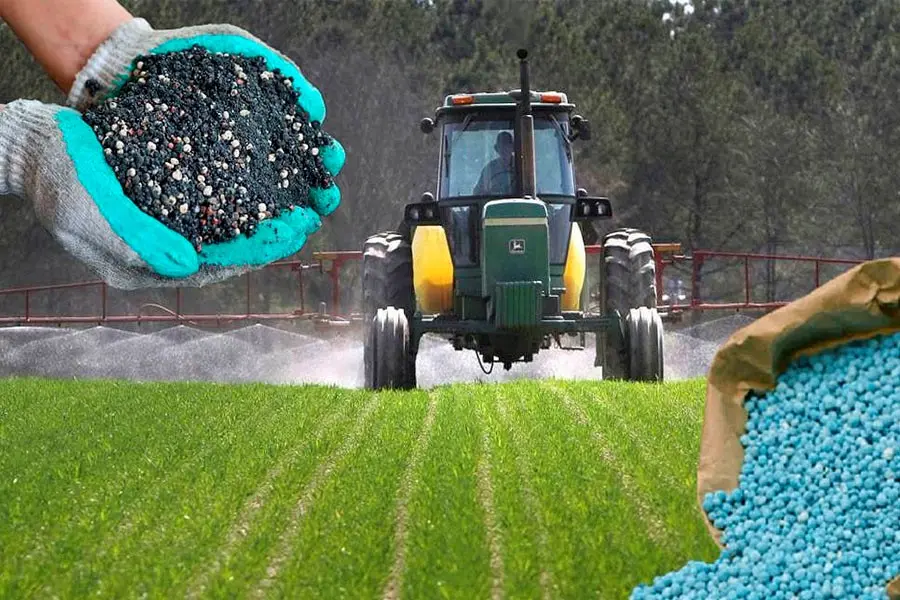
One of the traditional and low-cost fertilization methods in agriculture is seed treatment (seed coating). In this method, a small amount of chemical or organic fertilizers, especially micronutrients, is applied directly onto seeds or mixed with them before planting.
The goal is to provide the nutrients required for early germination and seedling growth. This method increases germination power, strengthens seeds, and supports early root development. Seed coating formulations often include fertilizers such as Potassium Sulfate, potassium fertilizers, iron sulfate, zinc, or fungicides to both nourish the plant and prevent early diseases.
Types of fertilization methods in agriculture with the best fertilizers
If you are looking to increase the productivity of Products through principled and effective fertilization methods, “Asia Potash Industry” is a smart choice for you.
With a strong track record in producing the highest quality Potassium Sulfate fertilizer in the country, this company offers Products that are well compatible with various fertilization methods such as pit fertilization, irrigation, foliar spraying, and seed treatment, significantly improving plant performance.
By purchasing directly from Asia Potash Industry, you benefit from guaranteed quality. Today, for strengthening your farm or orchard soil and achieving a healthy, high-yield harvest, include fertilizer purchase from Asia Potash Industry in your program!

Conclusion
The choice of the appropriate fertilization method in agriculture depends on the specific needs of plants, soil type, and environmental conditions. Methods such as fertigation, surface broadcasting, and pit fertilization can improve plant growth and increase Products yield, but each comes with its own advantages and limitations.
For example, foliar spraying and seed coating help supply nutrients quickly during sensitive growth stages. In any case, to achieve the best results, farmers must carefully evaluate different methods and select the most suitable one according to their farm or orchard conditions.
Comments (0)
Be the first to comment!