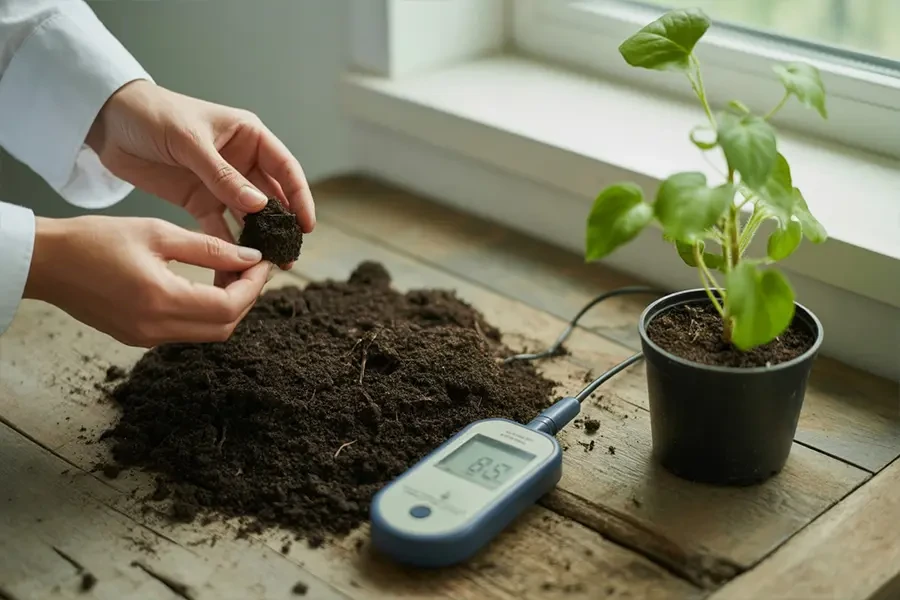
The greenery, freshness, and productivity of every plant depend on various factors, and among all of these, soil is the most important. Soil health plays a crucial role in a farmer’s success and can be evaluated from different perspectives. One of the most important indicators of soil health is its pH. In this article from the Asia Potash Industry website, we aim to examine soil pH, its importance, and the best methods for measuring and adjusting it. If you also desire freshness and greenery in your Products, stay with us until the end of this specialized article.
What is soil pH?
In simple terms, soil pH is a numerical scale used to measure how acidic or alkaline (basic) the soil is. This scale is classified from 0 to 14:
-
A pH of 7 means the soil is neutral.
-
A pH below 7 indicates acidic soil.
-
A pH above 7 indicates alkaline (basic) soil.
More technically, pH measures the concentration of hydrogen ions (H⁺) in the soil solution. An important point is that this scale is logarithmic; meaning soil with a pH of 5 is ten times more acidic than soil with a pH of 6.
The importance of soil pH lies in the fact that it acts as a key variable and directly affects nutrient availability, the activity of beneficial microorganisms, and even the physical structure of the soil.
In fact, pH determines whether plant roots can access nutrients in the soil or not. Therefore, understanding and adjusting it is the first and one of the most important steps in successful gardening and agriculture.
In the following sections, we will examine the effect of soil pH on plant growth, the disadvantages of high pH, and methods to reduce it; stay with us in the Asia Potash Industry Agricultural Magazine.
How does pH affect plant growth?
Soil pH is one of the most important chemical factors controlling plant health and growth. This effect operates through three main mechanisms, which are explained below.
1. Control of nutrient availability
If we focus on just one key effect of pH on plant growth, it is nutrient availability. pH plays the main role here and directly determines nutrient solubility and, consequently, their absorption by plant roots.
If soil pH is too high (alkaline) or too low (acidic), nutrients become chemically unavailable, and plant roots cannot absorb them, leading to poor plant growth. This phenomenon is called “soil locking.”
The optimal soil pH range is between 6.0 and 7.0. In this range, most essential macro- and micronutrients are optimally absorbed by roots.
2. Toxicity of soil elements
Improper pH can increase the concentration of certain elements, leading to soil toxicity and plant damage. For example, in highly acidic soils (pH below 5.5), the solubility of metals such as aluminum and manganese increases significantly. These elements become toxic at high concentrations and can stop plant growth and disrupt water and nutrient uptake.
3. Effect on the activity of beneficial soil microorganisms
Soil is a living ecosystem, and the activity of microorganisms such as beneficial bacteria and fungi is essential for plant health. These microorganisms play key roles in processes such as organic matter decomposition (converting compost into usable nutrients) and nitrogen fixation.
Soil microorganisms perform best at neutral pH (6.5 to 7.5). When soil becomes too acidic or too alkaline, their activity decreases, disrupting the soil nutrient cycle.
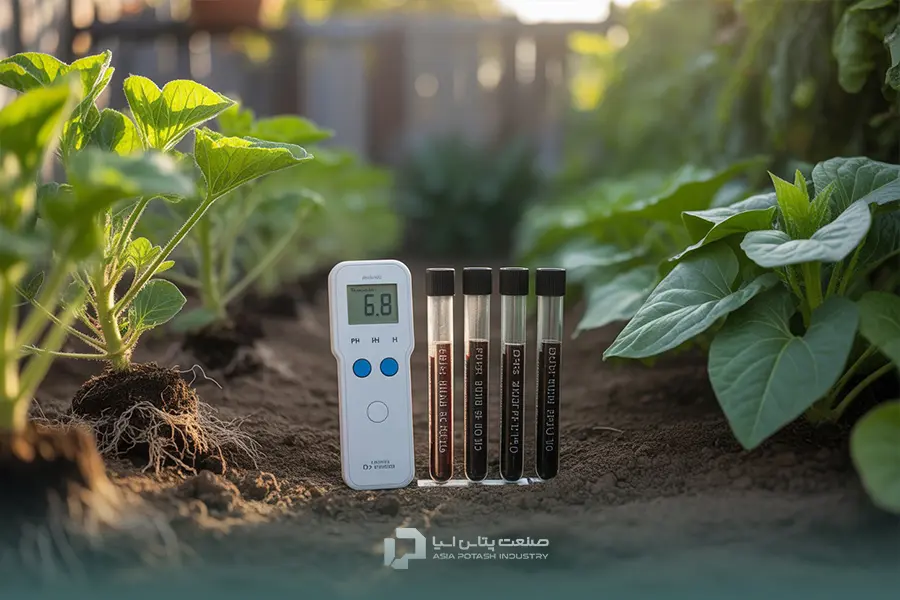
What are the disadvantages of improper soil pH?
High soil pH means strongly alkaline soil (also called calcareous soil). Note that both excessively high and low pH levels can be harmful. The disadvantages of improper soil pH include:
-
Severe nutrient deficiency (especially micronutrients): As mentioned earlier, improper pH causes nutrient lock-up, preventing nutrients from reaching plants. This leads to iron deficiency and chlorosis (yellowing of leaves). Zinc, manganese, copper, and phosphorus are also affected.
-
Soil structure degradation: Alkaline soils, especially those high in sodium, suffer structural breakdown due to dispersion of clay particles. This blocks soil pores, reducing water and air infiltration. As a result, soil remains muddy after irrigation and becomes hard, compact, and cracked after drying.
-
Risk of ion toxicity: At very high pH (usually above 8.5), concentrations of ions such as bicarbonate (HCO₃⁻) and sodium (Na⁺) may become toxic, damaging root cells or interfering with water uptake. In acidic conditions, toxicity occurs due to aluminum and manganese.
Signs of improper soil pH
Identifying soil pH problems by visual inspection is not easy, as symptoms may be confused with diseases or other factors. However, some signs can serve as warnings:
-
Poor plant growth and weak appearance.
-
Reduced flowering or fruit production.
-
Increased susceptibility to pests and diseases.
-
Yellow leaves with green veins (iron and manganese deficiency).
-
Soil becomes very dry, compact, and heavily cracked after irrigation.
-
Purple leaves (phosphorus deficiency).
-
Roots appear short, thick, and brittle.
-
Growth of specific weeds such as moss, sorrel, and bellflower.
Factors affecting soil pH
Several factors influence soil pH, both natural and human-induced. These determine whether soil is suitable for specific crops.
1. Parent material
The rock from which soil is formed is called parent material. Soils formed from alkaline rocks such as limestone are alkaline, while soils derived from granite or shale tend to be acidic.
2. Climate
Climate directly affects soil pH. Areas with high rainfall (humid and forest regions) usually have acidic soils due to leaching, where basic cations like calcium and magnesium are washed away and replaced by hydrogen and aluminum ions.
In general, humid regions have acidic soils, while dry and desert regions tend to have alkaline soils.
3. Vegetation
Vegetation also influences soil pH through decomposition of plant residues. For example, coniferous forest soils (such as pine forests) are acidic, while grasslands are generally more alkaline.
4. Use of nitrogen fertilizers
Continuous use of ammonium-based fertilizers (such as ammonium sulfate or urea) triggers nitrification, producing hydrogen ions and gradually acidifying the soil.
5. Repeated harvesting
Continuous cropping removes alkaline elements such as calcium, magnesium, and potassium, reducing soil buffering capacity and increasing acidity risk.
6. Industrial pollution and acid rain
Burning fossil fuels releases sulfur and nitrogen oxides, which react with atmospheric moisture and return as acid rain. This significantly lowers soil and water pH, increasing soil acidity.
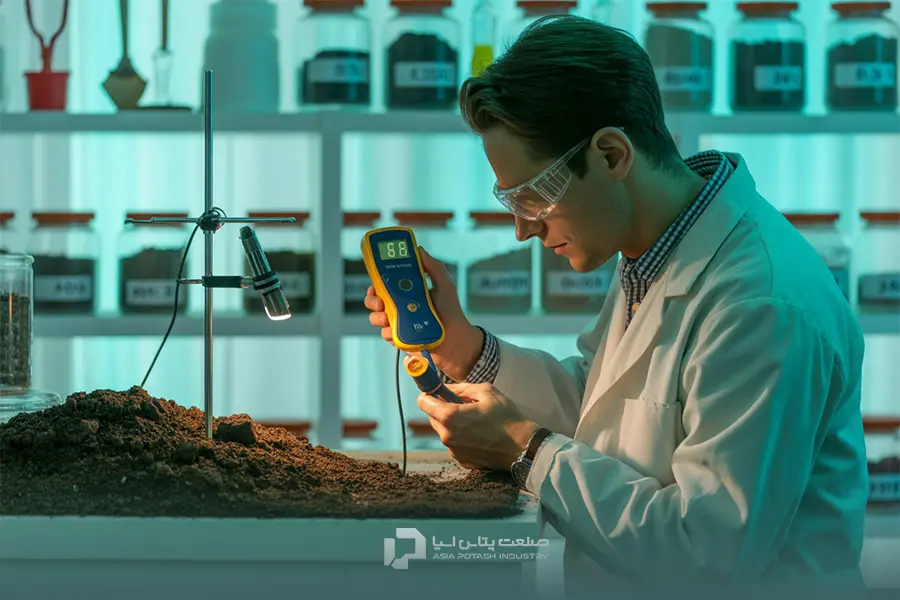
How to measure soil pH?
There are several methods with different costs and accuracy levels for determining soil acidity or alkalinity. The best and most accurate method is laboratory soil testing.
Below are the common methods:
Home method
This method only indicates whether soil is acidic or alkaline (in extreme cases) and does not provide exact pH values. It requires two containers, soil samples, distilled water, vinegar, and baking soda.
-
Collect soil samples from different locations and mix them.
-
Divide the sample into two containers.
-
Add distilled water to both samples to form mud.
-
Add half a cup of vinegar to one sample. If it bubbles, the soil is alkaline; if not, proceed to the next step.
-
Add half a cup of baking soda to the other sample. If it bubbles, the soil is acidic.
Soil test kits
Soil pH test kits are another method for estimating soil acidity or alkalinity. These kits can be purchased from agricultural or gardening stores, and used according to their instructions.
Digital pH meter
This is the most accurate home method. It provides a digital pH reading. Steps include:
-
Calibrate the device using standard buffer solutions.
-
Mix soil with distilled water to form a slurry.
-
Insert the electrode into the sample and wait for the reading.
Note: Rinse the electrode with distilled water after use to maintain accuracy and extend device life.
Soil laboratory testing
Sending soil samples to a certified laboratory is the most accurate method. In addition to pH, you can obtain detailed information about nutrients, salinity, and soil texture.
How to adjust soil pH?
Adjusting soil pH is essential for plant health and optimal yield. After determining whether the soil is acidic or alkaline, different approaches are used.
Lowering soil pH
If your soil is strongly alkaline, you need to use acidifying materials:
-
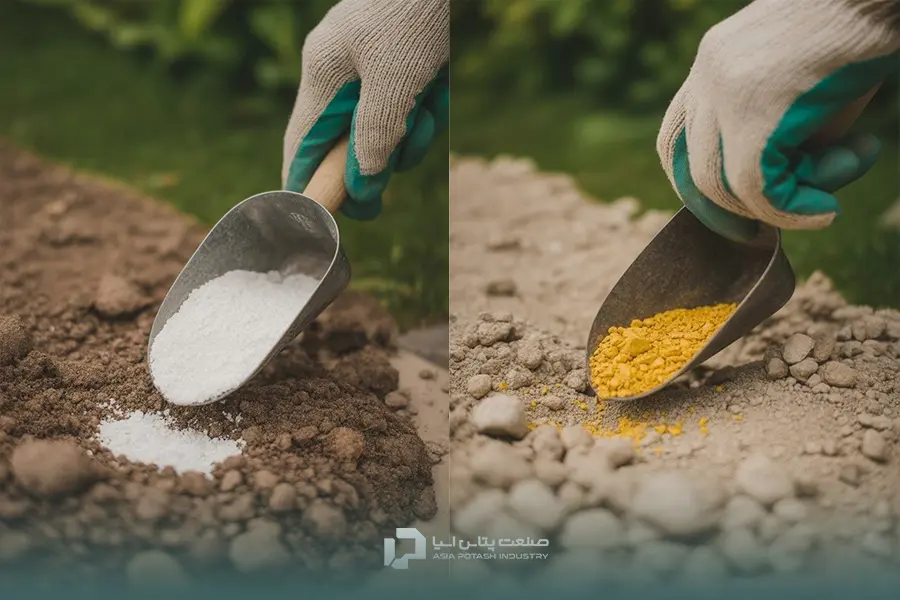
Adding sulfur: The most effective and safe method. Soil bacteria convert sulfur into sulfuric acid over time, gradually lowering pH.
This process is slow (several months) and should be applied before planting and mixed with soil.
-
Organic materials: Compost, peat moss, and sawdust gradually acidify soil.
-
Acid-forming fertilizers: Ammonium-based fertilizers such as ammonium sulfate help lower pH over time.
-
Aluminum sulfate and iron sulfate: These reduce pH quickly but must be used carefully due to toxicity risks.
Increasing soil pH
If soil is acidic, alkaline materials should be used:
-
Lime application: The most common method using calcitic or dolomitic lime. Dolomitic lime also supplies magnesium.
-
Wood ash: Raises soil pH but must be used cautiously due to strong effects.
Important notes for lowering pH
-
pH adjustment is a gradual process.
-
Mix amendments thoroughly with soil.
-
Irrigate after application to activate chemical reactions.
-
Re-test soil after 6–12 months.
Conclusion
A professional farmer—or even someone caring for a few home plants—must pay attention to soil quality. Proper soil conditions, along with other factors, ensure plant growth and vitality. In this article, we examined one of the most important soil health indicators: pH.
Keep in mind that soil pH should be tested and adjusted with expert consultation. If you have questions or experiences, feel free to share them in the comments.
Comments (0)
Be the first to comment!