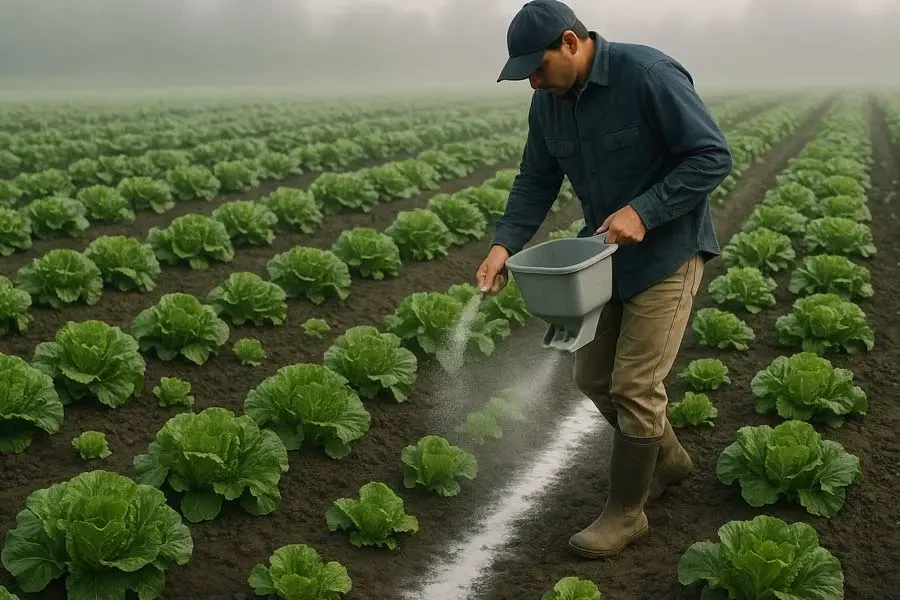
Fertilizer nutrition for lettuce plays a vital role in the growth and quality of this plant. This widely consumed vegetable is a rich source of beneficial vitamins and minerals. To achieve a high-quality product, key nutrients such as nitrogen, phosphorus, and potassium must be supplied on time. A deficiency in these elements can reduce both yield and product quality.
In this article from Asia Potash Industry Magazine, we examine the fertilizer program and provide a comprehensive table for lettuce fertilization.
Optimal environmental conditions for lettuce nutrition and growth
Lettuce requires a temperate climate for proper growth. The ideal temperature for its cultivation during the day is between 16 and 25°C, and at night between 10 and 20°C. An average monthly temperature of around 12 to 15°C is also recommended for the initial growth stage of lettuce.
Regular irrigation and preventing complete soil drying play an important role in effective nutrition and plant health. In addition, late-maturing and heat-resistant varieties can be planted until late April and harvested from June to July. These environmental conditions help improve nutrient uptake and increase yield.
Lettuce can absorb nutrients through both roots and leaves. The most common feeding method is root fertilization, where fertilizer is added to the soil and absorbed by the plant through the roots.
In addition, foliar feeding is also used, in which soluble fertilizers are sprayed onto leaves for better absorption.
Lettuce nutrient requirements at different growth stages
The nutritional needs of lettuce vary at each growth stage; in the early stages, nitrogen is considered essential for leaf development, while in later stages, phosphorus and potassium play an important role in improving plant quality and yield.
The amount and type of fertilizer used must also be adjusted based on soil conditions, fertilizer type, plant age, and weather conditions to achieve the best results.
Lettuce fertilization schedule table; a comprehensive nutrition program
|
Lettuce growth stage |
Recommended fertilizers |
Application rate (kg/ha) |
Description and important notes |
|
Before planting (soil preparation) |
Potassium Sulfate (K₂SO₄) |
100 – 150 |
Provides potassium and sulfur for nutrient balance and improves soil structure |
|
Phosphorus (P₂O₅) |
80 – 100 |
Strengthens root development and enhances early plant growth |
|
|
Nitrogen (N) |
50 – 70 |
Primary nutrient for vegetative growth |
|
|
Micronutrient fertilizers (zinc, copper, manganese) |
According to soil test |
Provides essential elements for plant growth and health |
|
|
3–4 weeks after planting (vegetative growth) |
Potassium Sulfate (K₂SO₄) |
50 – 100 |
Enhances leaf growth and plant resistance |
|
Nitrogen (N) |
40 – 60 |
Stimulates leaf growth and greenness |
|
|
Phosphorus (P₂O₅) |
20 – 30 |
Supports root development |
|
|
20 days before harvest (final stage) |
Potassium Sulfate (K₂SO₄) |
50 – 100 |
Improves leaf quality, color, taste, and shelf life |
|
Potassium (K) |
Based on soil requirement |
Emphasis on chloride-free potassium for sensitive crops |
|
|
Calcium (Ca) |
20 – 30 |
Supports plant strength and production processes |
|
|
Phosphorus (P₂O₅) |
20 – 30 |
Supports plant strength and production processes |
|
|
Nitrogen (N) |
20 – 30 |
Maintains leaf greenness and health |
|
|
Organic matter (compost and humic acid) |
1000 – 2000 kg/ha |
Improves soil structure and nutrient uptake |
|
|
Foliar feeding (optional, at different growth stages) |
Foliar spray of Potassium Sulfate + micronutrients |
According to manufacturer instructions |
Faster nutrient uptake, improved stress and disease resistance |
Lettuce fertilization program at the beginning of the planting season
At the beginning of the planting season, proper nutrition plays an important role in strengthening early lettuce growth, accelerating leaf development, and forming stronger roots. At this stage, lettuce requires a large amount of nitrogen for proper growth.
In addition, phosphorus is important for better root development and potassium for increasing plant resistance to diseases and improving leaf quality.
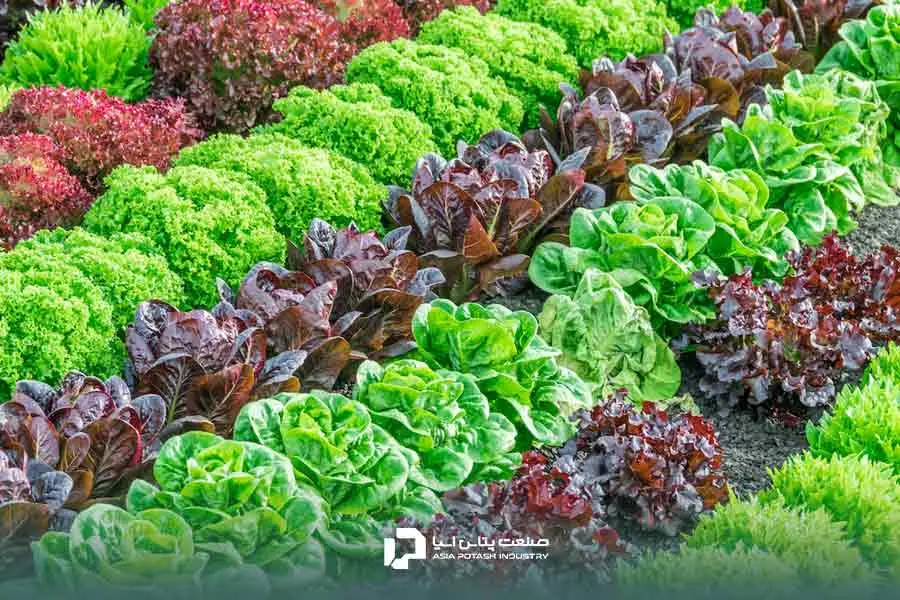
Best fertilizer combination for early lettuce growth
An appropriate fertilizer mix at the beginning of the growth season may include the following elements:
-
Nitrogen (N): primary growth and greenness stimulant
-
Potassium (K): increases plant resistance and product quality
-
Phosphorus (P): strengthens root system
-
Potassium Sulfate (K₂SO₄): strengthens cell walls, improves stress resistance, and regulates plant water balance
-
Micronutrients (zinc, copper, manganese, etc.): essential for plant development and health maintenance
The amount and ratio of these elements must be adjusted based on soil type and plant requirements. It is recommended to conduct a soil test before fertilization to design the best nutrition program.
Using specialized fertilizers or NPK formulations tailored to lettuce requirements can significantly increase farm productivity.
To learn more about Potassium Sulfate fertilizer from Asia Potash Industry, please visit the product page.
Final crop enhancement with smart fertilization: 20 days before harvest!
The golden time to improve product quality and yield is just before harvest!
About 20 days before harvest, plants are in a stage where they require complete, targeted, and specialized nutrition. Proper fertilization at this stage can significantly improve taste, color, size, and shelf life.
At this stage, a balanced combination of key nutrients and organic materials is recommended:
-
Potassium (K): key factor for better taste, color development, and marketability
-
Potassium Sulfate: chloride-free potassium and sulfur source, improving color, taste, sugar content, and shelf life; suitable for sensitive crops such as apples, grapes, and vegetables
-
Phosphorus (P): supports formation of larger heads and plant strength at harvest
-
Calcium (Ca): prevents physiological disorders such as tip burn
-
Nitrogen (N): used carefully to maintain greenness without harming quality
-
Organic materials (compost, humic or fulvic acid): improve soil structure and nutrient uptake
Potassium; a key element in lettuce nutrition
Potassium (K) is an essential element for healthy growth and high performance in lettuce. It regulates vital plant functions and is necessary throughout the fertilization program, especially during sensitive growth stages.
Main roles of potassium in lettuce:
-
Regulation of cellular activity and osmotic pressure
-
Water balance management in plant tissues
-
Increased resistance to stress and diseases
-
Improved leaf quality (freshness, color, crispness)
-
Higher yield and post-harvest shelf life
Expert recommendation: Using chloride-free potassium fertilizers such as Potassium Sulfate during vegetative growth and pre-harvest stages can significantly improve lettuce quality and marketability.
The secret to successful lettuce cultivation: the golden fertilization program with Potassium Sulfate!
Potassium is one of the key nutrients for lettuce growth and plays an important role in forming high-quality, crisp, and well-colored leaves. Timely and targeted use of Potassium Sulfate, especially in potassium-deficient soils, can significantly improve plant growth and health.
1. Base soil fertilization
Before planting lettuce, it is recommended to apply about 100–150 kg/ha of Potassium Sulfate to the soil. This helps balance potassium levels and supports strong early growth.
2. Supplementary fertilization
About 3–4 weeks after planting, during active leaf growth, a second application of 50–100 kg/ha Potassium Sulfate is recommended to support balanced and rapid leaf development.
3. Pre-harvest strengthening
At head formation and close to harvest, a third application of 50–100 kg/ha is carried out. This stage is important for improving appearance, freshness, and post-harvest shelf life.
Recommended application methods
-
Top-dressing fertilization: direct application of fertilizer on soil surface, especially along planting rows
-
Fertigation: dissolving Potassium Sulfate in drip irrigation systems for efficient and low-loss application
Important note: If soil test results show excess potassium, reduce application rates to avoid over-fertilization and plant damage.
Using high-purity Potassium Sulfate at these three key stages ensures a healthy, high-yield, and marketable crop. For purchasing high-purity, low-chloride Potassium Sulfate, contact our experts.
Choosing the right fertilizer means better lettuce harvest!
If you aim to produce healthy, marketable, and high-quality lettuce, choosing the right fertilizer is the key to success. Asia Potash Industry, the largest Potassium Sulfate producer in Iran, provides fertilizers aligned with global standards and the nutritional needs of crops like lettuce.
Their Potassium Sulfate contains minimal chloride and is rich in potassium and sulfur, essential for growth, greenness, freshness, and shelf life of lettuce leaves.
Now is the time to complete your fertilization program with high-quality products. For consultation and purchase, contact Asia Potash Industry experts.
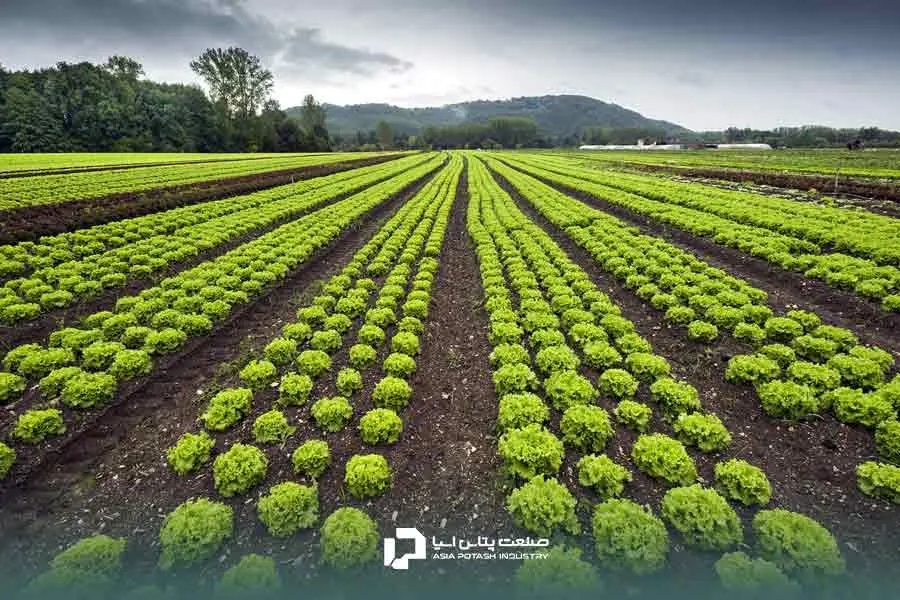
Final remarks; improving lettuce yield with a proper fertilization program
The lettuce fertilization table clearly shows the importance of timing and nutrient balance in improving crop growth and quality. Smart use of chloride-low potassium fertilizers such as Potassium Sulfate, along with nitrogen, phosphorus, calcium, and organic matter, plays a key role in complete plant nutrition.
Supplying these nutrients at key stages such as soil preparation, vegetative growth, and pre-harvest significantly improves leaf color, crispness, taste, pest resistance, and post-harvest shelf life.
This scientific and targeted fertilization program increases per-hectare yield, reduces production costs, and improves economic efficiency in lettuce cultivation.
Comments (0)
Be the first to comment!