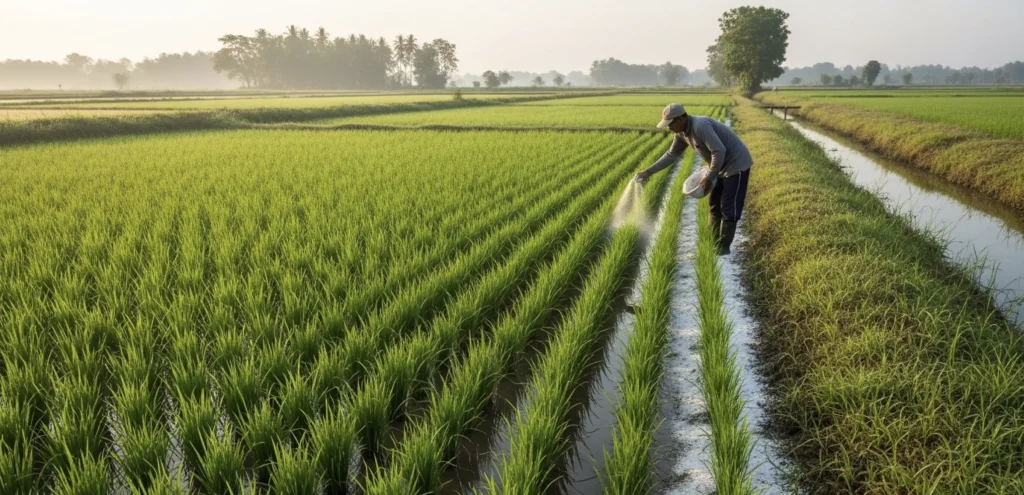
Potassium sulfate for rice, or potassium fertilizer, is one of the most important fertilizers for rice that helps improve rice growth. By using potassium fertilizer, you can strengthen the plant’s defense system and increase the grain size.
In this article, we will review the application method, timing, and benefits of potassium fertilizer for rice.
The importance and necessity of using potassium fertilizer for rice
You may wonder why potassium fertilizer is necessary for rice. High-potassium fertilizer increases rice resistance and prevents pest infestation and plant diseases. The best time to apply high-potassium fertilizer for rice is during the grain-filling stage, as it increases grain size and improves crop yield.
Benefits of potassium fertilizer for rice
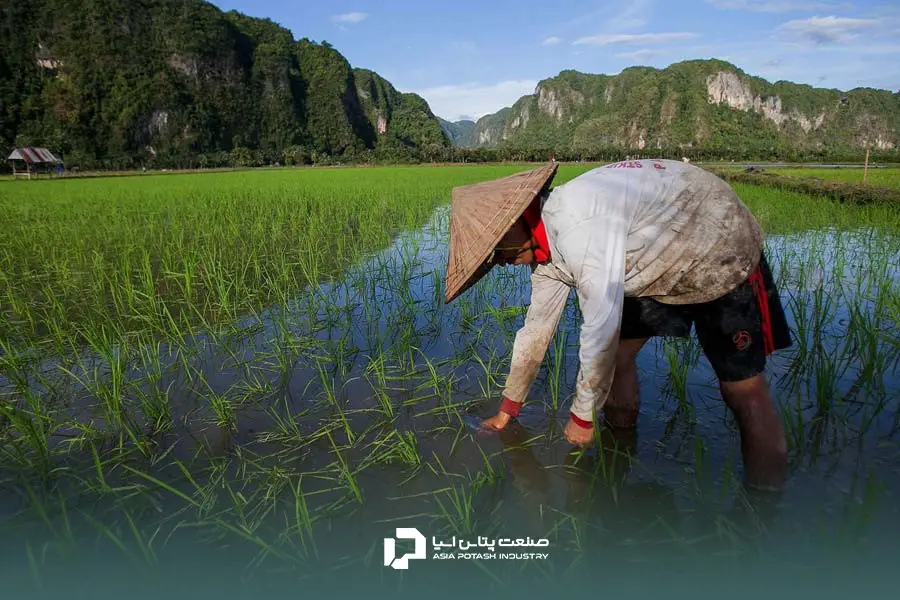
The use of potassium fertilizer for rice has various benefits that improve the quality and growth of rice. Some of these benefits include:
1. Improved grain quality (better weight, size, and overall quality of rice grains)
2. Increased resistance of rice plants against pests and diseases
3. Regulation of water balance in rice and reduction of water stress effects
4. Improved rice yield and grain production
5. Enhanced photosynthesis efficiency and improved plant metabolism
6. Increased resistance to environmental stresses such as drought and cold
7. Activation of important enzymes
8. Increased tillering
Overall, proper use of potassium fertilizer leads to improved rice quality and performance and has a positive impact on agriculture.
How to use potassium fertilizer for rice
You can follow the guide below to achieve the best results:
Before planting (pre-tillage):
-
Potassium fertilizer amount for rice: 200 to 300 kg of potassium sulfate per hectare.
-
Application method: Spread the fertilizer evenly over the soil surface and then mix it thoroughly with the soil through plowing.
Seedling growth stage (root development):
-
Potassium fertilizer amount for rice: 50 to 70 kg per hectare.
-
Application method: Apply this amount of fertilizer dissolved in water (through irrigation). This method helps improve root and leaf growth.
Flowering and panicle formation stage (grain formation)
Potassium fertilizer amount for rice: 50 to 70 kg per hectare.
Application method: At this stage, you can apply potassium sulfate fertilizer in a water-soluble form. This increases potassium availability to the plant and helps improve grain quality.
Best time to use potassium fertilizer for rice
It is essential to apply potassium fertilizer at the right time for rice. Consider the following:
-
Proper timing: It is recommended to apply potassium fertilizer in the early growth stages and during critical stages such as flowering and grain formation.
-
Soil testing: Soil testing is recommended to determine the exact potassium requirement.
-
Use of other fertilizers: Additionally, for optimal rice growth, it is necessary to use other fertilizers such as nitrogen (N) and phosphorus (P).
Signs of potassium deficiency in rice
One of the symptoms of potassium deficiency in rice is yellowing around the edges of older leaves. This yellowing gradually spreads to the center of the leaves, turning them brown and dry. As a result, the number of rice panicles decreases and grain yield is reduced.
Where to get high-quality potassium sulfate fertilizer?
If you are looking to improve the quality and performance of your rice products, potassium sulfate is one of the best options for you. Asia Potash Industry provides various high-quality potassium fertilizers to help improve your production and crop growth. For expert consultation and more information about our products, you can contact our advisors or visit our website.
Conclusion
Potassium fertilizer for rice is essential because it protects rice from pests and diseases and improves crop quality. Therefore, if you want a productive, healthy, and high-quality yield, you should use potassium fertilizer.
Comments (0)
Be the first to comment!