
Potassium is one of the essential elements for plant growth, playing a key role in biochemical and physiological processes in plants. This element helps plants withstand biotic and abiotic stresses, enabling optimal growth.
In this article, we will examine the importance of potassium in plant growth, the symptoms of its deficiency, and its impact on the quality of agricultural products.
The role of potassium in plant growth
Agricultural product production is influenced by both biological and non-living factors that can negatively affect yield and quality. These factors may lead to reduced agricultural productivity, making proper management of them very important.
Potassium is one of the essential nutrients for plants that regulates many biochemical and physiological processes affecting plant metabolism and growth. In addition to its role in growth processes, it helps plants resist biotic and abiotic stresses and maintain their survival.
Global food supply challenges
With the rapid growth of the global population, which will soon exceed 8 billion people, providing food for this increasing population will become a major issue. Therefore, to meet the food needs of future generations, a significant increase in agricultural production is necessary.
At the same time, the preservation of Earth’s natural and ecological resources must also be taken into consideration.
Factors affecting the reduction of agricultural production
Agricultural production is constantly influenced by various factors. Biotic factors such as insects, pathogens, and weeds, as well as abiotic factors such as salinity, drought, cold, and flooding, can significantly affect both the quantity and quality of agricultural production.
These issues require special attention in agricultural resource management.
The importance of potassium in increasing agricultural yield and quality
Potassium is one of the most important nutrients for plant growth and has a significant impact on improving quality and increasing agricultural production. The use of this element has increased in many parts of the world due to the well-established positive relationship between potassium application and higher yields.
Potassium: a key element for plant health!
Potassium is not only an essential plant nutrient but also plays a vital role in activating protein synthesis, enzymes, regulating osmotic pressure, photosynthesis, energy transfer, and maintaining ion balance between anions and cations. It optimizes metabolic processes, improves plant growth, and supports the formation of anatomical structures.
Plant requirement for potassium
Potassium is a macronutrient like nitrogen and phosphorus and is essential for plants. The amount of potassium in the Earth’s crust is about 1.9 to 2.3 percent, which is relatively significant compared to other essential elements. However, its available fraction in agricultural soils is very limited.
Potassium consumption in agriculture
The average potassium application rate in agriculture ranges from 50 to 300 kg per hectare, equivalent to 125 to 750 kg of potassium sulfate per hectare. However, potassium distribution in plants differs from other nutrients.
In most agricultural products, the amount of potassium removed through grains and fruits is much lower than the amount taken up by other plant parts that remain in the field.
Importance of managing plant residues in potassium use
In crops such as cereals, more than 70% of absorbed potassium remains in straw and residues. This shows that residue management significantly affects potassium fertilizer use and crop efficiency. Proper management of plant residues is essential for optimizing potassium fertilizer use.
Potassium content and sources in soil
Potassium content in soil is significantly higher than phosphorus. While phosphorus accounts for about 0.12% of the Earth’s crust, potassium makes up about 2.3%.
On average, soils contain about 1.2% potassium. This amount decreases due to processes such as weathering and leaching, making it lower than the potassium content of the Earth’s crust. Therefore, the more weathered the soil is, the lower its potassium content.
Potassium concentration in soils varies and can reach several hundred kg per hectare in surface layers (plow layer).
Forms of potassium in soil and its availability to plants
Potassium exists in soil in four forms:
-
Structural compounds
-
Exchangeable potassium
-
Non-exchangeable potassium
-
Solution potassium
Only a small portion of total soil potassium is immediately available to plants. Based on availability, potassium is categorized into three forms:
-
Unavailable potassium (not directly accessible to plants)
-
Slowly available potassium
-
Readily available potassium
These three forms are in a continuous dynamic equilibrium in the soil. “Equilibrium” means that they constantly transform into each other to maintain a stable level of available potassium in the soil solution.
Plant-available potassium and soil equilibrium
Rapidly available potassium is present in the soil solution and is easily absorbed by plants. However, due to plant uptake and leaching processes, potassium levels are constantly changing, and a true static equilibrium does not exist.
This reflects continuous fluctuations in available potassium in the soil and environmental factors affecting plant uptake.
Soil solution potassium and its effect on plant growth
Plants absorb potassium as K⁺ ions from the soil solution. The required concentration depends on plant type and growth stage. The effect of potassium in the soil solution also depends on the presence of other cations, especially magnesium and calcium.
Only about 6 to 10% of soil potassium is directly absorbed through root-soil contact; most is taken up from the soil solution. Potassium transport from soil to roots is a key aspect of plant nutrition that significantly affects growth and performance.
Importance of potassium in plant growth and reproduction
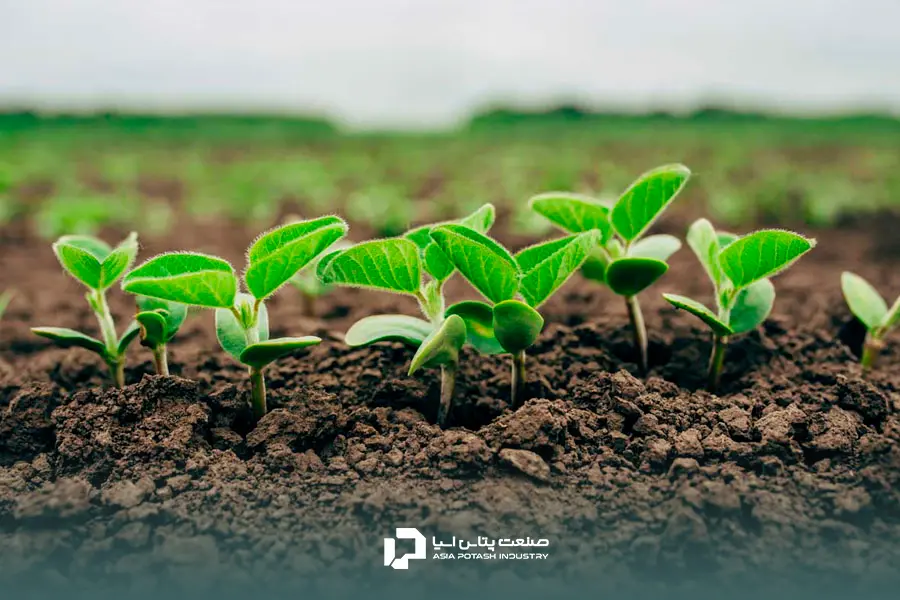
Potassium (K) is one of the 17 essential elements for plant growth and reproduction and, like nitrogen (N) and phosphorus (P), is considered a primary macronutrient. It plays a fundamental role in all stages of plant development and reproduction.
Effects of potassium deficiency in plants
Potassium deficiency reduces plant resistance to stresses such as drought, flooding, and extreme temperatures. It also weakens the plant’s ability to resist pests, pathogens, and nematodes.
Potassium helps maintain overall plant health by improving growing tissues and protecting against diseases.
Effects of potassium on crop quality
Potassium directly affects crop quality traits such as size, shape, color, and strength of seeds. It also improves fiber quality in crops like cotton and increases overall yield and quality.
Role of potassium in plant physiological processes
-
Increases root growth and drought tolerance
-
Activates more than 60 enzymes involved in plant growth
-
Participates in photosynthesis and food production
-
Plays a key role in sugar and starch transport
-
Enhances starch-rich seed production and protein content
-
Maintains cell turgor and prevents wilting
-
Increases resistance to diseases and environmental stresses
-
Improves nutrient and water transport in plants
-
Enhances photosynthesis and carbohydrate metabolism
-
Improves agricultural product quality
Potassium and nutrient balance in plants
For optimal potassium uptake, other nutrients must be present in sufficient amounts. Excess potassium may reduce magnesium availability, especially in sandy soils.
Conversely, in magnesium-rich soils, potassium deficiency may occur, particularly when phosphorus levels are high and potassium is low.
Forms of absorbable potassium
Potassium is mainly absorbed as K⁺ ions through plant roots and exists in different soil forms that affect its availability.
Potassium in plant growth
-
Exchangeable
-
Non-exchangeable
-
Soluble
-
Structural
These forms differ in their availability to plants. Due to leaching and soil erosion, potassium levels decrease over time, making structural potassium an important reserve source.
Potassium consumption in plants and its effect on soil
Potassium uptake in plants is higher than most nutrients except nitrogen. However, in potassium-rich soils, adding potassium fertilizers may not improve plant growth.
In such soils, potassium is mainly present in mineral structures and becomes available through mineral weathering and ion exchange.
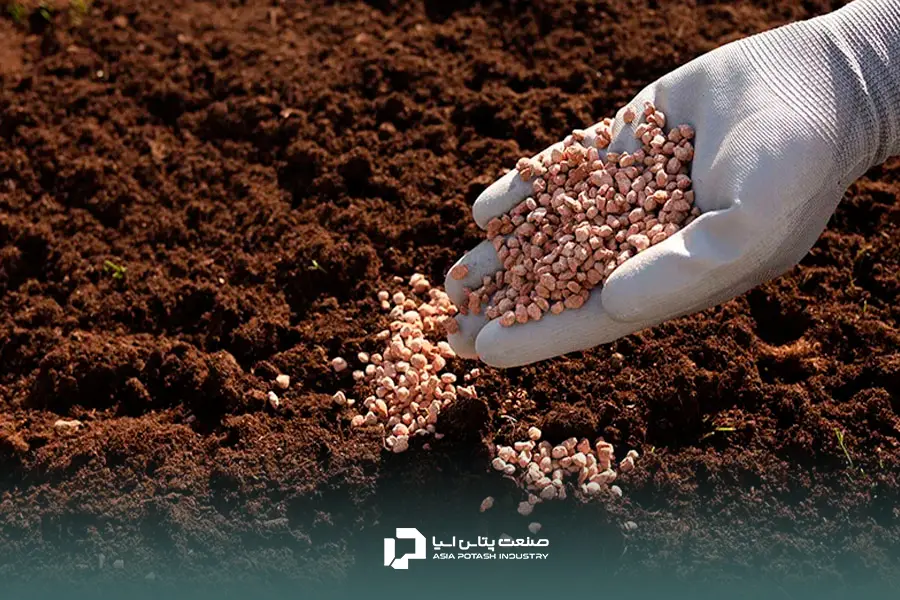
In low-moisture soils where leaching is minimal, potassium is well retained. These soils are usually neutral to alkaline and often do not require potassium or lime application for yield improvement.
However, in humid regions, potassium is continuously leached, requiring potassium fertilizer application. In organic soils, severe potassium deficiency is common due to low mineral content.
Mechanisms of potassium release under deficiency
When potassium deficiency occurs, microbial processes in the rhizosphere release potassium from minerals into plant-available forms.
These bacteria are typically heterotrophic and aerobic and release potassium through organic acids, proton excretion, ligand production, and extracellular polysaccharides.
Roles of potassium in plants
-
Activation of enzymes in meristematic tissues
Potassium activates enzymes in meristematic tissues essential for plant growth and development.
-
Regulation of water relations and stomata
It regulates stomatal opening and closing and maintains plant water balance.
-
Energy regulation in plants
Potassium influences energy metabolism processes in plants.
-
Nitrogen uptake and protein synthesis
It enhances nitrogen uptake and supports protein synthesis.
-
Starch formation
It plays an important role in starch biosynthesis.
-
Carbohydrate transport
It facilitates efficient transport of carbohydrates within the plant.
-
Plant growth regulation
Potassium deficiency leads to reduced plant growth, sometimes without visible symptoms in shoots and leaves.
-
Lodging resistance
It increases resistance to lodging, especially in crops like wheat.
-
Fruit quality improvement
It improves color and sugar content in fruits such as apples.
-
Resistance to pests and diseases
It enhances plant resistance to pests and diseases.
-
Nitrogen metabolism and protein synthesis
It participates in nitrogen metabolism and protein formation.
-
Transport of nutrients and water
It plays a key role in transporting water, nutrients, and sugars in plants.
-
Photosynthesis and carbohydrate metabolism
It influences photosynthesis and carbohydrate metabolism processes.
-
Improving agricultural product quality
It improves both yield and quality of agricultural products.
-
Improving fruit storage
It helps improve storage and shelf life of fruits.
Potassium’s effect on yield quality and performance
Potassium has a significant impact on improving crop quality and performance. Below are 10 key effects:
1. Root growth and drought resistance
Potassium strengthens root systems and improves drought tolerance.
2. Enzyme activation
It activates essential enzymes involved in plant metabolism.
3. Reduced water loss and wilting prevention
It maintains turgor pressure and prevents excessive water loss and wilting.
4. Photosynthesis support
It enhances photosynthesis and carbohydrate production.
5. Reduced respiration and energy loss
It reduces plant respiration and prevents energy loss.
6. Sugar and starch transport
It improves transport of sugars and starch throughout the plant.
7. Starch-rich seeds
Adequate potassium results in starch-rich seeds and better quality.
8. Increased protein content
It enhances protein synthesis in plant tissues.
9. Cellulose formation
It supports cellulose formation and reduces lodging risk.
10. Disease delay
It strengthens plant immunity and delays disease onset.
Potassium and plant resistance to biotic stress
-
Increased resistance to pests and diseases
Potassium increases plant resistance to pests and diseases. For example, in rice, it improves resistance to diseases such as brown spot and bacterial blight and pests such as stem borers, reducing pesticide use and improving yield quality.
-
Reduction of disease impacts
Potassium fertilizers increase resistance to bacterial, fungal, insect, mite, and nematode infections.
-
Improved yield under infection
Potassium significantly improves yield in infected plants—by 42% in fungal infections and up to 78% in viral infections.
-
Enzyme and metabolism regulation
It regulates enzyme activity, improves metabolic patterns, increases starch, protein, and cellulose production, and reduces low-molecular compounds that favor disease development.
-
Phenolic compound increase
It increases phenolic compounds, strengthening plant defense systems.
Potassium and drought stress
Water scarcity is a major limiting factor in arid and semi-arid regions. Drought stress reduces root growth and potassium mobility toward roots, limiting its availability.
Reduced potassium levels decrease drought resistance and disrupt essential physiological processes such as protein synthesis and stomatal regulation.
Symptoms of potassium deficiency
Potassium is highly mobile in plants, moving from older tissues to younger ones. Therefore, deficiency symptoms first appear in lower leaves and then spread upward.
A common symptom is yellowing (chlorosis) along leaf margins, which may lead to leaf drop in severe cases.
In broadleaf plants such as soybean or cotton, leaves may drop completely, leading to premature plant death. Deficient plants show slow growth, weak root systems, thin stems, and reduced development.
Perennial plants such as alfalfa and grass become more sensitive to cold under potassium deficiency.
Specific deficiency symptoms in crops
-
Potato: reduced tuber size and yield, chlorosis between veins and leaf edge burn.
-
Brassica crops: bluish-green leaves with interveinal chlorosis and burned leaf margins.
-
Tomato: woody stems, reduced growth, bluish-green leaves, yellow-orange marginal spots, and misshapen fruits.
Potassium and plant resistance to stress
Potassium enhances plant tolerance to abiotic stresses such as salinity, drought, heat, cold, and toxic metals by activating enzymes, strengthening cell walls, and regulating osmotic pressure.
-
Drought: Maintains water balance and reduces transpiration by regulating stomatal closure.
-
Salinity: Helps maintain osmotic balance and reduces ion toxicity.
-
High temperature: Improves heat tolerance through osmotic regulation and cellular stability.
Potassium in photosynthesis and crop quality
Potassium plays a vital role in photosynthesis by regulating stomata, light absorption, and carbohydrate transport. Deficiency reduces photosynthetic efficiency and leaf size.
This leads to lower yield and reduced crop quality.
Increasing yield and product quality
Potassium significantly improves yield through its role in metabolism and biosynthesis, enhancing crops such as wheat, rice, and maize.
For better yield and quality, using an effective potassium source is important. Potassium sulfate fertilizer, which provides both potassium and sulfur, is one of the best options. Products from Asia Potash Industry improve growth and increase plant resistance to environmental stresses.

Conclusion
Potassium is one of the most important essential nutrients for plants, playing a vital role in growth, development, and resistance to various stresses. Proper use of potassium fertilizers in agriculture can improve yield and product quality while increasing plant resistance to unfavorable environmental conditions.
Comments (0)
Be the first to comment!