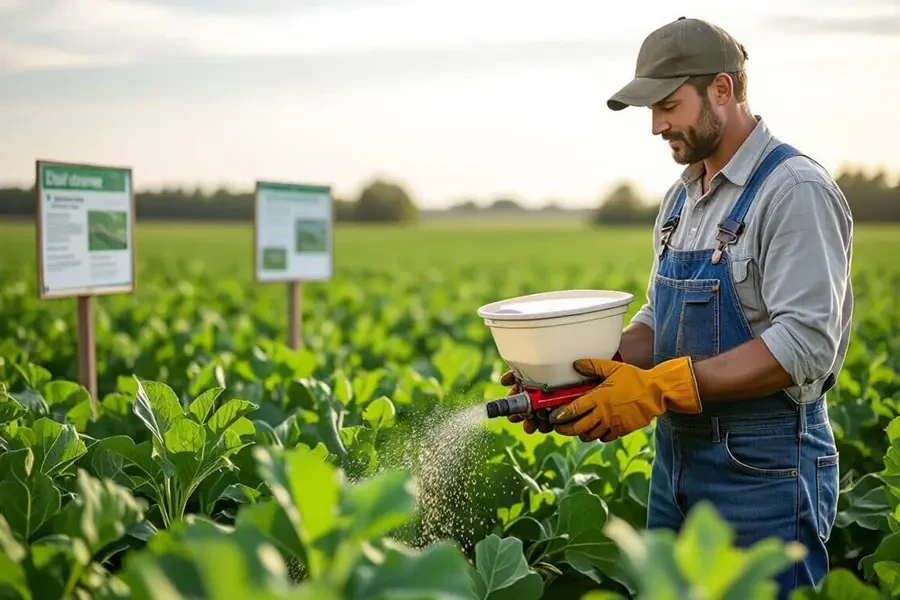
Sugar beet, this sweet and strategic root, is one of the main pillars of the sugar and sugar industry in the country. Every farmer who steps into the cultivation of this valuable crop pursues two major goals: achieving high tonnage per hectare and obtaining the highest possible sugar content.
These two goals, although sometimes seem contradictory, can be achieved with a golden key: a scientific and precise fertilization program!
Sugar beet fertilization is both an art and a science, and if not properly implemented, it not only wastes the investment and effort of an entire season but can also negatively affect soil quality in the long term.
In this comprehensive and specialized guide from Asia Potash Industry Agriculture Magazine, we aim to uncover all aspects and walk you step by step through the principles, details, and correct timing of sugar beet fertilization. From the importance of soil testing to introducing the best fertilizers for sugar beet growth and providing a practical sugar beet fertilization table, this article provides everything you need for a successful harvest. If you are ready to turn your farm into a model of high-quality sugar beet production, stay with us until the end.
Why is a Fertilization Program Important for Sugar Beet?
An optimized fertilization program is far more than just applying a few bags of fertilizer in the field. It is a strategic roadmap that follows the following goals:
-
Development of a strong root system: Creating a deep and branched root system that anchors the plant and provides a wide network for water and nutrient uptake.
-
Controlled vegetative growth: Producing healthy and efficient foliage for maximum photosynthesis, without excessive growth that reduces sugar accumulation.
-
Increase in sugar content and quality: Facilitating sucrose production and its transfer from leaves to the storage root.
-
Improved plant resistance: Strengthening the plant against pests, diseases, and environmental stresses such as drought, salinity, and temperature fluctuations.
In fact, sugar beet fertilization recommendations should act like a precise medical prescription tailored to the real needs of the plant and soil conditions.
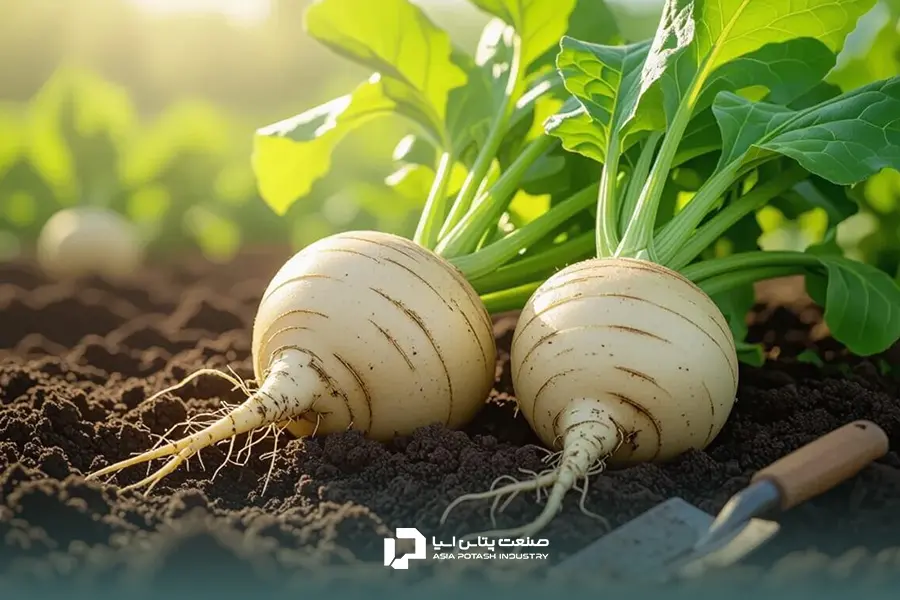
Key Nutrients in Sugar Beet Nutrition
To better understand sugar beet fertilization, we must first become familiar with the most important nutrients required by this crop:
Macronutrients
-
Nitrogen (N): The most important element during the vegetative growth phase. It is essential for leaf development and greenness, but excessive or late application reduces sugar content by promoting excessive leaf growth.
-
Phosphorus (P): Plays a key role in energy supply and root development, especially in early growth stages.
-
Potassium (K): The most critical element for sugar quality and accumulation. It regulates sugar transport from leaves to roots and improves drought resistance. Potassium deficiency leads to low sugar content and poor quality.
Micronutrients
Although required in small amounts, their absence can severely affect plant growth and nutrient uptake:
-
Boron (B): Its deficiency causes heart rot, necrosis, and internal root hollowing.
-
Manganese (Mn) and Iron (Fe): Essential for chlorophyll production and photosynthesis. Deficiency leads to interveinal chlorosis, especially in young leaves.
-
Zinc (Zn): Important for hormone synthesis and enzyme activity. Its deficiency causes stunted growth and reduced yield.
Four-Step Sugar Beet Fertilization Program
Fertilizers must be applied at the right time and in the correct manner. Below is a four-stage fertilization strategy:
Stage 1: Land Preparation (Foundation Stage)
This stage forms the foundation of the entire growing season.
Key actions:
-
Soil testing: The most critical step for identifying nutrient levels, pH, and salinity.
-
Soil pH adjustment: Optimal pH for sugar beet is 6.5–7.5. Lime is used for acidic soils and sulfur for alkaline soils.
-
Base fertilizers: Based on soil test results, phosphorus, most potassium, and organic manure should be incorporated into the soil.
Stage 2: Early Growth (4–8 Leaf Stage)
Seedling establishment and early root development occur in this stage.
Goal: Enhance root growth and plant establishment.
Recommended fertilizers:
-
First nitrogen application: Applied as banded fertilizer (urea or ammonium sulfate).
-
Starter phosphorus fertilizers: Improve root development and nutrient uptake.
Stage 3: Root Development (Up to 80 Days)
This is the peak vegetative growth phase and the beginning of sugar accumulation.
Goal: Maintain vegetative growth and initiate sugar storage.
Recommended fertilizers:
-
Second nitrogen application: Must be completed before 75–80 days; later application reduces sugar content.
-
Potassium application: Remaining potassium (e.g., potassium sulfate) should be applied in this stage.
-
Micronutrient foliar spray: Boron, manganese, and zinc application is highly recommended.
Read More: Potassium Sulfate application rate
Stage 4: Maturity and Sugar Storage
In this stage, all plant energy is directed toward root sugar accumulation.
Goal: Maximize sugar content and root weight.
Recommended fertilizers:
-
No nitrogen application: Nitrogen in this stage reduces sugar content.
-
Potassium dominance: Foliar application of high-potassium fertilizers (such as sulfate of potash) improves yield and sugar percentage.

Complete Sugar Beet Fertilization Table
| Growth Stage | Main Goal | Recommended Fertilizers | Key Notes |
| Pre-planting | Soil preparation and base nutrients | Triple superphosphate, potassium sulfate, sulfur, organic manure | Must be thoroughly mixed with soil via deep plowing |
| 4–8 leaf stage | Early growth and root development | Urea/ammonium sulfate, starter phosphorus fertilizers | Keep fertilizer away from seed to avoid damage |
| Root development | Root expansion and sugar initiation | Second nitrogen, potassium sulfate, micronutrient foliar sprays | Last safe stage for nitrogen application |
| Maturity stage | Increase sugar content and quality | No nitrogen, high-potassium foliar fertilizers | Repeated potassium sprays enhance sugar accumulation |
Asia Potash Industry: Supporting Higher Sugar Content
As emphasized throughout this guide, potassium plays a central role in producing high-quality sugar beet. Choosing a reliable potassium source is a direct investment in farm profitability. Asia Potash Industry, as one of the largest potassium sulfate producers, provides high-quality fertilizers that meet global standards.
Its potassium sulfate product, with high purity and very low chloride content, is one of the best options for sugar beet nutrition. It not only supplies potassium for higher sugar content but also improves nutrient uptake and soil conditions due to its sulfur content.
For more information, visit our Products page.
Final Remarks
Professional farmers understand that soil is a business partner, and success depends on understanding its needs. Sugar beet fertilization is a complex but manageable process that becomes highly effective when based on knowledge, testing, and proper inputs.
Do you have any challenges in sugar beet fertilization? Share your experiences and questions in the comments section.
Comments (0)
Be the first to comment!