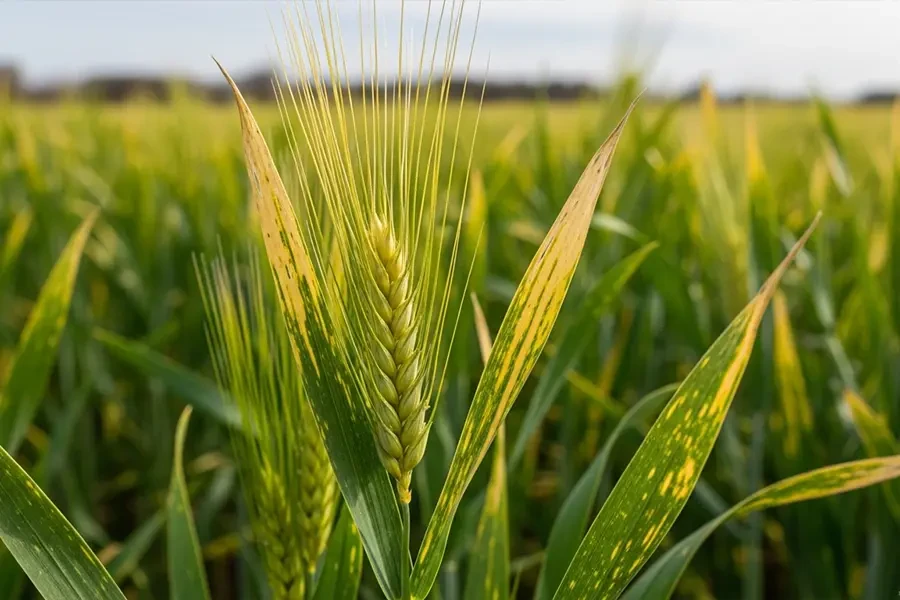
Sulfur is one of the essential elements for plant growth, playing a vital role in their biochemical and physiological processes. This element contributes to the synthesis of proteins, enzymes, and chlorophyll, and is effective in increasing the quality and quantity of agricultural products.
Given the characteristics of Iran’s soils, which are mostly alkaline and calcareous, the use of sulfur to improve soil conditions and increase crop productivity is highly important. Therefore, in this article, we examine the role of sulfur in plants and sustainable agriculture.
The Role of Sulfur in Agriculture and Plant Growth
Sulfur is a vital element for plants that plays a fundamental role in the growth and production of food products. This substance influences essential plant processes and is necessary for the proper growth of grains, fruits, various vegetables, and forage crops.
Sulfur is involved in protein synthesis and enzyme activity, and its deficiency can lead to a reduction in both yield quality and quantity. Sulfur is one of the most widely used nutrients in many agricultural products, and in some cases, its consumption is even higher than phosphorus.
Considering that most soils in the country are alkaline and calcareous, along with low organic matter content and high lime levels in irrigation water, the solubility of nutrients decreases and their absorption becomes significantly slower. In such conditions, plant nutrition with sulfur becomes particularly important and can play a key role in improving nutrient uptake.
Sulfur also plays an important role in strengthening plant resistance against stress and plant pests. This element is a structural component of many hormones and vitamins, including vitamin B1. In sulfate form, sulfur affects the water balance of both plant and soil.
Benefits of Using Sulfur in Agricultural and Orchard Lands
1. Soil acidification: Sulfur helps reduce soil pH and increases the solubility and absorption of nutrients such as iron, zinc, phosphorus, manganese, and other micronutrients. This reduces the need for phosphate and micronutrient fertilizers.
2. Improving irrigation water quality: Sulfur improves soil properties and reduces the negative effects of saline or alkaline irrigation water on plants.
3. Adjusting the pH of saline and alkaline soils: Sulfur can correct the pH of alkaline, calcareous, and saline soils and improve plant growth.
4. Correcting sulfur deficiency: Using sulfur helps eliminate sulfur deficiency in plants and increases crop yield.
5. Fungal control and soil disinfection: Sulfur, especially in granular and powder forms, has fungicidal properties against some fungal diseases and soil-borne pests.
6. Reducing nitrate accumulation: Sulfur application helps reduce nitrate accumulation in agricultural products, which is beneficial for human and animal health.
Sulfur is also present in organic compounds found in plants such as onions, garlic, and mustard, which give these plants their characteristic odor.

Effects of Sulfur Deficiency in Plants
Sulfur deficiency may appear with similar symptoms across different crops. This deficiency is often observed in sandy soils with low organic matter or soils prone to leaching. In some soils with high organic matter, the decomposition process is slow, which can also lead to sulfur deficiency.
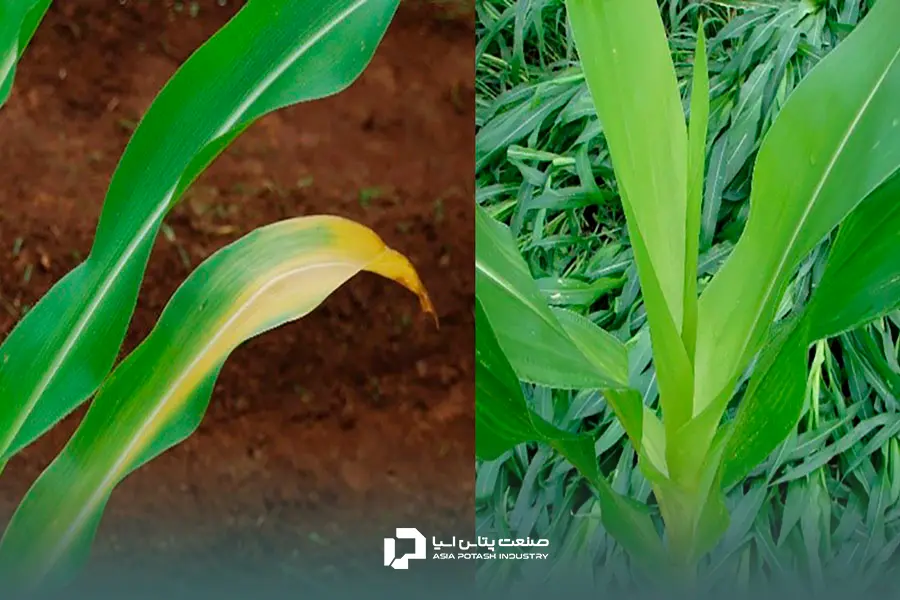
Sulfur is an immobile element; therefore, deficiency symptoms first appear in young leaves. In such conditions, plants become pale green or yellow, growth is reduced, and leaves become short, narrow, and thin. Veins gradually turn yellow as well. In addition, the number and size of leaves and the weight of fruits decrease.
Sulfur deficiency is similar to nitrogen deficiency, but sulfur deficiency symptoms appear first in younger leaves, and nitrogen application alone cannot improve plant health. In sulfur-deficient plants, non-protein nitrogen accumulates and nitrate levels increase, which may be dangerous for consuming animals and can cause poisoning.
Plants suffering from sulfur deficiency often have thin, short stems and slow growth. Nitrogen utilization decreases, resulting in incomplete fruit ripening. The nutritional value of forage crops also decreases because the N:S ratio becomes imbalanced.
Signs of Sulfur Deficiency in Plants
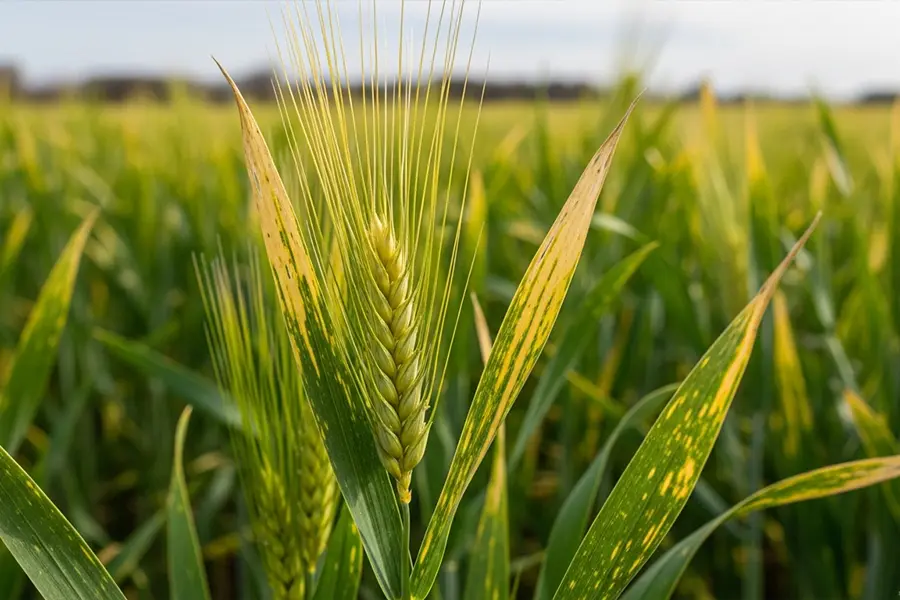
Another symptom of sulfur deficiency is the appearance of yellow stripes on leaves, which many farmers confuse with deficiencies of magnesium, manganese, and zinc. Below are the symptoms in different crops:
-
Cotton: Sulfur deficiency in cotton is seen as persistent yellowing of young leaves and reddening of leaf stalks, with older leaves also being affected.
-
Maize: In maize, interveinal yellowing appears mostly in younger and upper leaves. In later stages, redness may appear at the base of the stem and leaf margins.
-
Potato: In potato plants, sprouting of inner leaves along with significant yellowing of stems is observed. General yellowing of the entire plant becomes evident.
The Effect of Sulfur on Plant Health
The main roles of sulfur in plants include:
-
Participation in the formation of amino acids and proteins
-
Essential role in chlorophyll formation
-
Involvement in oil synthesis, especially in oil crops
-
Activity in nitrogen metabolism
Below are the effects of sulfur on the health of several crops:
-
Rice: Leaf sheath and then leaf blade gradually turn yellow. The number of tillers and plant size decrease, and panicles become shorter with fewer grains than normal plants.
-
Potato: Inner leaf buds begin to grow first, and noticeable yellowing appears in stems. Eventually, yellowing spreads throughout the entire plant.
-
Tomato: Plants become shorter and lighter green than normal. Yellowing is visible in different parts, and leaf stalks and stems may turn red.
-
Wheat: General yellowing occurs, often more pronounced between veins. Older leaves, however, remain green.
In addition to sulfur fertilizers,
the atmosphere is also considered one of the sources of sulfur for plants. Burning fossil fuels produces sulfur dioxide, which plants can absorb. Small amounts of sulfur also exist in the air as SO2 gas.
In industrial areas, sulfur dioxide in the air reacts with water vapor to form acid rain. Unlike agricultural sulfur compounds, this type of sulfur, due to its strong acidity, causes excessive soil pH reduction, damages plant tissues, and destroys beneficial soil microorganisms.
Therefore, acid rain is not only an unsuitable source of sulfur but also a harmful factor for vegetation and soil.
Conditions required for sulfur uptake by plants include:
– Sufficient organic matter
– Adequate moisture
– Temperature above 15°C
For sulfur to become available to plants, it must be converted into sulfate. This process is carried out by Thiobacillus bacteria in aerobic soils. Due to the reduction of organic matter in Iranian agricultural soils, this process occurs slowly; therefore, it is recommended to use sulfur together with animal manure.
The application rate of sulfur fertilizer should be based on soil testing and expert recommendation. Generally, about 300 kg per hectare is recommended depending on soil pH and irrigation water conditions. The critical sulfur level by turbidimetric method is 20 mg/kg for oil crops and 15 mg/kg for other crops.
In orchards, depending on tree type, sulfur fertilizer should be applied at 500 to 1000 grams per tree (depending on tree age) as a localized soil application (trench method).
Sulfur fertilizer, in addition to affecting soil pH and improving nutrient availability, also has fungicidal properties and helps disinfect the soil. It is used to control white root worm, powdery mildew, and various insects.
Sulfur has a synergistic effect with nitrogen, meaning it enhances the effectiveness of other organic materials in the soil. Sulfur deficiency is more common in leached and nutrient-poor soils.
Sulfur fertilizer helps increase agricultural yield. For sulfur to be converted into sulfate and utilized effectively, proper oxidation conditions must exist in the soil. The best time to apply sulfur is before planting, especially in saline and alkaline soils.
Types of Sulfur Fertilizers
Sulfur fertilizers are generally divided into four categories:
1. Sulfate-containing fertilizers
2. Elemental sulfur fertilizers
3. Mixed fertilizers containing both sulfate and elemental sulfur
4. Liquid sulfur fertilizers
The Best Sulfur Fertilizer for Improving Plant Growth and Quality
To improve crop growth and quality, we recommend using Potassium Sulfate as the main sulfur source. This product from Asia Potash Industry helps supply the sulfur required by plants and increases the solubility of nutrients such as potassium, magnesium, and phosphorus.
The use of Potassium Sulfate, especially in alkaline and calcareous soils common in Iran, can help correct soil pH and improve nutrient uptake.
Since sulfur deficiency can reduce crop yield and quality, this fertilizer not only prevents deficiency symptoms but also strengthens plant resistance to stress and pests. Therefore, using Potassium Sulfate is an effective solution for improving agricultural productivity and quality.
Final Remarks
Sulfur is a key element for plant growth and health, playing an important role in their biochemical and physiological processes. In addition to being essential for the formation of proteins, enzymes, and chlorophyll, it improves the quality of alkaline and calcareous soils and increases agricultural productivity.
Sulfur deficiency in plants can lead to reduced yield and quality. Therefore, the use of sulfur sources such as Potassium Sulfate is necessary to compensate for this deficiency and improve plant growth.
This fertilizer not only supplies sulfur but also helps improve soil pH and increases nutrient absorption, preventing problems caused by sulfur deficiency. Therefore, the use of Potassium Sulfate in agriculture is an effective way to enhance crop performance and quality.
Comments (0)
Be the first to comment!