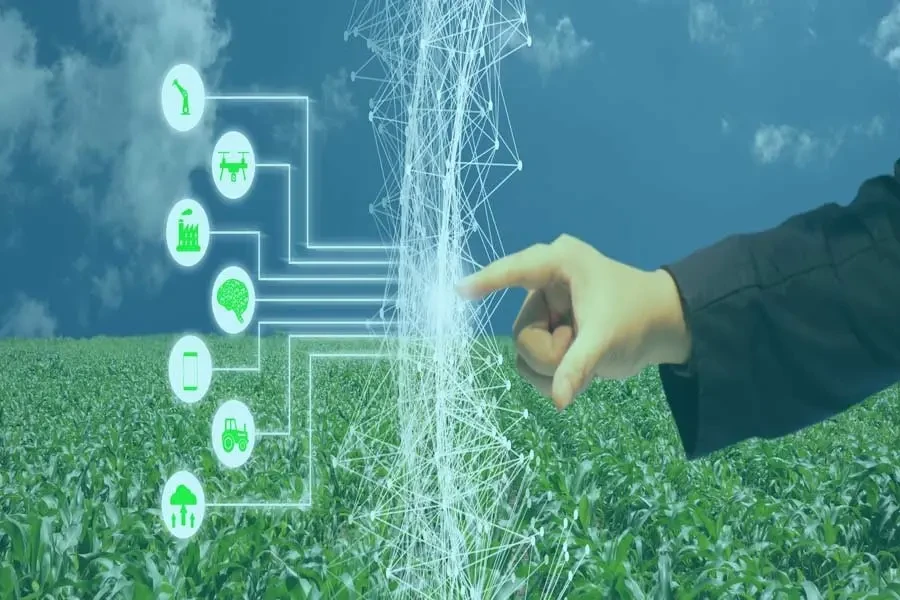
The Internet of Things (IoT) in agriculture refers to the use of smart tools and sensors that are connected to the internet and collect important information about farms and agricultural products. This technology enables farmers to carry out their operations more accurately, faster, and with less reliance on human labor.
In this article on the Internet of Things in agriculture, we answer the question of what IoT in agriculture is and what its applications and benefits are for farmers.
What is IoT in agriculture?
IoT in agriculture refers to the use of smart, internet-connected devices and sensors that help farmers manage agricultural processes in a more precise, convenient, intelligent, and automated way.
Devices such as soil moisture sensors, light and temperature sensors, surveillance cameras, drones, and smart machinery collect real-time data from the farm’s status.
This data is submitted online to management systems so that farmers can make the best decisions regarding irrigation, fertilization, pest control, and harvest timing.
Key applications of IoT in agriculture
The following items represent the main applications of IoT in agriculture:
1. Accurate weather forecasting
Sensors and smart devices provide real-time data on temperature, rainfall, and humidity, allowing farmers to plan accordingly and reduce potential losses.
2. Smart and optimized irrigation
IoT-based systems adjust irrigation timing and volume based on the actual needs of the soil and plants. This leads to water savings and improved crop quality.
3. Drone monitoring
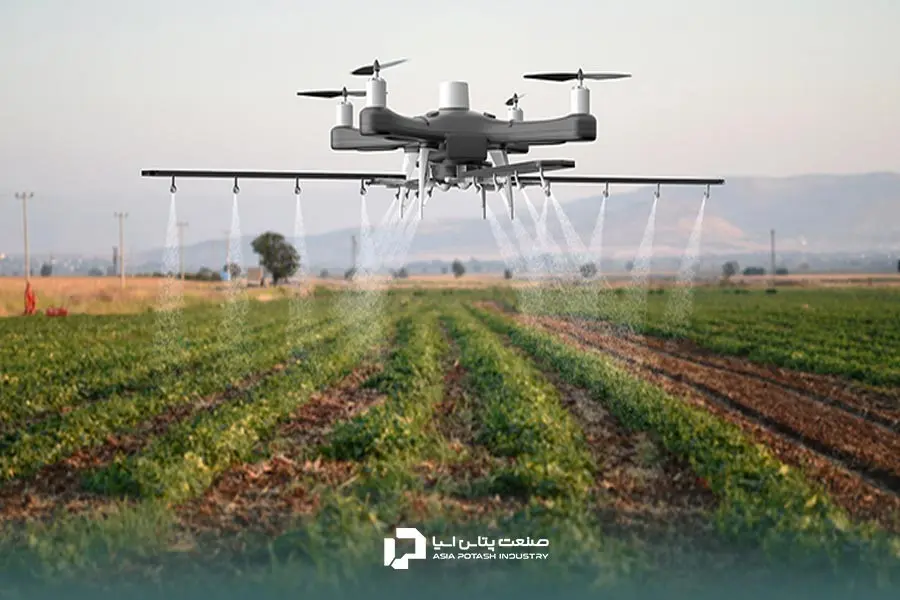
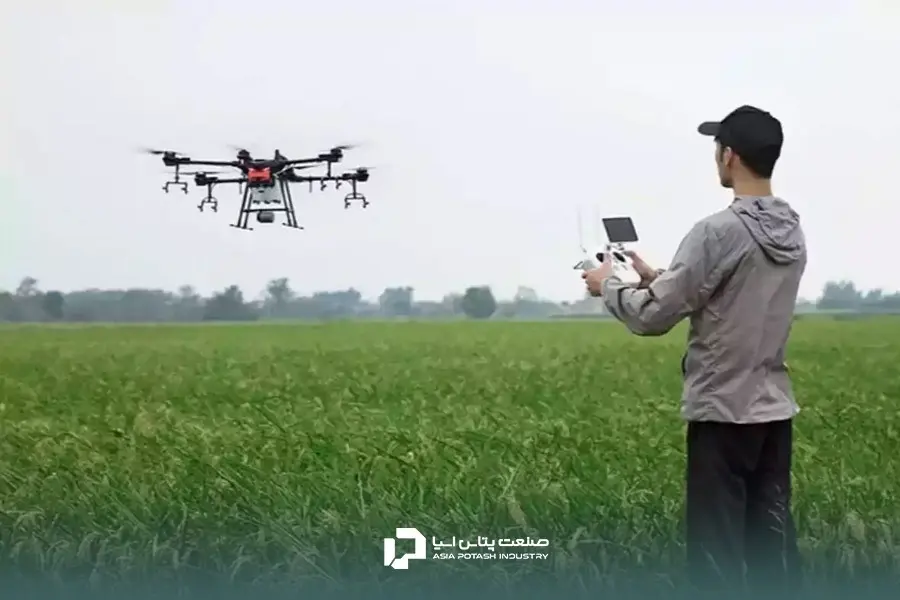
Drones equipped with cameras and various sensors have made farmers’ work easier. They can be used for spraying pesticides, detecting pests, and even planting crops, saving time and labor.
Today, drones (unmanned aerial vehicles) are used in many fields, and agriculture is one of the sectors that has significantly advanced thanks to this technology.
In agriculture, drones can perform several tasks, including:
- Examining soil quality, including fertility, erosion, and moisture levels
- Accurately and quickly spraying pesticides and nutrients on plants
- Supporting proper and timely irrigation of crops
- Collecting fast and accurate data from agricultural fields
- Real-time monitoring of crop health and growth
Using drones allows farmers to manage their fields more efficiently and harvest higher-quality products.
4. Asset and livestock tracking
With tracking devices, farmers can continuously monitor the health status of livestock and the location of machinery, preventing theft or misuse.
5. Data-driven agriculture
Instead of relying only on experience or guesswork, modern farmers use precise data and intelligent analysis to improve management and achieve better performance.
6. Smart greenhouses
IoT-based smart systems can automatically regulate greenhouse conditions such as temperature, humidity, and light, improving crop quality and reducing energy consumption.
Benefits of IoT in agriculture
- Increased yield and crop quality
- Reduced consumption of water, fertilizer, and other resources
- Cost and time savings
- Better prediction and control of agricultural problems
- Reduced human intervention and fewer operational errors
Smart agriculture: a transformative technology in farm management
Smart agriculture refers to the use of modern technologies and automated systems for planting, managing, and harvesting agricultural products.
This approach has two main components:
- Automated systems that use sensors, electric valves, and control devices to perform farm operations automatically.
- Artificial intelligence systems that help farmers make better decisions without requiring specialized equipment.
By combining tools such as soil and weather sensors, drones, and data analytics software, resources like water can be used more efficiently and crop quality can be improved. IoT and advanced communication technologies also enable precise remote monitoring of even large farms.
Smart agriculture reduces water and labor consumption, enables remote management, and can be applied everywhere—from large farms to home gardens. It contributes to better resource conservation and improved food security.
Supporting modern and sustainable agriculture
Asia Potash Industry, the largest Potassium Sulfate producer in Iran, has always supported farmers and stakeholders in this field with the aim of improving productivity and crop quality.
The potassium-based fertilizers produced by this company play a vital role in improving quality, increasing crop yield, and enhancing plant resistance to environmental stress.
By leveraging modern technology and adhering to global production standards, Asia Potash Industry has created a reliable platform to support modern agriculture and contribute to sustainable agricultural production.
Conclusion
IoT in agriculture has created a major transformation. With the use of sensors, drones, and smart devices, farming has become more precise, intelligent, and cost-efficient. This technology helps farmers produce healthier and higher-quality crops while also preserving natural resources and supporting agricultural sustainability.
Comments (0)
Be the first to comment!