
Alfalfa can be considered the richest source of forage for livestock, which makes it a strategic and highly important crop in agriculture. However, achieving maximum yield and quality in this valuable plant requires proper nutrition and precise fertilization planning.
Correct fertilization of alfalfa is the key factor in increasing both the quantity and quality of this product. Choosing the right type of fertilizer, accurate timing, and proper application methods are all factors that together can lead to optimal results for farmers.
But what is the best fertilizer for alfalfa? What does the scientific principle of fertilizing this crop include, and what points must be considered?
In this article from Asia Potash Industry Agricultural Magazine, we comprehensively address these questions. If you are also interested in learning more about the proper fertilization of this important crop, stay with us in this article.

Identifying Alfalfa Nutritional Needs: What Elements Does Alfalfa Require?
Alfalfa can be considered a highly demanding plant, and therefore it requires a wide range of nutrients to achieve maximum growth and quality. A successful fertilization program is based on a precise understanding of these needs and the role of each element in the plant’s life cycle.
Before selecting the strongest fertilizer for rapid alfalfa growth, you must first answer whether the essential nutrients required by alfalfa exist in the fertilizer you plan to use. Below are the elements that have the greatest impact on alfalfa.
Nitrogen (N): The Fuel for Stem and Leaf Growth
Although Rhizobium bacteria in the soil supply part of the plant’s nitrogen needs, the optimal use of this element—especially in the first year and after each cut—is the key to achieving explosive growth and excellent leaf production.
Phosphorus (P): The Architect of Strong Roots
Phosphorus is responsible for developing a strong root system, forming nitrogen-fixing nodules, and transferring energy within the plant. It provides a strong foundation for roots and ensures better water and nutrient uptake as well as resistance to stress.
Potassium (K): The Defense Shield Against Stress
This element plays a vital role in regulating osmotic pressure, activating enzymes, and increasing resistance to drought, cold stress, and diseases. Adequate potassium ensures final forage quality and long-term field productivity.
Boron (B): The Key to Pollination and Overall Health
Boron, as the most important micronutrient for alfalfa, plays a role in essential processes such as pollination, root nodule formation, and sugar transport. Its deficiency can seriously harm plant health and productivity.
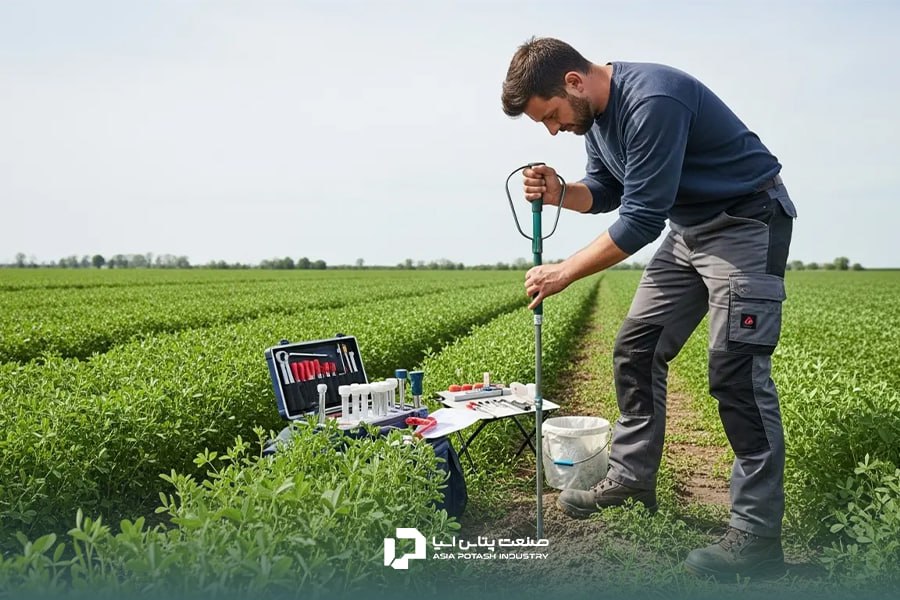
The First and Most Important Step: Soil Testing for Alfalfa
Alfalfa is a perennial plant with a deep root system that removes large amounts of nutrients from the soil each year. However, it is highly sensitive to elements such as potassium, boron, and molybdenum, and any deficiency can reduce the number of harvest cuts and lower forage quality. Therefore, even with the strongest fertilizer for rapid alfalfa growth, soil testing is essential to avoid unnecessary costs and achieve the best results.
Proper Sampling for Alfalfa Fields
Although general principles of soil testing apply in most cases, here we focus on alfalfa-specific sampling guidelines:
- Best timing: Two months before new planting or at the end of winter dormancy
- Sampling depth: 0–30 cm for main nutrients, 30–60 cm for nutrient movement analysis
- Number of samples: 15–20 points across the field depending on soil uniformity
Expert Interpretation of Soil Test Results
After laboratory analysis, interpreting results is crucial. Key alfalfa-related benchmarks include:
- Ideal pH: 6.5–7.5
- Potassium (K): at least 200 ppm for optimal performance
- Phosphorus (P): 25–30 ppm for proper establishment
- Boron (B): 1–2 ppm for flowering and growth
- Calcium (Ca): above 1000 ppm
- Magnesium (Mg): 150–200 ppm
Types of Fertilizers Required for Alfalfa
A successful fertilization program for alfalfa is a smart combination of different fertilizers, including chemical, organic (such as cow manure or even poultry manure), biological fertilizers, and growth stimulants. Each plays a specific role in ensuring soil fertility and plant productivity.
Chemical Fertilizers for Alfalfa
These fertilizers are quickly available to the plant and correct nutrient deficiencies efficiently. The strongest fertilizer for rapid alfalfa growth can often be found in this category.
- Urea (46% nitrogen): A concentrated nitrogen source for rapid stem and leaf growth, typically applied at 30–50 kg/ha after each cut.
- Triple Superphosphate (46% P₂O₅): A phosphorus source for root development; however, due to cadmium content, it is safer to use simple superphosphate instead.
- Potassium Sulfate (50% K₂O): An excellent potassium and sulfur source that increases plant resistance to stress.
Organic and Manure Fertilizers for Alfalfa
These fertilizers improve soil structure and increase microbial activity, but they also have limitations such as lack of precise nutrient balance and the need for large application volumes.
Cow and Sheep Manure for Alfalfa
Due to their balanced nutrient content, they are an ideal option. Application rate: 20–30 tons per hectare before planting. They must be fully decomposed; otherwise, they may introduce weed seeds and pests.
Poultry Manure for Alfalfa
A rich source of nitrogen (2–4%) and phosphorus. It must be fully composted to avoid root burn. Due to high salt content, it is not recommended in saline soils or established fields.
Biological Fertilizers
These fertilizers contain beneficial living organisms that naturally improve soil fertility.
Growth Stimulant Fertilizers for Alfalfa
These materials do not directly supply nutrients but improve nutrient uptake and plant resistance. When used in an integrated nutrient management program, they deliver the best results. They may include humic acid and seaweed extracts.
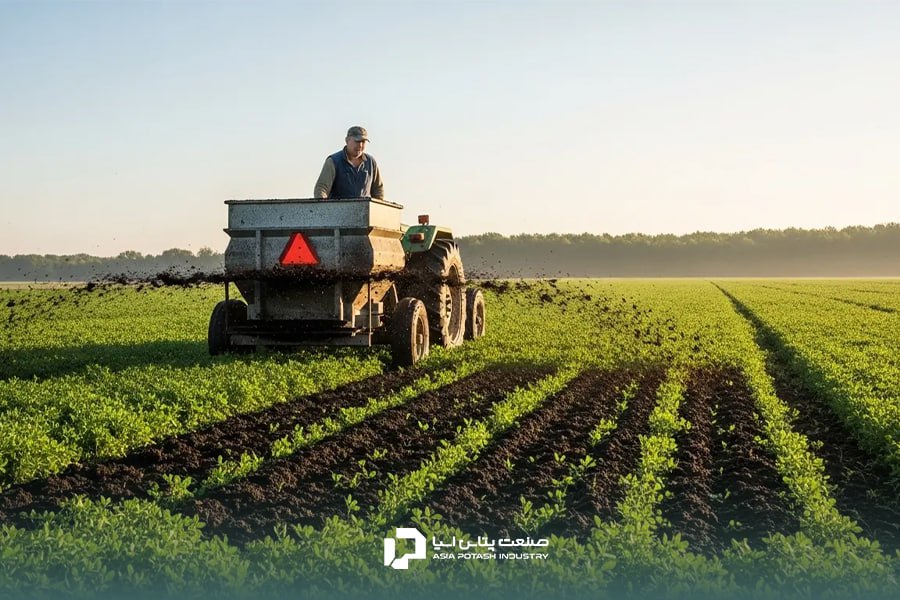
Best Time for Fertilizing Alfalfa
Proper timing is essential for optimal nutrient uptake and maximum yield. Even if you use the strongest fertilizer for rapid alfalfa growth, climate conditions and plant status must always be considered. Generally, the fertilization program is divided into four main stages:
Base Fertilization Before Planting
This stage forms the foundation of field success, aimed at long-term nutrient supply, improving soil structure, and preparing a proper root environment. Recommended fertilizers include decomposed manure, simple superphosphate, potassium sulfate, and sulfur.
Fertilization in the First Year of Establishment
Young plants require nutritional support for strong growth and deep root development. The goal is early growth enhancement and nodule formation. Fertilizers used include urea and growth stimulants such as humic acid.
Fertilization in Established Fields After First Harvest
This is the most important stage in perennial alfalfa nutrition, aimed at replenishing nutrients lost through harvesting and stimulating regrowth. Urea and potassium sulfate are commonly used.
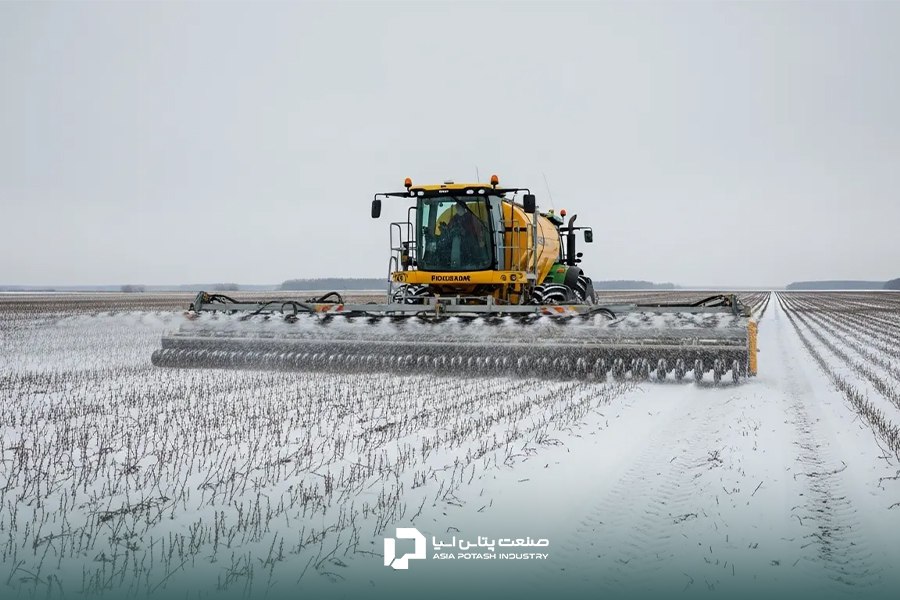
Winter Fertilization
This stage strengthens the plant for winter survival and prepares it for strong spring growth. Potassium and phosphorus fertilizers are typically used.
Environmental Factors Affecting Fertilization
Fertilization is not only about choosing the right fertilizer. Environmental conditions play a decisive role in success or failure.
Effects of Weather (Temperature and Rainfall)
Weather conditions directly affect timing and application methods. Low temperatures reduce Rhizobium activity and nutrient uptake, while high temperatures increase evapotranspiration and nutrient demand.
Heavy rainfall causes nutrient leaching (especially nitrogen), while drought increases soil salinity and may damage fertilizer efficiency.
Effects of Soil pH and Its Management
Soil acidity directly affects nutrient availability. For optimal use of the strongest fertilizer for alfalfa growth, proper pH balance is essential.
- Alfalfa performs best in neutral soils (pH 6.5–7.5).
- In acidic soils (below pH 6), nutrients such as phosphorus, calcium, and molybdenum become less available; liming is required.
- In alkaline soils, micronutrients such as iron, manganese, and zinc become less available; sulfur or iron sulfate can help correct this.
Effects of Soil Texture
Soil acts not only as a growth medium but also as a reservoir of water and nutrients. Understanding soil type helps optimize fertilization:
- Sandy soils: poor nutrient retention; organic fertilizers such as poultry manure are beneficial.
- Clay soils: high density; pre-plant fertilization is recommended.
- Loamy soils: ideal balance and best performance for alfalfa cultivation.
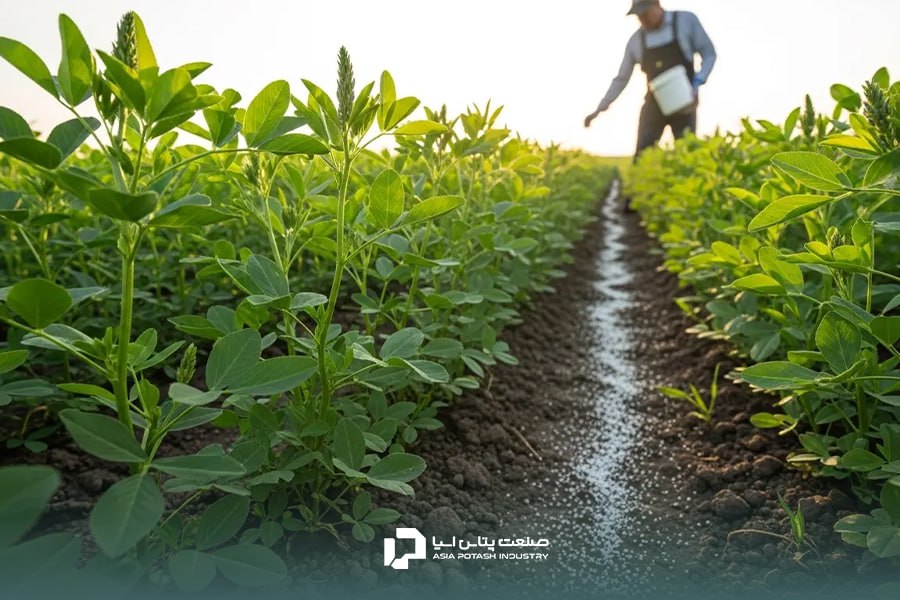
Step-by-Step Fertilization Program
A detailed fertilization schedule from planting to final harvest is provided below. Adjustments should be made based on soil tests and field conditions.
| Stage | Timing | Fertilizer Type | Application Rate | Key Notes |
| Soil preparation | 2–3 weeks before planting | Decomposed manure | 20,000–30,000 | Must be well mixed with soil |
| Soil preparation | 2–3 weeks before planting | Simple superphosphate | 100–150 | For root development |
| Soil preparation | 2–3 weeks before planting | Potassium Sulfate | 150–250 | Improves drought resistance |
| Starter fertilizer | 4–6 weeks after emergence | Urea | 30–50 | Promotes early growth |
| After first cut | 2–3 days after harvest | Urea | 30–50 | With irrigation |
| After first cut | 2–3 days after harvest | Potassium Sulfate | 50–70 | Replaces lost potassium |
| After second cut | 2–3 days after harvest | Urea | 30–50 | Stimulates regrowth |
| After second cut | 2–3 days after harvest | Humic acid | 10–May | Improves nutrient uptake |
| After third cut | 2–3 days after harvest | Urea | 20–40 | Lower rate due to reduced growth |
| After third cut | 2–3 days after harvest | Potassium Sulfate | 50–70 | Maintains forage quality |
| Winter fertilization | Late autumn | Potassium Sulfate | 80–120 | Cold resistance |
| Winter fertilization | Late autumn | Superphosphate | 50–80 | Root strengthening for next year |
Common Mistakes in Alfalfa Fertilization
Improper fertilization can lead to significant losses. Below are common mistakes:
Fertilization Without Soil Testing
Applying fertilizers without knowing soil status leads to waste and imbalance. Soil testing should be done at least every three years.
Excess Nitrogen Use
Overuse of nitrogen reduces nitrogen-fixing bacteria activity, increases weeds, and encourages pests.
Ignoring Boron
Lack of boron can stop shoot growth and reduce forage quality.
Incorrect Timing
Fertilizer needs vary by season; summer and winter applications differ significantly.
Improper Mixing of Fertilizers
Mixing fertilizers without knowledge can cause chemical reactions that reduce efficiency or damage crops.
Ignoring Soil pH
Without proper pH balance, nutrients become unavailable and microbial activity decreases.
Using Uncomposted Manure
Raw manure may burn roots or release ammonia.
Asia Potash Industry: A Leader in Alfalfa Fertilization Solutions
Asia Potash Industry is a leading producer of potassium fertilizers in Iran. Its high-purity, low-chlorine potassium sulfate products provide an ideal solution for alfalfa nutrition, improving plant strength, stress resistance, and forage quality.
Conclusion
Proper alfalfa fertilization is the art of balancing plant nutritional needs with soil capacity. Soil testing, correct fertilizer selection, precise timing, and proper application methods together ensure optimal yield and long-term soil fertility.
Following a structured fertilization program guarantees both high-quality forage production and sustainable agricultural profitability.
FAQ
What is the best fertilizer for alfalfa in the first year?
A combination of decomposed manure (20 tons/ha), simple superphosphate, potassium sulfate, and urea as starter fertilizer.
How much manure should be used for alfalfa?
Up to 30 tons per hectare of fully decomposed manure before planting.
What is the difference between fertilization in acidic and alkaline soils?
Use lime in acidic soils and sulfur in alkaline soils. Focus more on phosphorus and calcium in acidic soils and micronutrients in alkaline soils.
What are the effects of excess urea on alfalfa?
It reduces nitrogen-fixing bacteria activity and increases weed growth.
Comments (0)
Be the first to comment!