
Measuring soil pH is highly important in agriculture and gardening, because this small but critical number indicates how acidic or alkaline the soil is and directly affects the ability of plants to absorb nutrients.
The level of soil acidity or alkalinity can be determined with a simple test. In the following, we review various methods for measuring soil pH so that farmers and gardening enthusiasts can gain a clearer picture of the Status of their land. If you want to learn more about soil nutrition and its proper management, taking a look at the Asia Potash Industry Agriculture Magazine can be helpful.
Why is soil pH important?
Soil pH directly determines how much a plant can absorb nutrients available in the soil. In soils where pH is too high or too low, plant roots lose the ability to absorb nutrients, and even if the best fertilizers are added, they will not be effective.
Therefore, paying attention to this indicator is essential for maintaining and growing healthy plants. If after measuring soil pH you find that it is outside the suitable range, you should take steps to correct it. To address this issue, read the article Soil pH Adjustment.
Tools required for measuring soil pH
Before starting the measurement, it is necessary to become familiar with the proper tools and equipment. Choosing the right tools can significantly increase accuracy and ease of work.
Indicator papers and color kits
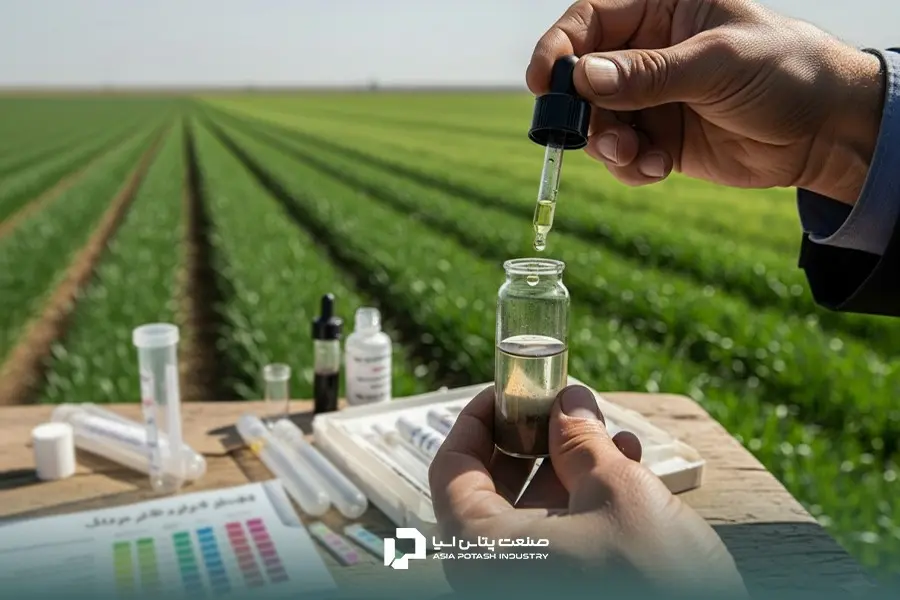
Indicator papers or color kits are simple and quick methods for measuring pH. To use them, a small amount of soil is mixed with distilled water, and the paper is dipped into the solution. By observing the color change and comparing it with the kit’s color chart, the soil pH is determined.
Field kits and home test kits
Field kits include ready-made chemical materials that can be used easily on-site without the need for a laboratory. These kits usually contain a reactive solution or powder that is mixed with soil and changes color. Some kits are even designed to show an approximate pH value without special instruments.
Home methods such as using vinegar, baking soda, or red cabbage juice also fall into this category and are useful for basic learning and experimentation, although they are less scientifically accurate.
Salt solutions (such as CaCl₂) in laboratories
For precise soil pH measurement in laboratories, soil is usually mixed with salt solutions such as CaCl₂. This process stabilizes ions and produces reliable and consistent results.
Standard soil-to-solution ratios are followed, and after mixing, pH is determined using a pH meter. This method is mainly recommended for scientific research or when highly accurate soil status determination is required.
Digital pH meters
Digital pH meters are among the most common tools for accurate soil pH measurement. These devices use sensitive electrodes to detect hydrogen ion activity and display the pH value on a screen.
Before use, the electrode must be calibrated with buffer solutions to ensure accurate results. Another important point is that after each use, the electrode should be cleaned and dried to extend the device’s lifespan.

Key points for improving accuracy in soil pH measurement
Accuracy in soil pH measurement depends not only on having good tools but also on the procedure and attention to technical details. Even small errors at this stage can lead to incorrect land management decisions. Also, by understanding whether the soil is acidic or alkaline, you can prevent over-fertilization of plants. Therefore, observing the following points will improve accuracy and reliability:
1. Importance of device calibration
Calibration is one of the most important steps. Digital devices, like any measuring instruments, gradually develop errors over time. Using standard buffer solutions (usually pH 4, 7, and 10) helps recalibrate the device and produce more accurate readings.
2. Temperature and moisture conditions of the sample
Temperature and moisture are influential factors that are often overlooked. If the soil sample is too wet or muddy, the result will be inaccurate. Similarly, very high or very low temperatures affect electrode performance and chemical reactions in the solution. The best practice is to slightly dry the soil and perform the test at room temperature using fresh distilled water.
3. Repetition and averaging of measurements
A single test can never represent the true status of the soil. Soils naturally vary across a field; a point near an irrigation source may have a different pH than a drier area.
Therefore, samples should be taken from multiple parts of the field, each tested separately, and the average recorded.
Cleaning tools and preventing contamination
A common error in measurement is leaving soil particles or chemicals on the electrode or sample container. These residues can transfer to the next test and affect results. Therefore, after each measurement, electrodes and containers must be washed with distilled water.
Choosing proper water for soil solution preparation
Some people use tap water or well water instead of distilled water. This is one of the major mistakes in soil pH measurement because non-pure water already has its own pH and distorts the results.
Using distilled or deionized water ensures that only soil pH is measured, not a mixture of soil and water impurities.
Step-by-step soil pH measurement process
Accurate soil pH measurement requires following a defined procedure. By correctly performing each step, reliable and repeatable results can be obtained. This section guides you from sampling to recording results.
Proper soil sampling principles
Proper sampling is the foundation of accurate measurement. It is best to take samples from different parts of the field and mix them to obtain a representative sample. Sampling depth is usually 0–20 cm, but may vary depending on crop type and agricultural purpose.
The sample should be as dry as possible and free of large stones and debris to ensure more accurate measurement.
Preparing the soil-water solution (ratios and methods)
For measurement, a portion of soil is placed in a container and mixed with distilled water to form a muddy solution. The common soil-to-water ratio is usually 1:1 or 1:2 depending on the protocol.
Before measuring, allow the particles to settle so the pH meter or indicator paper can detect an accurate value.
Using a pH meter and recording results
After preparing the solution, insert the pH meter electrode into it. Wait until the displayed value stabilizes. Record the number and repeat the measurement at least twice for accuracy.
If using digital devices, always calibrate the electrode with buffer solution before each measurement.
Using simple methods like paper or home solutions
If you want to measure soil pH without advanced equipment, you can use indicator papers, color solutions, or traditional methods such as vinegar, baking soda, and red cabbage juice.
Mix soil with an appropriate amount of water and place the indicator in it. A color change indicates acidity or alkalinity. Then compare the color with the kit chart to estimate soil pH.
Soil pH ranges:
Comments (0)
Be the first to comment!