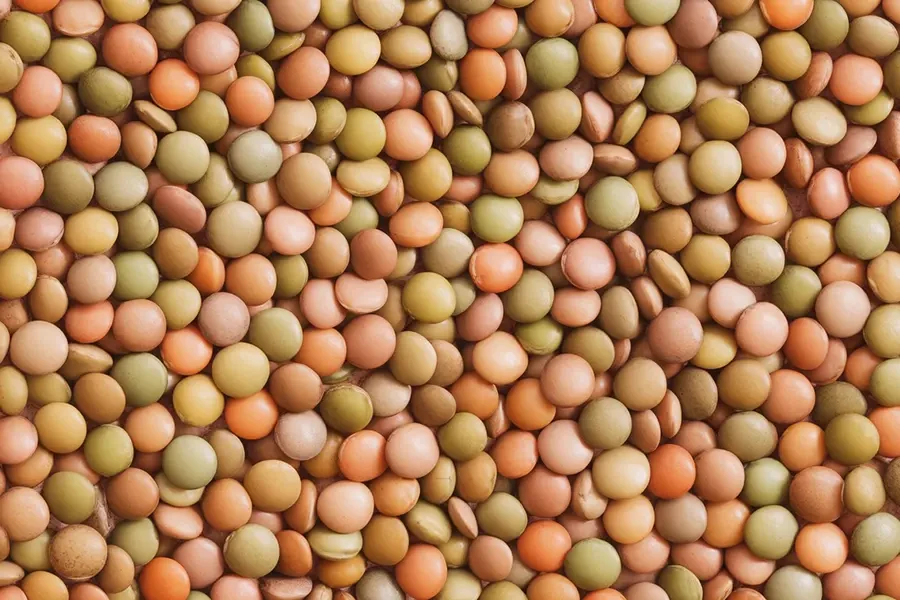
عدس، این دانه مغذی و ارزشمند، یکی از مهمترین Products در الگوی کشت بسیاری از مناطق ایران، بهویژه در کشت دیم است. با این حال، بسیاری از کشاورزان بهدلیل عدم استفاده از یک برنامه غذایی علمی، نمیتوانند به بیشترین برداشت ممکن این محصول دست پیدا کنند.
کوددهی عدس یک فرایند تخصصی است که با کشاورزی سنتی و استفاده از توصیههای عمومی فاصله زیادی دارد.
در این مقاله جامع از Asia potash industry agricultural magazineWe are going to show you how by identifying the real needs of the plant and choosing the best fertilizer for lentils, you can reduce your costs and increase the yield and quality of your product significantly; Stay with us.
Nutritional principles of lentils
The first and most important point in lentil fertilization is to understand its unique biological characteristics. Lentils belong to the legume family (plant seeds such as peas, beans, mung beans, lentils and beans) and can take and fix nitrogen directly from the atmosphere with the help of symbiotic bacteria from the genus Rhizobium. This means that the plant has its own natural fertilizer plant in its roots, which causes the “nitrogen paradox”.
The nitrogen paradox occurs when nitrogen fertilizers backfire. Lentils need nitrogen to grow, but excessive use of nitrogen fertilizers makes the plant sluggish and stops the natural nitrogen fixation process. Therefore, the secret of basic lentil nutrition is to provide a sufficient amount of nitrogen for the initial growth (starter dose) in such a way that the plant does not become lazy and its natural nitrogen factory does not stop working.
Essential nutrients of lentils: What do lentils need to grow?
To choose the right fertilizer for lentils, you must first familiarize yourself with the nutrients required for the growth of this plant:
- Nitrogen (N): As mentioned, this element is necessary to start the growth and establishment of seedlings. Nitrogen will be enough to start the growth of lentils at the rate of 20 to 30 kg per hectare.
- Phosphorus (P): Phosphorus plays a vital role in the development of a strong root system, energy transfer and early plant establishment. A stronger root means better absorption of water and nutrients, especially in rainy conditions; So farmers should take its provision very seriously.
- Potassium (K): Potassium manages vital processes such as water regulation in the plant, sugar transfer to the seeds, seed filling and increasing the plant’s resistance to drought, cold and diseases. Potassium deficiency means small seeds and low yield. To learn more about the effects of this element of the article The role of potassium in plants read the
- Secondary and low consumption elements: Sulfur (S) is critical for protein production, calcium (Ca) for cell wall strength, and micronutrients such as zinc (Zn), boron (B), and iron (Fe) for flowering, successful fertilization, and photosynthesis.
💡 Read more: What is potassium fertilizer?
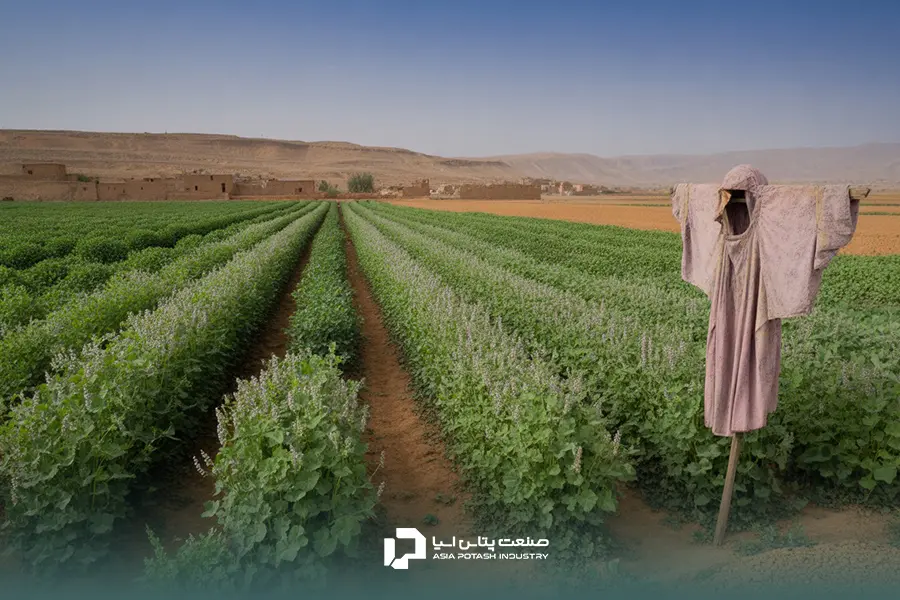
Types of fertilizers for lentils: which one to choose?
Now that we know the needs of the lentil plant, let’s move on Types of agricultural fertilizers We go for lentils. A successful program is a smart combination of the following three groups of fertilizers:
1. Biological fertilizers for lentils
The nutrition of the lentil plant is mostly based on the activity of small and useful organisms that live in the soil; The most important of them are rhizobium bacteria. In order for these bacteria to accompany the seed, they use a product called inoculant.
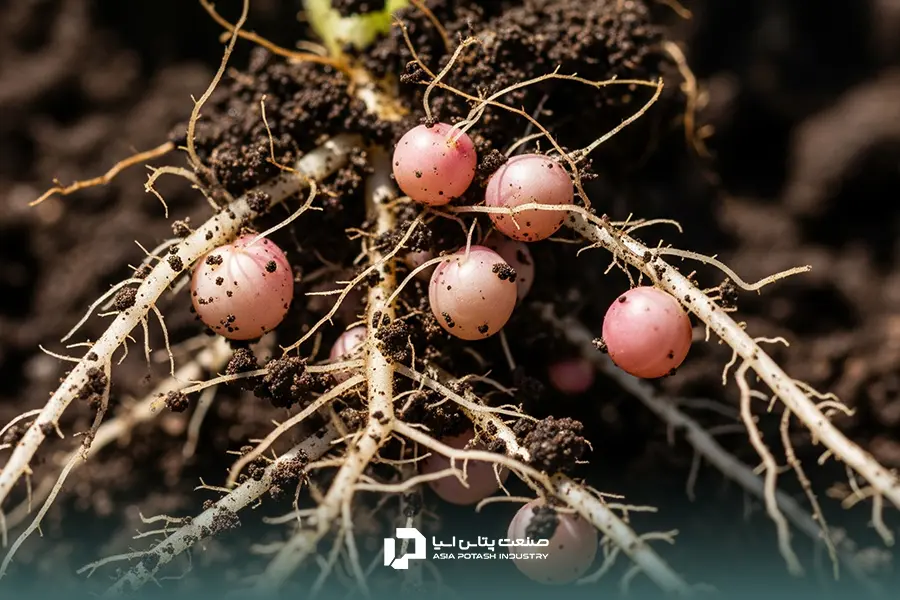
When the seed germinates, the rhizobium enters the root and forms small structures called root nodules. Inside these nodes, an important thing happens: the nitrogen in the air, which the plant cannot normally use, is converted into an absorbable form. For this reason, this process is called “natural nitrogen production factory”. By doing this, lentils provide most of the nitrogen they need by themselves, and dependence on chemical fertilizers is reduced.
In addition to rhizobiums, there is another group of beneficial microorganisms called phosphate solubilizing bacteria (PSB). These bacteria can release phosphorus locked in calcareous soils so that the plant can absorb it more easily. As a result, the efficiency of phosphate fertilizers increases.
In general, the use of biological fertilizers makes the soil more alive, plant nutrition becomes more stable and the cost of chemical fertilizers is reduced.
2. Organic fertilizers for lentils
Organic fertilizers, in addition to providing the nutrients needed by lentils, also help to maintain the health of the soil. Common examples of these fertilizers include well-rotted manure and compost.
When these materials are added to the soil, the amount of organic matter in the soil increases, and this makes the soil more capable of retaining water and nutrients; A point that is very vital in the conditions of rainfed farming.
Another important feature of organic fertilizers is that they gradually and continuously provide nutrients to the plant. Therefore, lentils always have a stable source of nutrition during the growing season, and at the same time, beneficial soil microorganisms also use these materials.
These fertilizers also contain valuable compounds such as humic and fulvic acids, which are called “biostimulants” or biostimulants.
These compounds are not directly plant food, but they make the entire nutritional system more efficient by improving the soil structure, increasing the absorption of micronutrients and stimulating root growth. The final result of this process is more productivity, better use of water and fertilizer and increased yield of lentils.
3. Chemical fertilizers for lentils
Fertilizers should only be used to address deficiencies identified in a soil test, not as a primary source of nutrition. Because the basis of lentil nutrition is based on biological activities and symbiosis with rhizobium.
For nitrogen, only a small amount is recommended as a starter dose at the beginning of cultivation. In this context, using ammonium sulfate fertilizer is better than urea; Because in addition to nitrogen, it also provides sulfur and is more stable in the soil.
Phosphorus, which is also called “root architect”, must be placed deep in the root zone before planting and along with plowing; Because it has little movement in the soil and if it is used late, its efficiency will decrease.
For potassium, which plays an important role in the quality and weight of lentil seeds, the choice of source is very important. The best option is potassium sulfate; Because it has a low amount of chlorine, it does not create saltiness, and in addition to potassium, it also provides the sulfur needed to make protein. in contrast, Buy potassium chloride Due to having a lot of chlorine, it can cause poisoning for this sensitive plant.
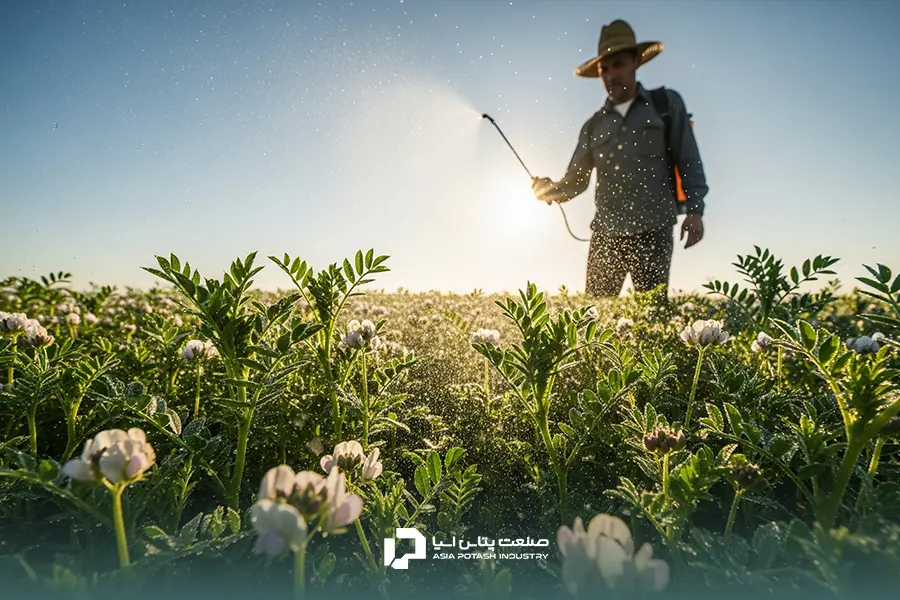
Finally, complete NPK fertilizers and micronutrients play an effective role in specific growth stages, especially through foliar application. For example, foliar spraying of compounds containing boron and zinc before flowering prevents flower drop, and foliar spraying of potassium sulfate during the seed filling stage helps to improve yield. Also, the use of micronutrients in the form of chelate ensures their absorption in alkaline soils.
💡 Learn more:
Rock potassium sulfate It is one of the best potassium fertilizers for plants sensitive to salinity. This product, which is supplied by Sanat Potas Asia, the largest manufacturer of stone potassium sulfate in Iran, provides the sulfur needed by the plant in addition to potassium.
The four stages of lentil fertilization
A successful lentil fertilizer program is a dynamic program that provides the right food at each stage of the plant’s growth. In the following, we describe these four key steps.
Step 1: Land preparation and planting (basic fertilization)
The main goal in this phase is to modify the soil structure and enrich it with elements that must be available to the roots from the very beginning so that the lentil plant starts growing strongly. Actions in this stage are carried out integrally before planting.
First, spread organic fertilizers such as fully decomposed animal manure on the ground according to the soil’s needs (usually 10 to 20 tons per hectare for irrigated cultivation and 5 to 10 tons for rainfed). At the same time, add all the required amount of phosphorus and potassium fertilizers; Because these elements move slowly in the soil and must be present in the root zone from the beginning of the season. Potassium sulfate and triple superphosphate are suitable options.
Next, a limited dose of nitrogen, preferably from the source of ammonium sulfate, is used to provide the initial energy of the seedling. After spreading all these fertilizers, mix them well with the soil by plowing. The most vital action at the end of this stage and just before planting is to inoculate the seeds with Rhizobium bacteria to activate the plant’s natural nitrogen production plant.
Stage 2: Early vegetative growth (from 2 leaves to before flowering)
At this stage, the young lentil seedling is establishing, developing roots and increasing its leaf surface. The main goal is to support this process to make a strong and healthy plant.
In hydroponics, if you feel that plant growth is slow or seedlings are weak, a foliar application with a fertilizer that is high in phosphorus (such as 10-52-10) can be an excellent growth stimulator.
Also, the use of humic acid through irrigation helps the rooting of lentils. But in rainfed farming, any fertilizer action depends on the presence of sufficient moisture in the soil. If you have had good rainfall and the plant is weak, a foliar application with a balanced fertilizer (such as 20-20-20) will help maintain the root system.
Step 3: Before flowering and full flowering
This step is very sensitive and decisive because the number of pods is determined here. Our goal at this point is to provide the necessary energy for flowering and prevent the flowers from falling through a successful fertilization. To achieve this goal, the main focus should be on micronutrients.
An essential foliar spray containing boron (B) and zinc (Zn) elements at this time has a great effect on preventing flower drop. At the same time, the plant’s need for potassium is increasing, so using a balanced or higher potassium fertilizer (such as 12-12-36) as a foliar spray provides the necessary energy to successfully pass this stressful stage.
Step 4: Forming the pod and filling the seed
This is the final stage and actually the profitable stage of the farm. All the energy and nutrients that the plant has stored so far must be transferred to the seeds to maximize their weight. In this phase, potassium plays the first role. In hydroponics, the best solution is to use high potassium fertilizers such as potassium sulfate through the irrigation system or frequent foliar spraying. This will help the grains to fill and become heavy.
In the conditions of rainfed cultivation, where absorption from the roots is limited due to low humidity, foliar spraying with these high potassium fertilizers is the only effective solution. This method provides potassium directly to the plant through the leaves and makes a significant difference in the final weight of the product.
Asia’s potash industry; The largest producer of high potassium fertilizer in Iran
Lentil fertilization table (irrigated and dry cultivation)
|
Growth stage |
Agricultural purpose |
Proposed program for hydroponics |
A proposed program for rainfed farming (with a focus on water efficiency) |
|
before planting |
Establishment of root growth and development |
Animal manure (10-20 tons) + complete phosphorus (50 kg) + complete potassium + nitrogen starter (20-30 kg) + seed inoculation with rhizobium |
Animal manure (5-10 tons) + complete phosphorus (15-30 kg) + nitrogen starter (20 kg) + seed inoculation with rhizobium |
|
vegetative growth (2 to 6 leaves) |
Seedling strengthening |
Foliar spraying of high phosphorus fertilizer (such as 10-52-10) |
If needed and there is moisture, balanced NPK foliar spraying |
|
Before flowering |
Support for flowering and successful conception |
Foliar spraying of fertilizer containing boron (B) and zinc (Zn) + high potassium fertilizer (such as 12-12-36) |
Boron and zinc foliar spraying (very vital) |
|
Seed filling |
Maximize seed weight and quality |
Irrigation or foliar spraying with high potassium fertilizers (such as potassium sulfate) |
Foliar spraying with high potassium fertilizers (absorption through leaves) |
Golden tips for fertilizing lentils
- Never fertilize without a soil test. This is like driving with your eyes closed.
- Do not overdo nitrogen consumption. Let the lentil plant do its natural work.
- Yellowness in old leaves is a sign of lack of mobile elements (nitrogen, potassium) and yellowness in young leaves is a sign of lack of non-mobile elements (sulfur, iron).
- In rainfed cultivation, foliar spraying is the best method. This method delivers nutrients directly to the plant without the need for soil moisture.
💡 Read more: What is the role of sulfur in plants?
The vital role of potassium and a special solution for the Asian potash industry
As you saw in the fertilizer application, potassium plays a key role in the filling of lentil seeds. This element is responsible for transferring energy and sugars from leaves to seeds. Without enough potassium, the seeds remain hollow, small and of poor quality, and the plant weakens against environmental stress.
Asian potash industry As one of the country’s leading companies in the field of chemical products production, realizing this vital need, produces and supplies potassium sulfate fertilizer with the highest degree of purity and complete solubility.
Potassium sulfate fertilizer with high purity and the lowest amount of chlorine can have a significant impact on your harvest. Contact us to find out how to use and supply agencies of this fertilizer.
final word
In order to harvest more lentils, you need to choose the right method of lentil fertilization. Soil testing is always the first thing to do. A soil test gives you a deep insight into the nutritional needs and condition of the soil, and based on that you can use organic, biological and chemical fertilizers. In this way, you will have a good harvest and the soil will remain healthy and strong for planting next year.
What experience have you had in fertilizing lentils? Which fertilizer has had the most effect for you? Share your experience with us and other farmers in the comments section. Also, if this article was useful to you, send it to your friends.
Frequently asked questions
A starter fertilizer high in nitrogen and phosphorus, such as diammonium phosphate or a combination of ammonium sulfate and triple superphosphate, along with seed inoculation with rhizobium bacteria, will give the plant the best start.
Yellowing of old leaves is usually a sign of nitrogen deficiency. This symptom is seen if the starter dose is not enough or the bacterial activity has not yet reached its peak. Of course, potassium deficiency also shows itself with yellowing and burning of the edges of old leaves.
Manure is great, but it alone cannot provide all the needs of the plant at the right time. Especially phosphorus and potassium, which are essential for key growth stages, must be supplemented through other sources of fertilizers
There are two golden stages for foliar application, before flowering (to provide boron and zinc to prevent flower drop) and at seed filling stage (to provide potassium to increase seed weight).
Comments (0)
Be the first to comment!