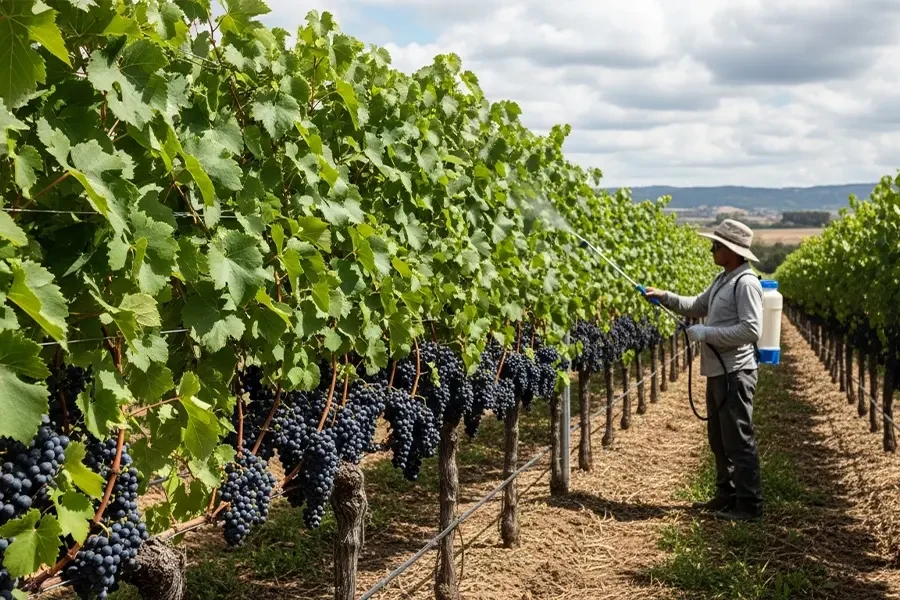
Have you ever thought about the real potential of your orchard? Each tree in your garden can produce higher-quality, larger and more flavorful fruits than you imagine; however, this requires implementing a scientific fruit tree fertilization program. Many orchardists, despite great effort, never reach maximum yield due to the use of unsuitable Name fertilizers or incorrect timing.
This comprehensive guide to fruit tree fertilization is your precise roadmap for selecting the best fertilizer for fruit trees and implementing a professional fertilization program to achieve a yield that will surprise All and maximize your profitability. To achieve this goal, do not miss this educational article from Asia Potash Industry Agricultural Magazine.
Why is scientific fertilization of fruit trees important?
A fruit tree requires a set of 17 essential nutrients for growth, flowering, and high-quality production. A deficiency in even one of these elements can disrupt the entire fruiting cycle. This scientific concept is known as Liebig’s Law of the Minimum.
Liebig’s Law states that plant growth is limited by the scarcest nutrient in the soil. This means that even if All nutrients are abundant, but one element such as nitrogen is deficient, plant growth will still be restricted to that same level. Therefore, fertilizing fruit trees is not simply about applying one type of fertilizer; it must be done according to the tree’s actual needs at each growth stage.
Essential nutrients required for fruit trees
To select fertilizer for fruit trees, we must first understand the role of each element. Nutrients are divided into two main categories:
- Macronutrients, which are required in large quantities.
- Micronutrients, which are required in small but essential amounts.
Below, we examine the importance and Name of different elements in these two categories.
Macronutrients: the main drivers of growth and yield
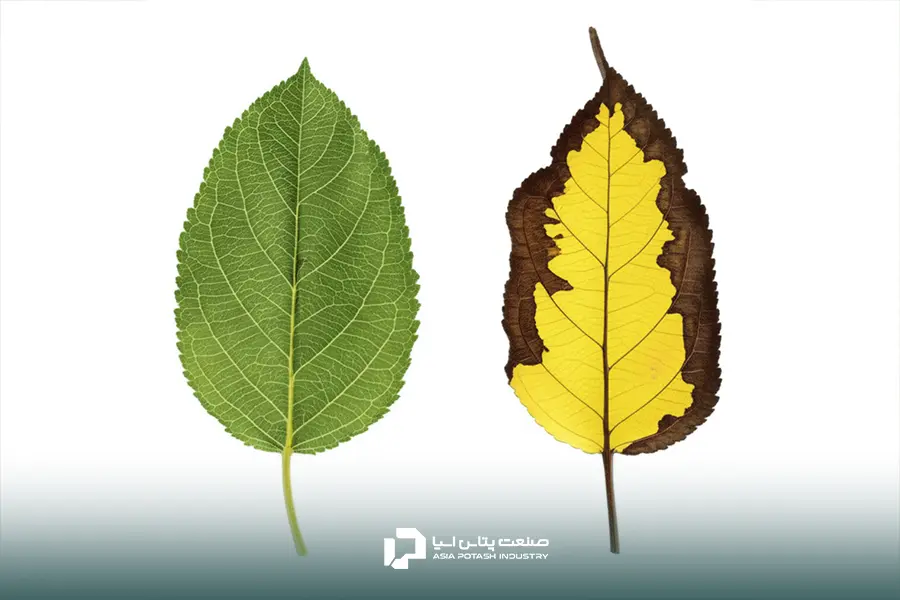
- Nitrogen (N): Nitrogen is the primary element for vegetative growth, chlorophyll production, and the Development of new shoots and leaves. Its deficiency causes yellowing of older (lower) leaves and weak, slow growth. If you are looking for the best fertilizer for rapid growth in early stages, a nitrogen-rich fertilizer is essential.
- Phosphorus (P): Phosphorus plays a key role in root Development, energy transfer processes (ATP), and most importantly, flower formation and successful fruit set. Strong roots mean better absorption of water and nutrients.
- Potassium (K): The most important element for fruit quality and quantity is potassium. It is involved in more than 60 enzymatic processes and regulates water movement, sugar transport from leaves to fruits, increases fruit size, improves color, taste, and shelf life. Potassium also significantly increases resistance to cold, drought, pests, and diseases.
Micronutrients: small in quantity but essential
Micronutrients are required in very small amounts, but their absence can nullify all your efforts and costs. Learn more about them below:
- Calcium (Ca): Essential for cell wall structure and fruit firmness, and helps prevent disorders such as bitter pit in apples and blossom-end rot.
- Magnesium (Mg): The central atom in chlorophyll and vital for photosynthesis.
- Boron (B) and Zinc (Zn): These elements are essential for successful pollination, fruit set, and hormonal growth. Their deficiency can lead to severe flower drop and misshapen fruits.
As mentioned above, providing these nutrients is essential for increasing fruit yield. But the question is: how can we determine their levels in the soil?
There are two ways. First, through soil testing, which provides a complete analysis of your orchard and land status. Second, through leaf analysis testing, which shows how much of these nutrients are actually reaching the tree.
Complete analysis of fertilizers for fruit trees
Choosing the correct fertilizer type depends on your Goals, soil health, and timing:
Chemical fertilizers for fruit trees
These fertilizers provide nutrients in a concentrated and readily absorbable form, quickly available to the plant, making them ideal for correcting deficiencies and meeting specific needs in critical growth stages. NPK fertilizers (such as 20-20-20) or high-potash fertilizers (such as Potassium Sulfate) fall into this category.
- Advantages: Fast effect, precise ratios, easy application.
- Disadvantages: Risk of soil salinity, possible root burn if overused, and no long-term improvement of soil structure.
Best organic fertilizer for fruit trees
Organic fertilizers such as fully decomposed manure, compost, and vermicompost not only provide nutrients gradually but also play a key role in improving soil health. They improve soil structure, increase water retention capacity, and support beneficial soil microorganisms.
- Advantages: Long-term soil fertility improvement, slow and steady nutrient release, reduced leaching risk.
- Disadvantages: Lower nutrient concentration, slower effect (not suitable for acute deficiencies).

What is the best fertilizer for fruit trees Codeam?
Professional orchardists use a combined system. They rely on organic fertilizers as the foundation of the program to build healthy and fertile soil, and then apply high-quality chemical fertilizers in a targeted and precise manner to meet specific tree needs during critical growth stages. This approach combines long-term sustainability with high performance.
Stages and fertilizer application rates for fruit trees
In this section, each key fertilization stage is reviewed in more detail along with application rates.
Note: These values are general guidelines, and the best fertilizer rate for fruit trees should be determined based on tree age, soil type, soil and leaf test results, and previous year’s yield.
Phase 1: Late winter (dormancy and preparation)
This stage is the foundation of the annual orchard nutrition program. The main goal is to place immobile nutrients (such as phosphorus and potassium) and organic matter in deeper soil layers near active roots so they are readily available at the start of the growing season.
For this stage, trenching (chalcoding) is the best method. In this method, trenches or pits 40–60 cm deep are dug in the outer one-third of the tree canopy (where young and Active roots are located), and fertilizer is applied there.
Recommended application (per mature tree):
- Fully decomposed manure: 20 to 30 kg
- High phosphorus fertilizer (such as triple superphosphate): 200 to 300 g
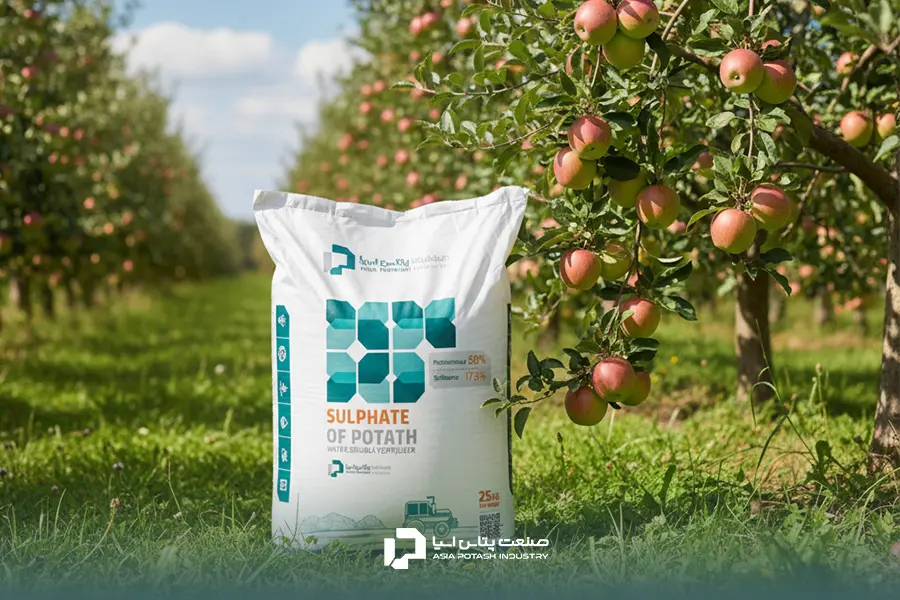
- Potassium fertilizer (such as Potassium Sulfate granules Asia Potash Industry): 500 g to 1 kg
- Powder sulfur: 500 g to 1 kg (for soil pH correction and improved nutrient uptake)
Phase 2: Early spring (bud break and flowering)
The goal of this stage is to provide the energy needed for bud break, support explosive shoot and leaf growth, and ensure strong flowering and successful pollination.
At bud swell, applying nitrogen fertilizers as a top-dress (surface application with irrigation) creates a positive growth response. Also, foliar spraying of key elements before full bloom ensures better flower quality and fruit set.
Recommended application:
- High nitrogen fertilizer (urea): 150 to 250 g per mature tree as top-dress.
- Fruit set foliar spray (pre-flowering): 2 to 3 liters (or kg) per 1000 liters of water.
Phase 3: Summer (fruit growth and enlargement)
This stage is crucial for producing larger and better fruits. The main goal is increasing fruit cell size, transferring sugars from leaves to fruits to improve taste, and completing color and final quality.
Summer fertilization is the most critical time for using potassium fertilizer in fruit trees. Regular use of high-potassium fertilizers through irrigation (fertigation) or foliar spraying will significantly improve final yield.
Recommended application:
- Potassium Sulfate (fertigation): 10 to 15 kg per hectare per application (repeated every 3–4 weeks).
- Potassium Sulfate foliar spray: 3 to 5 kg per 1000 liters of water.
- Calcium foliar spray: 2 to 3 applications in this phase are recommended to improve fruit firmness and shelf life.
Phase 4: Autumn (after harvest; investment for next year)
For successful orchard management, autumn fertilization is extremely important, although many growers neglect it. The goal is to replenish the nutrients used during production. It is like recharging the tree so it can survive winter and produce well again next year.
The question is: how should autumn fertilization be done? After harvest, leaves are still Active. A foliar spray transfers nutrients directly to buds, where they are stored for winter and support strong spring growth.
Recommended application:
Foliar spray: a mixture of urea (low concentration, about 5 kg) + zinc sulfate (2 kg) + boric acid (1 kg) per 1000 liters of water.

Comprehensive annual fertilization schedule table for fruit trees
This table is a general and practical guide. For more accurate results, soil and leaf testing is essential.
|
Tree phenological stage |
Main fertilization goal |
Recommended fertilizer type |
Best application method |
|
Late winter (trenching) |
Strengthen soil foundation and nutrient storage |
Decomposed manure, granular phosphorus and potassium fertilizers, sulfur |
Trenching |
|
Bud swell (early spring) |
Energy for initial vegetative growth |
High nitrogen fertilizer (urea/ammonium sulfate) |
Soil top-dressing |
|
Pre-flowering |
Enhance flowering and pollination |
Fruit set fertilizer (containing zinc and boron) |
Foliar spray |
|
After petal fall |
Improve cell division and fruit firmness |
Liquid calcium fertilizer, boron |
Foliar spray |
|
Early fruit growth (pea stage) |
Start fruit expansion and quality improvement |
High potassium fertilizer (Potassium Sulfate) |
Fertigation, foliar spray |
|
Mid-summer |
Continued growth, color development, and sugar accumulation |
Repeat potassium fertilizer, micronutrient foliar sprays |
Fertigation, foliar spray |
|
One month before harvest |
Final color and taste development |
Final dose of potassium fertilizer |
Fertigation |
|
After harvest (autumn) |
Storage for next year |
Fruit set fertilizer (N, B, Zn), phosphorus and potassium |
Foliar spray, soil application |
Asia Potash Industry: your partner in achieving premium yield with pure potassium
As repeatedly emphasized, potassium is the key to producing larger, more colorful, and marketable fruits. However, All potassium fertilizers are not created equal. The presence of chlorine (Cl) in some common potassium fertilizers (such as Potassium Chloride fertilizer) can be toxic for many fruit trees (especially stone fruits and citrus), leading to soil salinity buildup, reduced quality, and root damage.
Asia Potash Industry, understanding this critical need, offers high-quality Potassium Sulfate fertilizer in powder and granular form to professional growers. This product, with high potassium content and minimal standardized chlorine levels (around 1.5%), is an ideal, safe, and reliable choice for your orchard. Using Asia Potash Industry Potassium Sulfate at the fruit growth stage ensures that your trees receive the purest and most effective form of potassium for producing the best and heaviest yield.
To purchase Asia Potash Industry Potassium Sulfate fertilizer, you should contact our sales agents. For information about distributors and consultation, please contact us via contact.
Final words
Proper nutrition of fruit trees is a direct investment in increasing your income and product quality. By understanding tree needs, selecting the best fertilizer for fruit trees, and following the correct fertilization timing, you can fully unlock your orchard’s potential. Remember that potassium is the key element that transforms a year of effort into valuable and profitable fruits.
If you found this comprehensive article useful, please share it. Also, write your valuable experiences and questions in the comments below; our experts at Asia Potash Industry are ready to respond.
Comments (0)
Be the first to comment!