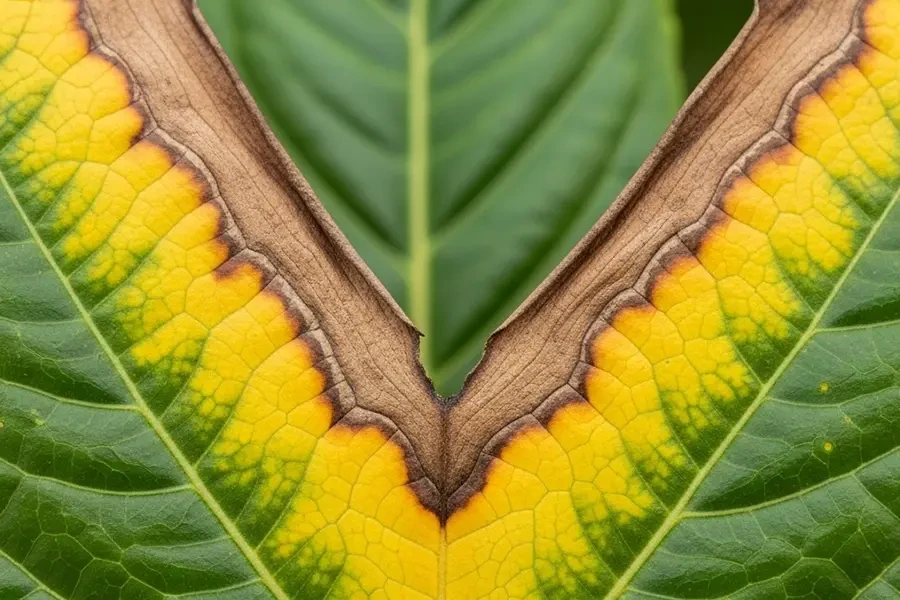
Potassium is one of the essential elements for plant growth and development, and its deficiency can lead to reduced crop quality. In fields or houseplants, you may sometimes observe symptoms such as leaf yellowing, marginal leaf burn, and reduced growth, which are often caused by potassium deficiency.
In this article from Asia Potash Industry Agriculture Magazine, we examine the symptoms of potassium deficiency in plants, from early signs to its long-term effects on plant health. We also introduce scientific diagnostic methods, factors affecting potassium uptake, and the best solutions to correct this deficiency. If you are dealing with weak plants and pale leaves, this guide can help you make the right decision at the right time to revive your plants.
What is potassium deficiency in plants?
Potassium (K), like nitrogen and phosphorus, is not part of the plant’s structural components, but its role in plant growth is undeniable. This element helps regulate water pressure in cells, improves nutrient transport throughout the plant, enhances enzyme activity, and supports protein synthesis.
When sufficient potassium is not available in the soil or plant tissue, these processes are disrupted. As a result, photosynthesis decreases, plant resistance to environmental stresses such as drought weakens, and overall crop yield drops significantly.
Potassium deficiency is more commonly observed in sandy, light, or highly leached soils. This element is easily mobile in soil, and without proper management, its reserves can quickly decline. Therefore, agricultural experts recommend maintaining a stable potassium source in plant nutrition programs.
Symptoms of potassium deficiency in plants
Potassium deficiency can affect plant growth and quality in various ways. Symptoms usually start in older leaves and gradually spread to younger leaves:
- Purple or white spots on the underside of leaves These spots usually indicate early metabolic disruption and appear first on older leaves.
- Leaf yellowing (chlorosis) Leaves lose their color and turn pale; this yellowing typically starts at the edges and moves toward the center.
Brown leaf margins One of the most characteristic signs of potassium deficiency is burning or browning of leaf edges, which restricts leaf growth.
- Leaf curling and rolling Leaves may deform and curl inward, indicating potassium deficiency.
- Reduced number of leaves and flowers The plant is unable to produce normal levels of foliage and flowers, resulting in reduced vegetative growth.
- Stunted plant growth Stems and branches weaken, and overall plant growth declines.
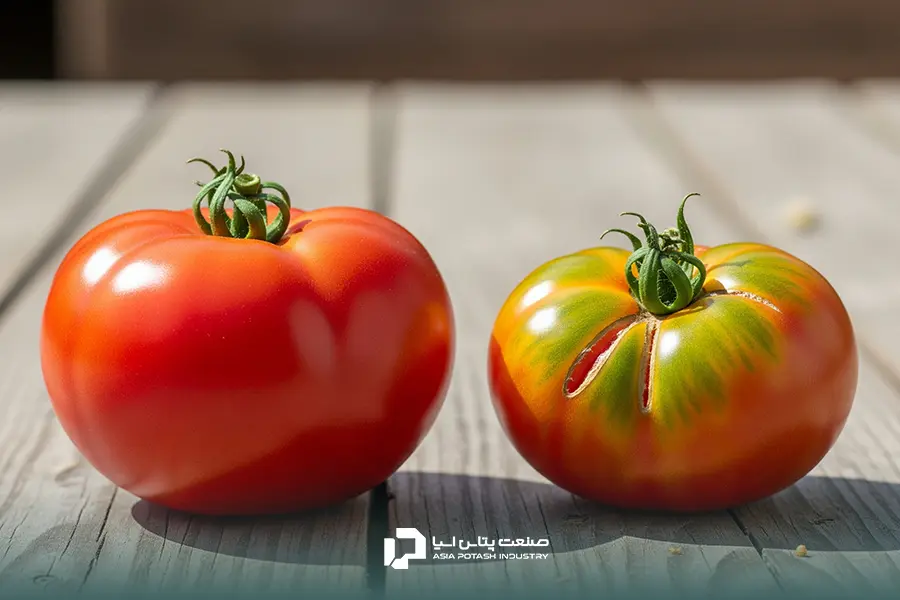
- Delayed or incomplete fruit ripening Fruits may ripen late or remain immature, reducing product quality.
- Thicker fruit skin and altered taste Some Products may develop thicker skins or a sourer taste due to disrupted nutrient transport.
- Reduced fruit or cluster formation Flowering and fruit set decrease, resulting in fewer fruits.
- Abnormal coloration of Products Fruits or leaves may develop unusual coloration regardless of plant type.
- Wilting or dehydration of Products The plant may show drought-like symptoms even when soil moisture is adequate due to impaired water uptake and transport.
- Weak, short stems Shoots become thin, short, and brittle, reducing their ability to support leaves and fruits.
- Gray discoloration of leaves In some plants, severe potassium deficiency can cause leaves to appear gray or dark.
All of these symptoms help farmers and gardeners identify potassium deficiency in time and apply corrective measures such as proper fertilization.

Symptoms of potassium deficiency in houseplants
If you love houseplants, you should know that potassium deficiency is more common than you might think. This is because most potting soils gradually lose their nutrients over time.
Common symptoms in houseplants include:
- Yellowing of leaf margins
- Drying and burning of leaf tips
- Slow growth and smaller-than-normal leaves
- Reduced resistance to stress such as temperature changes or drought
Symptoms of potassium deficiency in common agricultural crops
Potassium deficiency appears differently in each crop, but in all cases it reduces yield and product quality. Recognizing these symptoms in widely cultivated crops helps farmers take timely corrective action.
- Potato Brown spots on leaves and marginal leaf burn occur. Tubers become smaller, uneven, lower in starch, and have reduced storage life.
- Tomato Leaves curl and show marginal burn. Fruits ripen late and often develop thick skins and sour taste. Flower drop and reduced fruit set are also common.
- Maize Yellowing and brown striping appear at leaf margins. Stem growth slows and kernels do not fill properly, significantly reducing yield.
- Rice Leaves turn yellowish-brown with necrotic spots. Stems become weak and short, and panicle formation decreases, strongly affecting yield.
- Legumes (e.g., beans and chickpeas) Leaves become pale and brittle. Pod formation decreases and seeds fail to develop properly, reducing overall quality.
Read More: What are the symptoms of potassium deficiency in wheat?
Difference between potassium deficiency and other nutrient deficiencies
Plants require multiple nutrients for growth, and each deficiency shows different symptoms on leaves, roots, and fruits. One of the main challenges for farmers is correctly identifying which nutrient is lacking.
- Nitrogen deficiency Leaves turn uniformly yellow, especially older ones. In maize, this causes even yellowing across leaves. In contrast, potassium deficiency affects leaf margins first, progressing toward browning edges.
- Phosphorus deficiency Leaves become dark or purplish, and root growth is restricted. In potatoes, phosphorus deficiency weakens roots, while potassium deficiency causes brown leaf margins and poor tuber quality.
- Magnesium deficiency Causes interveinal chlorosis (yellowing between veins while veins remain green). Unlike potassium deficiency, which burns leaf edges, magnesium deficiency leaves margins relatively intact.
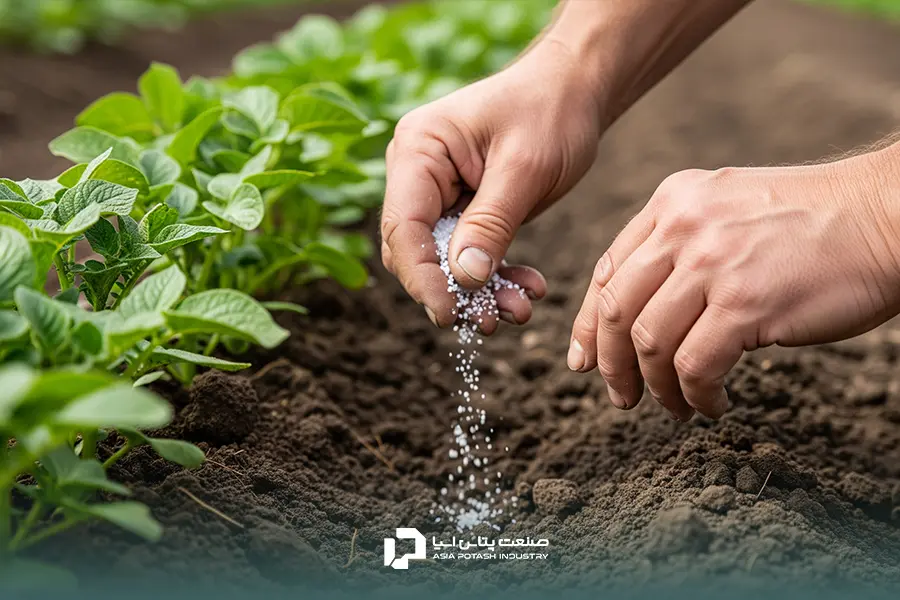
Solutions for correcting potassium deficiency
Use of potassium fertilizers
Fertilizers such as Potassium Sulfate (K₂SO₄) and Potassium Chloride (KCl) are the most common potassium sources in agriculture. For example, in apple orchards, Potassium Sulfate not only corrects potassium deficiency but also improves fruit sweetness and color.
Foliar application of potassium
When root uptake is limited, foliar spraying is the fastest way to correct deficiency. This method is especially effective for fruiting crops such as tomato and cucumber, improving fruit size and reducing flower drop.
Combining potassium fertilizers with organic matter
Using potassium fertilizers along with compost or manure improves soil structure and potassium retention. In potato cultivation, this prevents leaching in sandy soils and improves tuber quality.
Proper irrigation management
Since potassium moves with water in the plant, irregular irrigation can reduce its uptake. Proper and balanced irrigation improves potassium absorption. For example, in watermelon cultivation, good water management increases sweetness and shelf life.
Factors affecting potassium uptake in plants
- Soil moisture: Potassium dissolves in water and is easily absorbed by roots; therefore, soil moisture facilitates its uptake.
- Soil aeration: Roots require oxygen for efficient nutrient absorption; well-aerated soil enhances potassium uptake.
- Soil temperature: Optimal temperature (15–27°C) improves root activity, while low temperatures significantly reduce potassium absorption.
Preventing potassium deficiency: practical tips
Soil testing before planting
Soil analysis helps determine potassium levels and allows proper fertilization planning.
Splitting fertilizer application
Applying potassium fertilizer in multiple stages prevents leaching, especially in light soils.
Maintaining soil organic matter
Organic matter improves soil structure and potassium retention, especially in sandy and dry regions.
Balanced irrigation management
Both overwatering and underwatering reduce potassium availability.
Crop rotation
Crop rotation with low potassium-demand plants helps maintain soil nutrient balance.
Methods for accurate diagnosis of potassium deficiency
Visual inspection
Symptoms such as leaf edge burn and yellowing of older leaves are key indicators.
Comparison with healthy plants
Comparing with healthy plants of the same species helps identify differences in growth and color.
Soil testing
The most reliable method to measure available potassium in soil.
Plant tissue analysis
Leaf testing helps determine potassium levels inside plant tissues.
Measuring soil EC and pH
Soil salinity or improper pH can limit potassium uptake even if it is present in the soil.
Best products for correcting potassium deficiency
- Potassium Sulfate (SOP) Improves fruit quality and disease resistance.
- Potassium Chloride (MOP) Economical but should be used carefully for chloride-sensitive crops.
- Liquid potassium fertilizers Fast absorption, suitable for foliar or irrigation application.
- NPK fertilizers Provide balanced nutrition when multiple deficiencies exist.
Common mistakes in treating potassium deficiency
- Excessive potassium application Can cause soil salinity and nutrient imbalance.
- Ignoring soil pH Improper pH reduces nutrient availability.
- Using inappropriate fertilizers Wrong fertilizer type reduces effectiveness.
- Misdiagnosis of symptoms Symptoms may overlap with nitrogen or magnesium deficiency.
Asia Potash Industry; a professional solution for potassium supply
Potassium deficiency is a common issue affecting both houseplants and field crops, directly impacting growth, resistance, and product quality. Asia Potash Industry provides high-quality potassium fertilizers, including Potassium Sulfate (SOP), offering a reliable solution for plant nutrition.
Our high-quality SOP fertilizer is suitable for foliar application and fertigation, helping quickly correct potassium deficiency, improve plant health, and enhance yield quality.
For consultation or purchase, contact us.
Final words
Potassium deficiency is a widespread problem in both agricultural fields and houseplants. Early diagnosis, soil testing, and proper fertilization are the key steps to managing it effectively. By following best practices and avoiding common mistakes, you can prevent serious crop losses and improve productivity.
Comments (0)
Be the first to comment!