
Proper potato fertilization is one of the most important factors in increasing the yield and quality of this widely consumed crop. The choice of fertilizer type, application timing, and dosage has a direct impact on root growth, tuber development, and the plant’s resistance to diseases.
By following scientific plant nutrition principles, farmers can improve both the quantitative and qualitative performance of their crops while preventing the loss of soil nutrients. In this process, understanding the different types of chemical and organic fertilizers, the role of various nutrients, and the proper timing for their application is of great importance.
If you would like to learn more about this subject and related tips, stay with us in this article from the Asia Potash Industry Agriculture Magazine.
Potato Growth Stages and Nutritional Requirements at Each Stage
Potato growth is a multi-stage process, and at each stage, the plant has different nutritional requirements. If you know which nutrients should be supplied to the soil at each stage, you can both prevent fertilizer waste and help the plant devote all its energy to producing healthy, high-yield tubers.
Keep in mind that increasing potato yield is not limited to fertilization alone. We recommend reading the related article to become familiar with all the principles involved.
Vegetative Growth Stage (Before Tuber Formation)
At this stage, the potato plant has recently emerged and is producing leaves and stems. The plant must rapidly expand its leaf area to store enough energy for the subsequent stages.
This is where nitrogen (N) comes into play. This element stimulates vegetative growth and promotes leaf development, greenness, and increased photosynthesis.
Alongside nitrogen, phosphorus (P) also plays a key role. Phosphorus helps root development and improves plant establishment in the soil. Especially in cold or nutrient-poor soils, high-phosphorus fertilizers such as superphosphate or ammonium phosphate can provide the plant with a strong start.
However, excessive nitrogen application during this stage can make the plant overly vegetative and later negatively affect tuber formation. Therefore, maintaining balance is essential.
Beginning of Tuber Formation
This stage usually starts from the third to the sixth week after planting. The plant enters a new phase where leaf and stem growth alone is no longer sufficient. Now, energy must be directed into the soil so that tubers can form.
At this stage, nitrogen application should be reduced and replaced with potassium because potassium plays a vital role in transferring sugars and energy to the tubers.
If the soil is deficient in potassium during this period, potatoes may produce small or malformed tubers. Therefore, applying potassium top-dressing precisely at this time is the key to success.
Tuber Bulking and Maturity
Now that the tubers have formed, they need to become larger and heavier. This is the most critical period for increasing final yield. Any mistake in nutrition or irrigation can directly affect the final weight.
At this stage, potassium and calcium play the primary roles. Calcium strengthens cell walls and increases tuber resistance to storage diseases.
Using Potassium Sulfate and, if necessary, foliar spraying with calcium nitrate can turn this stage into the peak performance period of the field. If leaves become yellow or tubers soften, it may indicate deficiencies of these nutrients.
Read More: What Is the Role of Potassium in Plant Growth?
Best Practices for Potato Fertilization
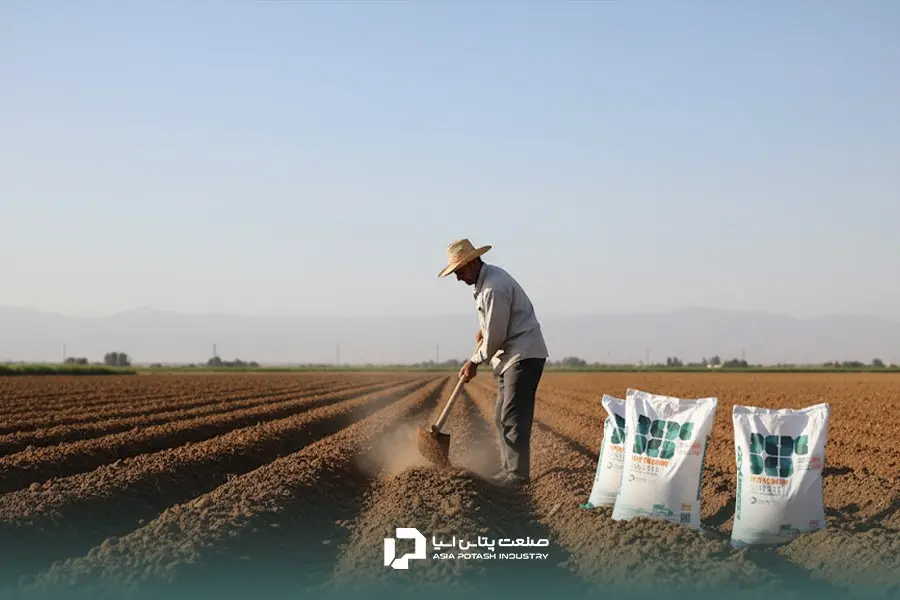
When it comes to potato fertilization, choosing the right fertilizer alone is not enough. More importantly, fertilizers must be applied correctly. The type of fertilizer, timing, and application method determine how successful the final results will be.
Base Fertilization Before Planting
At the beginning of the process, about 2 to 3 weeks before planting, base fertilizers should be added to the soil. These fertilizers usually include a combination of nitrogen, phosphorus, potassium, sulfur, and organic matter such as well-rotted manure. They perform best when steps have already been taken to adjust soil pH before fertilization.
Points to Observe at This Stage:
- Thoroughly mix fertilizers with the soil before final plowing.
- Use agricultural sulfur or bentonite sulfur in alkaline soils.
- Avoid excessive nitrogen application at this stage (it causes excessive vegetative growth and delays tuber formation).
Suggested Fertilizer Combination:
- Ammonium Phosphate: 100 kg/ha
- Potassium Sulfate: 150 kg/ha
- Sulfur: 50–80 kg/ha
- Well-Rotted Manure: 20–30 tons/ha
This stage forms the foundation of the field. If executed properly, you have already completed half the journey successfully.
Read More: What Are the Symptoms of Sulfur Deficiency in Plants?
Top-Dressing Fertilization During Different Growth Stages
Top-dressing refers to supplying nutrients during the growing season. This practice is generally carried out to meet the plant’s new nutritional requirements. However, mistakes in timing or application methods may lead to root burn, fertilizer loss, or even reduced yield.
Common Top-Dressing Methods
- Fertigation: Suitable for farms equipped with drip or tape irrigation systems.
- Surface Broadcasting (Manual or Mechanical): Suitable for traditional farms; fertilizer is spread on the soil surface and followed immediately by irrigation.
- Side-Dressing: Suitable for fertilizers that require gradual absorption or establishment in the root zone. Examples include humic acid, powdered sulfur, and granular Potassium Sulfate.
- Foliar Spraying: Primarily used to supply micronutrients and quickly correct deficiencies. Under certain conditions, some macronutrients such as powdered Potassium Sulfate can also be applied this way.
Suggested Schedule:
|
Growth Stage |
Top-Dressing Fertilizer Type |
Approximate Rate (kg/ha) |
Application Method |
|
Beginning of Tuber Formation |
Potassium Sulfate |
15 – 20 |
Through Irrigation Water |
|
Tuber Bulking |
Calcium Nitrate |
2 – 3 |
Foliar Spray |
|
Micronutrient Deficiency |
Zinc, Boron |
According to Instructions |
Foliar Spray |
Foliar Spraying; Timing and Dosage
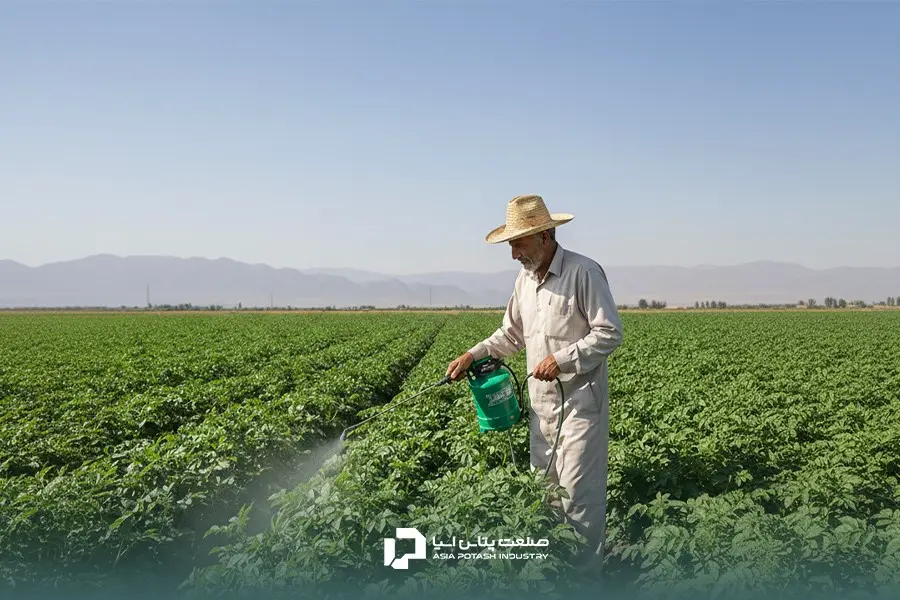
Foliar spraying is a fast and cost-effective method for correcting nutritional deficiencies. However, it is only effective when performed properly.
Suitable Cases for Foliar Spraying:
- Immediate deficiencies such as leaf yellowing, leaf spots, and growth stagnation.
- Micronutrients such as boron, zinc, manganese, and iron.
Important Notes:
- Apply only during cool weather (early morning or evening).
- Follow the exact dosage to avoid leaf burn (e.g., 1‰ for boron).
- Avoid mixing fertilizers with pesticides without prior testing.
- No rainfall or irrigation should occur for up to 12 hours after application.
Best Time for Potato Fertilization During the Growing Season
In plant nutrition planning, the timing of fertilizer application is just as important as selecting the right fertilizer type for achieving high yields and superior crop quality. Even the best fertilizers, if applied at the wrong time, may not only fail to produce the desired results but may also reduce yield, encourage excessive vegetative growth, or create stress for the plant.
Fertilization Before Planting
The pre-planting stage is the first and one of the most critical decision points in a potato nutrition program. During this period, base fertilizers that require time to release nutrients are incorporated into the soil. Fertilizers such as ammonium phosphate, well-rotted manure, agricultural sulfur, and under certain conditions, Potassium Sulfate, are generally applied 2–3 weeks before planting.
Precise Timing of Top-Dressing Applications
After emergence and the start of vegetative growth, approximately 20–30 days after planting, the plant enters the tuber initiation stage. This stage is the golden period for applying potassium fertilizers. Top-dressing should be scheduled so that potassium is available to the plant before tuber bulking begins.
During this period, reducing nitrogen application and increasing potassium is essential. Once leaf development is complete and the plant enters the underground development phase, potassium fertilization should begin.
Late-Season Fertilization: Yes or No?
During the final weeks of growth, when tubers are maturing, a common question is whether additional fertilizer applications—especially foliar fertilizers or micronutrients—are necessary.
If plant nutrition has been complete and balanced during previous stages, late-season fertilization is generally unnecessary. However, in poor soils or areas experiencing environmental stresses (salinity, drought, or poor soil structure), foliar applications of micronutrients such as boron, manganese, or calcium may be beneficial.
However, one important point must be considered: no nitrogen should be applied during the final two weeks before harvest. Nitrogen at this stage delays tuber maturity, increases tissue moisture content, and reduces storage life.
Best Fertilizers for Potatoes at Each Growth Stage
One of the main concerns of farmers is determining which type of fertilizer has the greatest impact at each stage of potato growth.
Use of Base Fertilizers
Before planting, the primary focus should be on supplying essential nutrients such as nitrogen, phosphorus, potassium, and sulfur. These elements play key roles in root development, soil preparation, and improving nutrient availability. Common fertilizers used during this stage include:
- Ammonium Phosphate
- Fully Composted Manure
- Bentonite Sulfur
In most Iranian soils, formulations such as 12-8-32 or 15-15-15 are recommended depending on the growth stage. If soil testing has been performed, the use of more acidic fertilizers or sulfur additions may improve nutrient uptake in alkaline soils where needed.
Potassium Fertilizers and the Role of Potassium Sulfate
Potassium is a key nutrient for producing high-quality potatoes. Potash fertilizer plays a vital role in sugar transport, cellular water regulation, tuber skin thickness, and disease resistance. Among potassium fertilizers, Potassium Sulfate is considered a superior choice for potatoes due to its minimal chloride content, high solubility, and mild soil reaction.
The recommended application rate is generally between 150–200 kg/ha and can be adjusted according to the application method (soil application, top-dressing, or fertigation) and soil conditions.
Read More: What Are the Symptoms of Potassium Deficiency in Plants?
Benefits and Methods of Using Potassium Sulfate for Potatoes
Among all potassium fertilizers, Potassium Sulfate holds a special position in potato nutrition.
Benefits of Potassium Sulfate
One of the most important advantages of this fertilizer is its minimal chloride content. Chloride can reduce tuber quality, alter taste, and decrease storage life in sensitive crops such as potatoes. By supplying pure potassium and sulfur, Potassium Sulfate improves both yield and product quality.
Potassium Sulfate promotes larger tubers with higher starch content, enhances resistance to drought and diseases, and improves firmness, color, and shelf life.
Application Methods and Recommended Rates
Potassium Sulfate can be applied in several forms. The choice depends on the crop growth stage, soil conditions, and irrigation system.
1. Soil Application (Base or Top-Dressing)
In soil application, granular fertilizer is spread on the soil surface and incorporated through tillage or irrigation. This method performs particularly well in moderately saline or heavy soils. The recommended base application rate is 150–200 kg/ha.
2. Fertigation
In fields equipped with drip or tape irrigation systems, applying water-soluble Potassium Sulfate ensures more uniform nutrient uptake. Its high solubility allows nutrients to become available to roots quickly. Solution concentration must be carefully managed to prevent precipitation and nozzle clogging. The recommended rate is 15–20 kg/ha, applied in several doses throughout the growing season.
3. Foliar Application
When an immediate potassium supply is needed or deficiency symptoms appear on leaves, foliar spraying at a concentration of 1–2% is recommended. This method is especially useful from mid-growth through the later stages of tuber formation. The best application time is during cool periods of the day (early morning or evening) with no rainfall expected for at least 12 hours after application.
Final Note: Potassium uptake is highly dependent on soil moisture. Therefore, any application of this fertilizer should be accompanied by proper irrigation management.
Comments (0)
Be the first to comment!