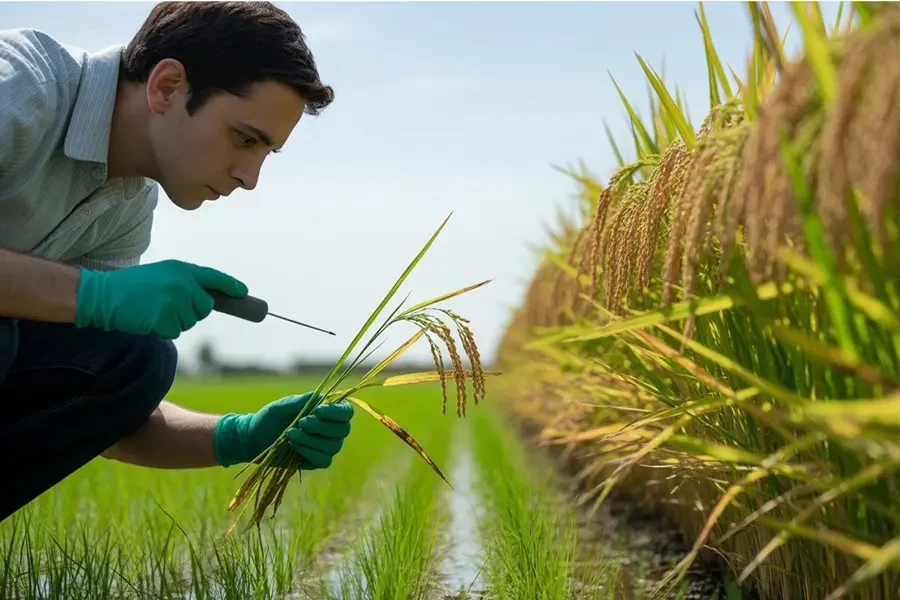
Soil nutrient imbalances are one of the main causes of low and poor crop yield. In this article from Asia Potash Industry Magazine, we have addressed the most important points related to nutrient deficiencies in rice. By reading this article, you can correctly identify disorders caused by nutrient deficiencies, recognize their symptoms, and become familiar with scientific and practical solutions to solve these problems.
If you also want to farm scientifically and professionally, do not miss this article.
What are the most important nutrients for rice?
To achieve maximum yield and optimal rice plant growth, a balanced and well-proportioned supply of nutrients is essential. These nutrients are divided into micronutrients and macronutrients, and each of them plays a vital role in growth stages from germination to grain filling.
Among all these elements, nitrogen, phosphorus, and potassium are the most important nutrients for rice. Below, we will introduce all of these nutrients in detail.
Read More: What are the types of chemical fertilizers?
Essential macronutrients for rice
-
Nitrogen (N): Nitrogen is the most important element for vegetative growth. It plays a fundamental role in producing chlorophyll, amino acids, and proteins. Its effects can be seen in increased plant height, larger and more numerous leaves, more productive tillers, and increased panicle numbers.
-
Phosphorus (P): Phosphorus is especially important in the early growth stages of rice. It improves root water and nutrient uptake, increases tillering, promotes early flowering, supports grain formation and ripening, and provides energy for metabolic processes.
-
Potassium (K): Potassium mainly strengthens rice against stress conditions. It enhances stem strength and reduces lodging, protects the plant against diseases, pests, drought, and salinity stress, improves photosynthesis and sugar transport to grains, and directly affects final grain quality (taste and appearance).
Essential micronutrients for rice
-
Zinc (Zn): Zinc is essential for enzyme activity and plant growth hormone production in rice.
-
Iron (Fe): Iron is crucial for chlorophyll production in rice plants.
-
Manganese (Mn): Manganese plays a role in photosynthesis and respiration and enhances nitrogen uptake.
-
Silicon (Si): Silicon is not a primary essential nutrient but has a positive effect on rice growth. It strengthens cell walls and increases resistance to pests, diseases, and lodging.
-
Boron (B) and Copper (Cu): These elements improve pollination and grain formation in rice.
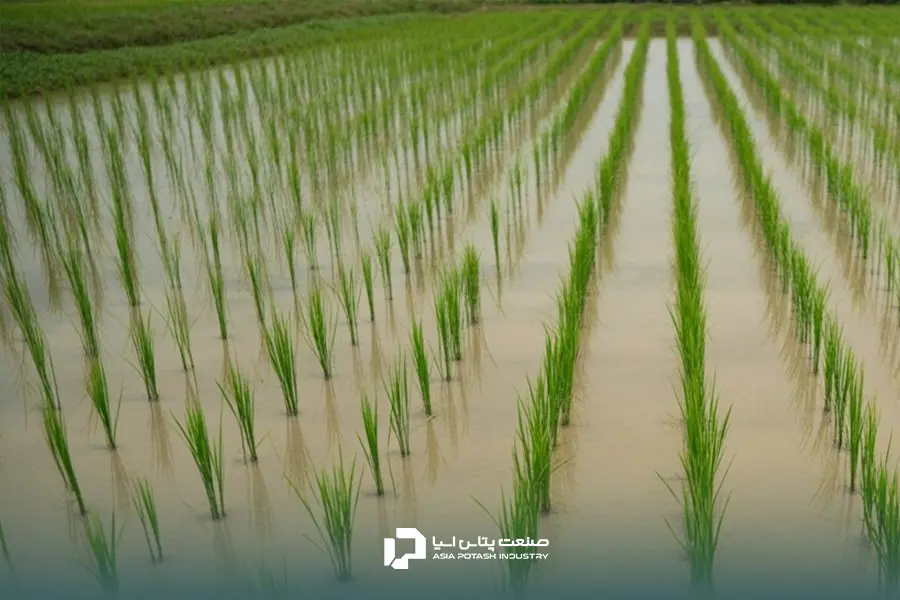
How do nutrients affect rice growth?
As explained above, nutrient deficiencies affect various physiological processes in rice growth. Each element plays a key role in plant health, and an optimal balance is required for ideal yield. If this balance is disrupted, nutrient disorders occur in the field, which we will discuss further below.
Read More: Potassium plays a key role in strengthening rice stems and improving grain quality. To ensure optimal results, it must be applied at the right time. Read the article “Best time to apply potassium fertilizer for rice” to learn the precise fertilization schedule.
What are nutrient disorders in rice?
Nutrient disorders in rice refer to a condition where the plant cannot receive a balanced and adequate supply of nutrients. This leads to weak growth and ultimately reduced yield and quality.
It is important to note that nutrient disorders are not only caused by deficiencies but also by excess nutrients, which can lead to toxicity. Both types are explained below.
Nutrient deficiency in rice
Nutrient deficiency occurs when one or more macronutrients or micronutrients are not sufficiently present in the soil or are not available for plant uptake due to unsuitable soil pH.
Read More: One of the main reasons nutrients are not absorbed is improper soil pH. But how can soil pH be measured and corrected for better nutrient uptake? Read the full explanation in “Methods for adjusting soil pH”.
Nutrient toxicity
Nutrient toxicity occurs when the concentration of a nutrient in soil or water becomes so high that it becomes toxic to the plant. This condition not only damages the plant but also disrupts the absorption of other essential nutrients.
Farmers can identify nutrient disorders through visible symptoms before serious damage occurs. These signs are explained below.
Read More: Chemical fertilizer incompatibility chart
What are the symptoms of nutrient disorders in rice?
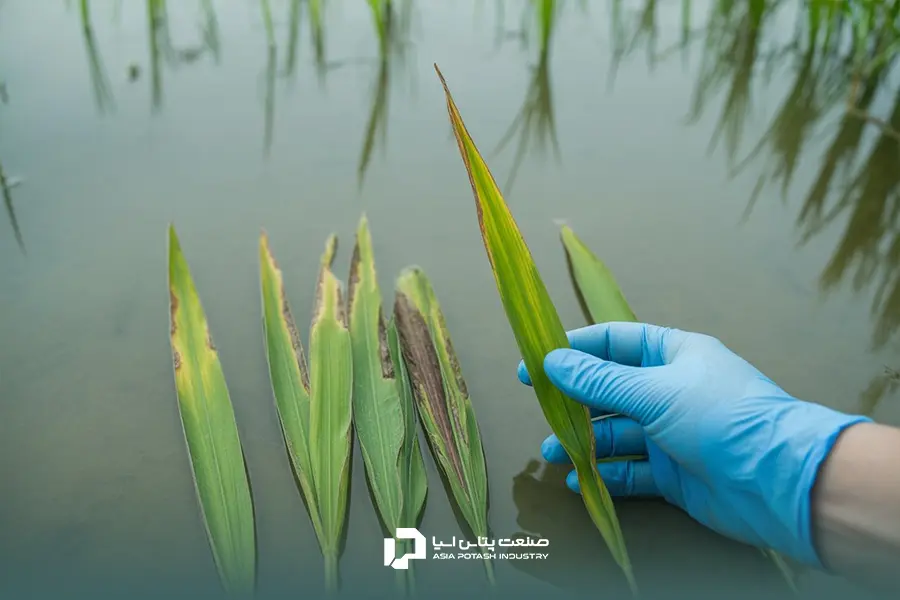
Rice plants express problems through visible symptoms such as color changes, growth stagnation, poor tillering, and weak grain development. Early detection increases the chances of preserving yield quality.
Below, we first examine general symptoms and then specific nutrient deficiencies.
1. Abnormal leaf color changes
Leaves are key indicators of plant health. Color changes may appear in different forms:
- General yellowing (chlorosis): If it appears in older leaves, it indicates nitrogen deficiency; in younger leaves, it may indicate iron or sulfur deficiency.
- Dark green coloration: Often associated with phosphorus deficiency and growth stagnation.
- Other colors: Purple, red, or bronze leaves may indicate severe phosphorus deficiency or iron toxicity.
2. Growth and structural disorders
- Growth stagnation: Short plant height indicates general nutrient deficiency, especially nitrogen, phosphorus, or zinc.
- Poor tillering: One of the first signs of nitrogen and phosphorus deficiency.
- Weak stems and lodging: Often caused by potassium and silicon deficiency.
3. Leaf spots and burn symptoms
- Small brown rust-like spots: Potassium deficiency
- Leaf tip and margin burn: Potassium deficiency
- White or brown streaks on young leaves: Zinc deficiency
4. Distribution pattern of symptoms
Understanding where symptoms appear helps diagnose the issue:
- Lower leaves: Mobile nutrient deficiency (N, P, K, Mg)
- Upper leaves: Immobile nutrient deficiency (Fe, S, Zn, Cu, B)
- Patchy field symptoms: Often linked to soil pH imbalance, salinity, or structural issues
What is the best way to diagnose nutrient disorders in rice?
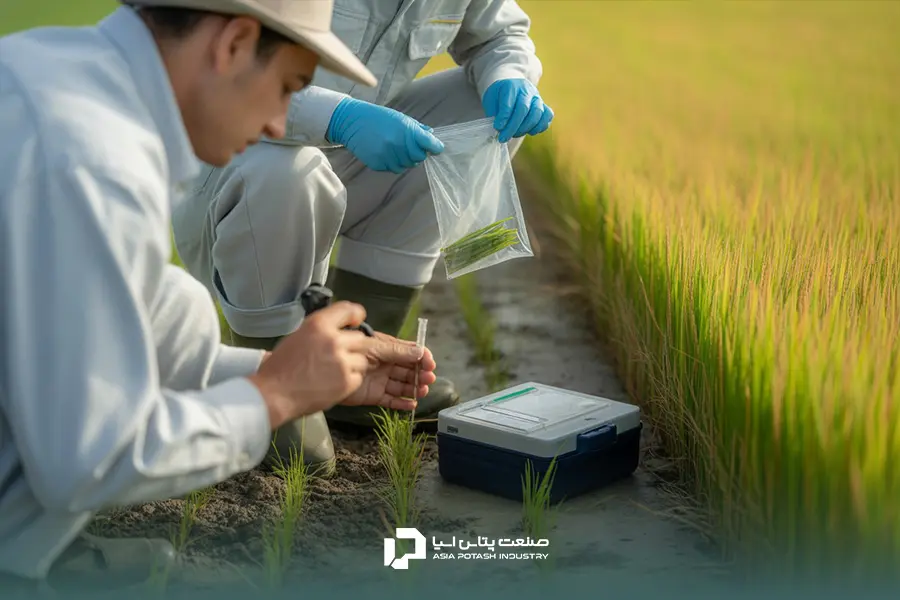
The best approach is a combination of field observation and laboratory testing.
Step 1: Soil testing
Soil testing determines soil fertility status before planting and helps design a proper fertilization program.
Step 2: Leaf analysis
Leaf analysis is the most accurate method for diagnosing nutrient disorders, as it shows what the plant is actually absorbing.
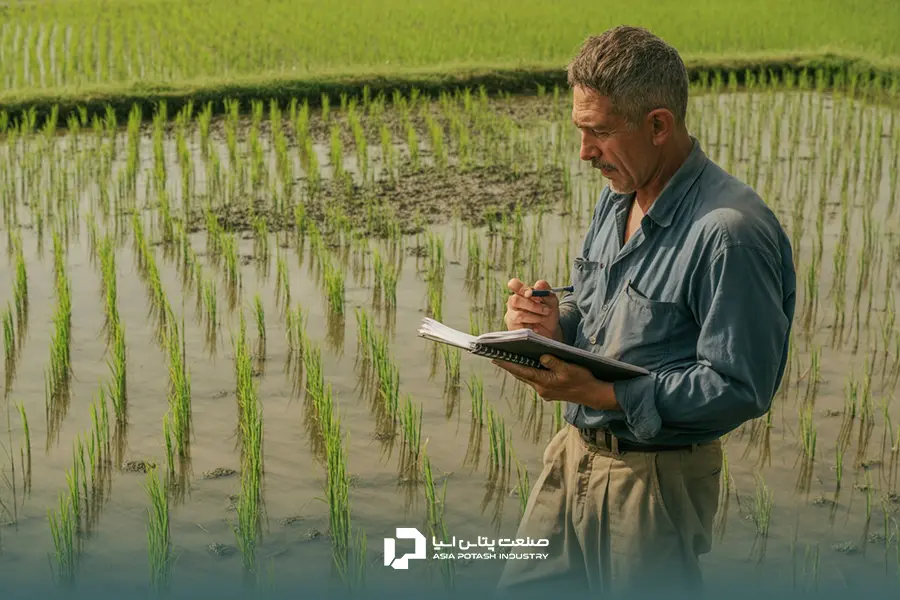
How to treat nutrient disorders in rice?
Treatment depends on whether the issue is deficiency or toxicity.
Treatment of nutrient deficiency
- Nitrogen deficiency: Apply urea during tillering and early panicle formation stages.
- Phosphorus deficiency: Use superphosphate or DAP before planting; during growth, use water-soluble phosphorus fertilizers.
- Zinc deficiency: Apply zinc sulfate as soil application or foliar spray.
- Potassium deficiency: Use Potassium Sulfate fertilizer, which improves stem strength, disease resistance, and grain filling.
Read More: What is Potassium Sulfate?
Technical data sheet of Potassium Sulfate Asia Potash Industry
Treatment of nutrient toxicity
- Nitrogen toxicity: Stop nitrogen fertilizers and increase potassium application.
- Iron and manganese toxicity: Improve drainage and adjust soil pH using lime.
Asia Potash Industry: Largest Potassium Sulfate Producer in Iran
Asia Potash Industry is the largest producer of potassium sulfate fertilizer in Iran, offering high-potassium and low-chlorine products in powder and granular forms. These fertilizers improve yield quality, stress resistance, and storage life of crops.
Final conclusion
Successful farming requires continuous monitoring and field observation. Identifying nutrient disorders early allows farmers to prevent serious yield loss and maintain crop quality.
If you have any questions, feel free to share them in the comments so that Asia Potash Industry experts can respond.
Comments (0)
Be the first to comment!