
لوبیا بهعنوان یکی از مهمترین حبوبات در الگوی غذایی و زراعی ایران، نقشی کلیدی در امنیت غذایی و اقتصاد کشاورزان ایفا میکند. دستیابی به حداکثر عملکرد کمی و کیفی در این محصول، بیش از هر چیز به یک مدیریت تغذیهای هوشمندانه و علمی وابسته است. بسیاری از کشاورزان با این سوال مواجه هستند که بهترین کود برای لوبیا چیست و چگونه باید یک برنامه کوددهی لوبیا را اجرا کنند تا بهترین نتیجه را بگیرند.
این مقاله جامع از Specialized journal of potash industry in Asia, as a complete guide, will introduce you to the types of fertilizers for beans and help you to have a detailed plan for the stages of bean fertilization with a deep understanding of the plant’s nutritional needs and achieve a favorable harvest.
Knowing the nutritional needs of beans
To choose the best bean fertilizer, we must first know what elements this plant needs to grow and complete its life cycle. These elements are divided into two main groups:
Consumable elements (macro)
These elements are needed in large quantities and are the main components of plant structure:
- Nitrogen (Nitrogen – N): It is the most vital element for foliage growth and photosynthesis. But in beans, due to the ability to fix air nitrogen, its management is very sensitive and different.
- Phosphorus (P): Flowering and seed formation are essential for the development of a strong root system.
- Potassium (K): It is known as “quality factor”. This element plays a vital role in the plant’s resistance to diseases and environmental stress, the transfer of sugars, and most importantly, the filling and weight of the seeds.
- Calcium (Ca), magnesium (Mg) and sulfur (S): These high-use secondary elements play a role in cell wall strength, chlorophyll production, and protein production, respectively.
low consumption elements (micro)
These elements are needed in small amounts, but their deficiency can disrupt the entire growth process. The most important ones for beans include iron (Fe), zinc (Zn), manganese (Mn) and boron (B).
It is very important to know the essential elements for more bean fruiting; But how should we know how much these elements are in the soil and how much our plant needs these elements? This is where scientific tests open to agriculture. We will examine one of these tests below.
Why is soil testing important for choosing the best bean fertilizer?
Any fertilizer recommendation without accurate information about the condition of the farm soil is an unscientific and costly action. soil test A prerequisite is a requirement that provides you with the following key information to help you avoid overuse of fertilizers:
- Soil pH: This factor controls the availability of nutrients. In alkaline soils (high pH), which are common in many regions of Iran, elements such as iron and zinc, even if they are present in the soil, cannot be absorbed by the plant. To get to know How to measure soil pH And how Adjust soil pH Refer to previous training articles.
- Salinity (EC) and water quality: Beans are sensitive to salt. The soil and water test determines the level of salinity and prevents damage to the product.
- Amount of available nutrients: A soil test will tell you how much phosphorus, potassium and other essential elements are in your soil so you can calculate the exact type and amount of fertilizer you need.
therefore, The best fertilizer for beans, is a fertilizer that is selected based on the results of the soil test and to solve the specific deficiencies of your farm.

Comprehensive review of types of fertilizers for beans
There are different fertilizers in the market. In the following, we will discuss the most important types of fertilizer for beans and the use of each one.
nitrogen fertilizers; White fertilizer or urea fertilizer?
The term white fertilizer for beans usually refers to urea fertilizer. Urea (with 46% nitrogen) is the most concentrated source of this element. But there is one very important thing about beans. This plant absorbs nitrogen from the air through symbiosis with rhizobium bacteria in the roots.
As a result, excessive use of urea fertilizer for beans makes this symbiosis system lazy and stops it. This not only increases your costs, but also removes one of the biggest natural benefits of beans. Therefore, urea should be used only in small amounts (about 50-80 kg/ha) as a “starter” at the beginning of growth and before the root nodules are fully activated.
complete NPK fertilizers; Is the three twenty fertilizer suitable for beans?
Three twenty fertilizer for beans (NPK 20-20-20) is a general fertilizer that can be useful in the vegetative growth stage (before flowering) and create a balanced growth. But this fertilizer is not a complete solution for the whole season.
The needs of beans change in different stages; It needs more phosphorus at the beginning of growth, boron and zinc at flowering, and very high potassium at the seed filling stage. Three twenty fertilizer for beans cannot optimally meet these specialized needs and its continuous use, especially due to the high percentage of nitrogen, can be harmful.
organic fertilizers; The role of chicken manure for beans
Poultry manure is an excellent organic source for beans, especially in rotted or processed (pellet) form. In addition to supplying various nutrients, this fertilizer helps to improve soil structure, increase water holding capacity and stimulate beneficial microbial activity by increasing organic matter. The best time to use it is before planting and during land preparation so that it mixes well with the soil. Poultry manure is a long-term investment in the health of your soil.
micronutrient fertilizers; The necessity of using iron fertilizer for beans
Iron deficiency is one of the most common problems in bean cultivation, especially in calcareous and alkaline soils. Its symptoms are yellowing of young leaves and veins remaining green. This condition, called “chlorosis”, severely reduces photosynthesis.
To solve this problem, using iron fertilizer for beans in the form of chelated iron is the most effective solution. Chelates protect iron from unfavorable soil conditions and keep it absorbable for the roots. Foliar application of iron chelate as soon as symptoms are observed is the fastest way to treat.
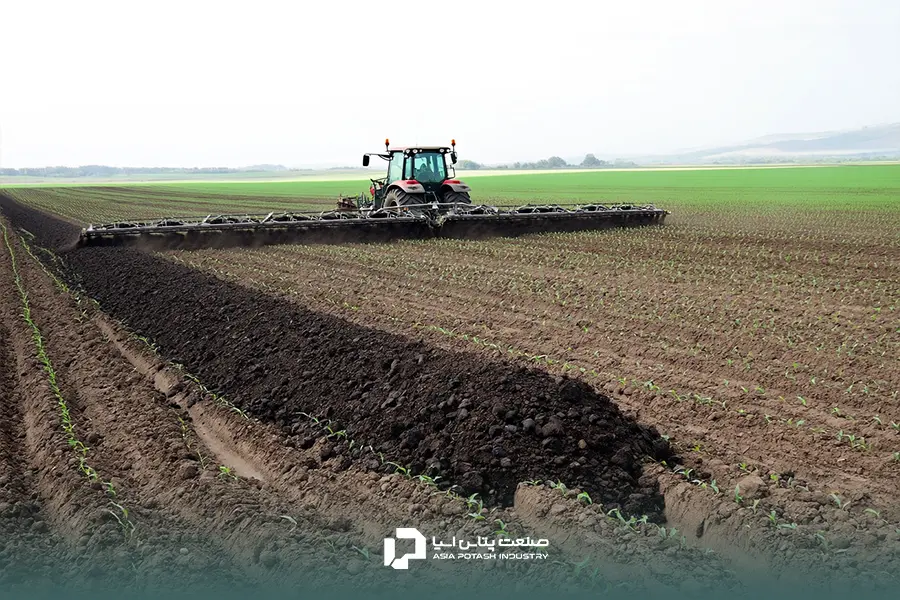
Stages of bean fertilization
A successful bean fertilization program is one that takes into account the changing needs of the plant at each stage of growth. The stages of bean fertilization can be summarized as follows:
- Land preparation: Focus on improving the soil and providing basic elements such as phosphorus, potassium and organic matter.
- Primary growth (2 to 6 leaves): Providing enough starter nitrogen and phosphorus for root development.
- Complete vegetative growth: Using balanced fertilizers to strengthen the plant and maximize the leaf area.
- Flowering: Focusing on key elements such as boron and zinc to increase flowering and successful fertilization.
- Pod formation and seed filling: This stage is the peak of the plant’s need for potassium to transfer sugar to the seeds and increase the weight and quality of the product.
We will examine each of these steps in detail below; Stay with us.
First step: land preparation and planting
In this initial and vital step, the main goal is to modify the soil structure and create a rich and fertile substrate for plant growth. This stage forms the foundation and basis of the nutrition program in the entire cropping season. For this purpose, fertilizers should be used that release their elements slowly and ensure the long-term health of the soil.
The best course of action is to use organic fertilizers such as fully decomposed animal manure at the rate of 20 to 30 tons per hectare or processed chicken manure at the rate of 1 to 1.5 tons per hectare.
In addition to organic sources, basic chemical elements should also be added to the soil. Based on the results of the soil test, usually potassium sulfate in the amount of 200 to 300 kg and phosphate fertilizers such as triple superphosphate in the amount of 100 to 150 kg per hectare are recommended. Also, in alkaline and calcareous soils, adding 300 to 500 kg of granular sulfur is very effective to help regulate pH and increase the ability to absorb other elements.
All these fertilizers should be spread on the surface of the ground before the last tillage operation and mixed well with the 20 to 30 cm layer of soil to provide a homogeneous and rich environment for the roots.
What is the role of element sulfur in plants?
Second stage: initial growth and establishment of the plant (from 2 to 6 leaves)
After germination and the emergence of primary leaves, the focus of the nutritional program is on strengthening the young seedling and developing a strong and extensive root system as quickly as possible. Strong roots greatly increase the plant’s ability to absorb water and nutrients in later stages. During this period, the plant is still not able to fix nitrogen from the air, so it needs an external nitrogen source as a starter or primary auxiliary force.
For this purpose, using high phosphorus fertilizers such as 10-52-10 fertilizer at the rate of 20 to 30 kg per hectare along with irrigation water (fertilizer irrigation) is the best solution to stimulate rooting. At the same time, to provide primary nitrogen, a small amount of urea fertilizer, about 50 to 80 kg per hectare, can be used in the form of manure or irrigation.
To increase the absorption efficiency of these elements and improve the structure of the soil around the roots, it is strongly recommended to use 10 to 20 liters of liquid humic acid per hectare. The key at this stage is to limit nitrogen application to encourage the plant to form anchoring nodules on the root.
The third stage: complete vegetative growth (before flowering)
At this stage, the bean plant must devote all its energy to producing as much healthy and strong foliage as possible. The more and healthier the plant’s leaf surface, the higher its capacity to produce energy and, ultimately, more yield. During this period, the plant needs a balanced nutrition of all the main elements.
Using a balanced complete fertilizer such as NPK20-20-20 (Three twenty) in the amount of 20 to 30 kg per hectare as irrigation fertilizer can provide the needs of the plant well. This stage is also when symptoms of micronutrient deficiencies, especially iron, appear in young leaves. Therefore, the plant should be closely monitored and if any yellowing is observed, complete micronutrient fertilizers or specifically iron chelate in the amount of 2 to 3 kg per hectare should be applied as a foliar spray to prevent the photosynthesis process from stopping.

The fourth stage: flowering and formation of the primary pod
This stage is a turning point in the life cycle of the plant, where the vegetative phase gradually gives way to the reproductive phase. The main purpose of nutrition in this period is to stop the excessive growth of foliage and direct all the energy of the plant towards the production of more flowers, increase the success in pollination and prevent the falling of flowers and newly formed pods.
At this point, the use of nitrogen fertilizers should be completely stopped. Instead, the focus should be on key elements such as boron (B) and zinc (Zn), which play a direct role in pollen grain viability and the fertilization process. Foliar spraying of 1 to 2 liters or kg of fertilizers containing these two elements per hectare is very effective.
To supply the energy needed for this process, high potassium NPK fertilizers such as 36-12-12 can be used as a foliar spray with a concentration of 2 to 3 parts per thousand. This work helps the plant to enter the product production stage with strength.
The fifth stage: filling the seeds (final stage)
This stage is the weighing period and determines the final performance of the product. The main goal is to transfer the maximum amount of sugar and nutrients produced in the leaves to the growing seeds so that the seeds become heavy, large and of high quality. The key element and the main commander of this process is potassium (K).
During this period, the plant needs high amounts of potassium. The best source to meet this need, Potassium sulfate fertilizer It has a small amount of chlorine. It is recommended to give this fertilizer in 2 to 3 times with an interval of 10 days, each time at the rate of 10 to 15 kg per hectare through the irrigation system.
Foliar spraying of potassium sulfate with a concentration of 3 per thousand is also very useful as a quick auxiliary solution. The use of monopotassium phosphate, which is a rich source of phosphorus and potassium, can help to improve the quality and speed up the processing of the product. Proper nutrition at this stage will guarantee the harvest of a high-quality and marketable product.
Bean fertilization program table
The table below provides a suggested bean fertilization schedule. Exact amounts should be adjusted based on your field soil test.
|
Growth stage |
Nutritional goal |
Recommended fertilizers |
Method of consumption |
Recommended amount (per hectare) |
Key technical points |
|
Land preparation (before planting) |
Modifying soil structure, adjusting pH, providing basic elements and creating a fertile substrate |
fully rotted animal manure or chicken pellets, granular sulfur (in alkaline soils), triple superphosphate, potassium sulfate |
Soil (spreading and mixing with soil) |
Manure: 20-30 tons Chicken pellets: 1000-1500 kg |
This is the most critical step in improving long-term soil health. Fertilizers should be mixed with the soil before the last disking. |
|
Early growth (2 to 6 leaves) |
Strengthening and developing the root system, providing initial nitrogen (starter), increasing the initial growth of the plant |
High phosphorus NPK fertilizer (such as 10-52-10), urea fertilizer (starter dose), liquid humic acid |
Irrigation (fertilizer irrigation) / foliar spraying |
High Phosphorus NPK: 2-3 kg (spraying solution) or 20-30 kg (irrigation) Humic acid: 10-20 liters (irrigation) |
Phosphorus is essential for root development. A low dose of nitrogen helps in early growth. Humic acid improves the absorption of elements. |
|
Full vegetative growth (6 to 8 leaves) |
Maximize leaf area for photosynthesis, general plant strengthening |
Complete fertilizer NPK 20-20-20, complete micronutrient fertilizer (containing Fe, Zn, Mn), iron chelate |
Irrigation / foliar spraying |
NPK 20-20-20: 20-30 kg (irrigation) or 2-3 kg (spraying solution) Iron chelate/micronutrient: 2-3 kg (spraying solution) |
At this stage, the plant should be carefully monitored for signs of micronutrient deficiency, especially yellowing of young leaves (iron deficiency). |
|
Before flowering and flowering |
Stimulating and increasing flowering, improving the process of pollination and fertilization |
High potassium NPK fertilizer (such as 12-12-36), fertilizers containing zinc (Zn) and boron (B) |
Spraying |
High Potash NPK: 2-3 kg Zinc and boron fertilizer: 1-2 liters/kg |
Very sensitive stage. Avoid using fertilizers with high nitrogen alone. Boron is vital for pollen grain survival. Avoid spraying directly on open flowers at the peak of pollination. |
|
Encapsulation |
Preventing the falling of flowers and young pods, supporting the initial growth of pods |
High potassium NPK fertilizer (such as 12-12-36 or 12-3-43), potassium silicate, calcium-boron fertilizer |
Irrigation / foliar spraying |
High Potash NPK: 20-30 kg (irrigation) calcium-boron: 2-3 liters/kg (spraying solution) Potassium silicate: 2-3 liters (spraying solution) |
Potassium is essential for transporting sugars to growing pods. Calcium strengthens the cell wall and prevents it from falling. |
|
Seed filling |
Increasing grain weight and size (tonnage), improving final product quality |
Fertilizers with very high potassium (such as potassium sulfate/suloptas), phosphate fertilizers (such as monopotassium phosphate) |
Irrigation / foliar spraying |
Soluptas: 2-3 kg (spraying solution) or 10-15 kg (irrigation) Monopotassium Phosphate: 2 kg (spraying solution) |
This stage is the peak of the plant’s need for potassium. Potassium directs the energy (sugar) produced in the leaves to the seeds and makes them full and heavy. |
Expert guide for using potassium sulfate for beans
As you saw in the bean fertilization table, potassium plays an irreplaceable role in determining the quality and quantity of the final product in the final stages of growth. Due to its high purity and very small amount of chlorine, potassium sulfate is the best source of this element for beans, which are sensitive to chlorine.
How to use potassium sulfate fertilizer for beans is as follows:
Before planting (base consumption)
- Time: At the time of final land preparation and before planting, together with other basic fertilizers.
- Quantity: About 200 to 300 kg per hectare, depending on the soil test. This provides a stable source of potassium throughout the growing season.
During growth (use of vinegar)
- Time: In the key stages of flowering and the beginning of the filling of the pods, the plant’s need for potassium reaches its peak.
- Quantity: 50 to 100 kg per hectare as irrigation fertilizer. This amount helps to quickly transfer sugars to the seeds and increases the weight of one thousand seeds and the quality of the product.
Note: This fertilizer recommendation is general and it is better to use soil test before planting and using fertilizer.

Asia’s potash industry: the leader in the supply of high-quality potassium for Iran’s agriculture
For the successful implementation of a nutritional program, access to high-quality and standard fertilizers is essential. Asian potash industry As the largest producer of potassium sulfate fertilizer in Iran, it is proud to produce a product with the highest degree of purity and ideal characteristics for Iranian agriculture. The potassium sulfate produced by this company, with complete solubility and negligible chlorine, is the best choice for farmers who seek to achieve maximum quality performance in crops such as beans.
final word
Choosing the best fertilizer for beans is not a single-factor decision, but the result of intelligent and dynamic management. Remember that the basis of the work is the soil test. Respect the natural ability of beans to fix nitrogen and use urea fertilizer wisely. Know the needs of the plant at each stage of growth and adjust your fertilizer program accordingly.
Finally, ensure the quality and performance of your product by providing adequate potassium in the final stages through a quality source such as potassium sulfate.
Was this guide helpful to you? We are happy to share your thoughts and experiences with us and other farmers in the comments section. Help your friends to harvest a better product by sharing this article.
Frequently asked questions
Yellowing between the veins in young leaves is usually a sign of iron deficiency. This problem is more common in alkaline soils and can be solved quickly by spraying iron fertilizer for beans (chelate form).
Excessive use of nitrogen fertilizers (urea or white manure). This disables the plant’s natural nitrogen fixation system, increases costs, and delays flowering by stimulating vegetative growth.
Yes, this is the best approach. Use chicken manure for beans as an amendment and base fertilizer before planting to improve long-term soil health, and use targeted chemical fertilizers to meet specific plant needs during the growing season.
Potassium is needed in all stages of growth, but the peak of the plant’s need is in the stages of flowering, pod formation and especially seed filling. The consumption of this fertilizer in these stages directly affects the weight and final quality of the product.
Comments (0)
Be the first to comment!