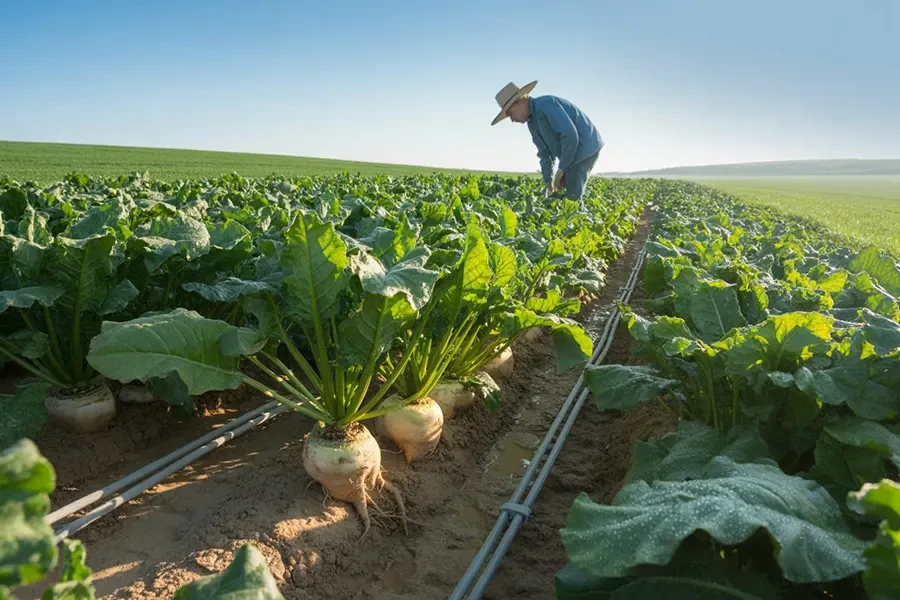
Sugar beet is one of Iran’s important agricultural products and plays a key role in supplying sugar and related industries. Increasing its yield and quality requires adherence to scientific principles throughout all stages of cultivation and harvesting. Choosing suitable seeds, proper soil and fertilizer management, and regular irrigation are among the main success factors. In this article from Asia Potash Industry Agricultural Magazine, we review methods for increasing the sugar content (polarization) of sugar beet.
Seed selection
Seed selection is the first and most important stage in increasing sugar beet yield. The main characteristics of a good seed include:
- Uniform growth: A good seed should produce plants with similar growth so that nutrition and irrigation can be managed optimally.
- Disease resistance: Seeds resistant to powdery mildew, root rot, and virus-related leaf curl reduce spraying costs and improve crop quality.
- Climatic adaptability: The seed must be compatible with regional temperature and soil type so that roots can develop properly.
Land and soil preparation
One of the most important factors influencing sugar beet yield is proper land preparation and soil improvement. Healthy and suitable soil provides a strong foundation for root development and significantly determines final crop quality. Soil type, texture, organic matter content, and pH adjustment are key parameters that must be evaluated before planting.
In light soils, the main issue is moisture retention and erosion control, while heavy clay soils require structural improvement so that roots can grow freely.
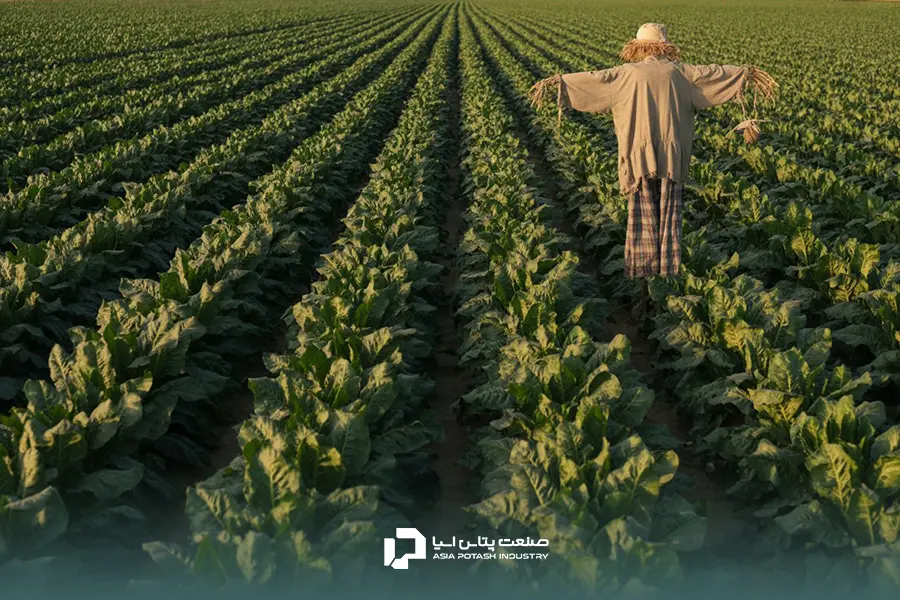
Plowing and improving soil structure
Plowing, as the first operational step in land preparation, plays a major role in water infiltration, soil aeration, and root development. In clay or heavy soils, deep and uniform plowing is necessary to break compact layers and allow unrestricted root growth.
Proper plowing also helps incorporate plant residues evenly into the soil, improving fertility and reducing soil-borne pests and diseases.
Plowing should be done in a way that the soil is neither too loose (causing erosion) nor too compact (restricting root penetration).
Crop rotation and soil pH adjustment
Crop rotation with different plants, especially legumes, is an important strategy for maintaining soil fertility and reducing pest and disease pressure. Legumes such as peas and beans fix nitrogen in the soil and can reduce the need for nitrogen fertilizers.
In addition, soil pH adjustment plays a key role in nutrient absorption. For example, the optimal pH for sugar beet is between 6 and 7. Outside this range, absorption of nutrients such as phosphorus becomes problematic.
In alkaline and calcareous soils, agricultural sulfur is recommended to reduce pH and improve growing conditions. Sulfur helps acidify the soil, in contrast to agricultural lime, which increases soil pH.
Read More: What is the role of sulfur in plants?
Effect of proper nutrition and fertilization on sugar beet quality
Proper nutrition is one of the main factors in increasing sugar beet yield and quality. Nitrogen, phosphorus, and potassium are the main nutrients required by the plant, each playing a specific role in vegetative growth and root development. In addition, micronutrients such as boron, zinc, manganese, and iron are essential for uniform growth and increasing sugar content. Understanding different types of fertilizers helps in selecting the right type, dosage, and timing.
Effect of nitrogen fertilizer on sugar beet
Nitrogen plays a key role in vegetative growth and leaf development. Healthy leaves increase photosynthetic capacity, leading to more sugar production for storage roots. However, excessive nitrogen has the opposite effect.
Nitrogen should be applied during the leaf growth stage and before root bulking begins. Misuse during root enlargement causes excessive leaf growth and reduces sugar transfer to the root, resulting in lower yield and sugar content.
Effect of phosphorus fertilizer on sugar beet
Phosphorus is essential for root development. It helps the plant form strong and healthy roots capable of storing sugar.
Phosphorus should be available at the beginning of the growing season to support proper root formation. Deficiency leads to short and scattered roots, reducing sugar content.
The best method is applying phosphorus fertilizers as a base application before or during initial soil preparation.
Effect of potassium fertilizer on sugar beet
Potassium plays a key role in transporting sugars to storage roots and increasing sugar content. Its deficiency reduces sugar movement from leaves to roots and severely decreases quality.
Potassium should be applied during the root bulking stage to ensure large and high-sugar roots.
High-potassium fertilizers, such as potassium sulfate, are among the best options and can be applied through irrigation every 10 to 15 days.
Potassium not only increases root weight but also improves sugar quality and sucrose percentage.
Purchase low-chlorine Potassium Sulfate fertilizer
Irrigation management for increasing sugar beet yield
Regular and timely irrigation is one of the key factors in increasing sugar beet yield. Water shortage or irregular irrigation can limit root growth and reduce both weight and sugar content. In addition to water quantity, timing and irrigation method are also important. Sugar beet requires different water levels at different growth stages.
Water requirements at different growth stages
- Emergence and vegetative growth stage: The plant needs sufficient water to form healthy leaves and develop roots. Water deficiency at this stage leads to weak leaf growth and reduced root development.
- Root development stage: This is the most sensitive stage. Water stress results in small and poorly developed roots and lower sugar content.
- Root filling and pre-harvest stage: Proper irrigation increases sugar transfer to roots and improves final yield, while over-irrigation may increase root rot.
Modern irrigation methods
Modern systems such as drip irrigation improve water efficiency and ensure uniform root development. Benefits include:
- Uniform water distribution and elimination of dry/wet zones
- Reduced evaporation and lower water costs
- Reduced soil salinity buildup
- Improved yield quality without increasing fertilizer use
Weed control
Weeds are a serious problem in sugar beet fields and directly reduce yield and quality. They compete for water, light, and nutrients, limiting root development. Effective weed management is therefore essential for increasing sugar beet quality.
Weed control methods are divided into mechanical and chemical approaches:
Mechanical method: Includes manual weeding or machinery use. It is effective in small fields and reduces chemical usage.
Chemical method: Uses herbicides that control weeds without harming sugar beet. Timing and selection depend on soil type, crop stage, and weed species.
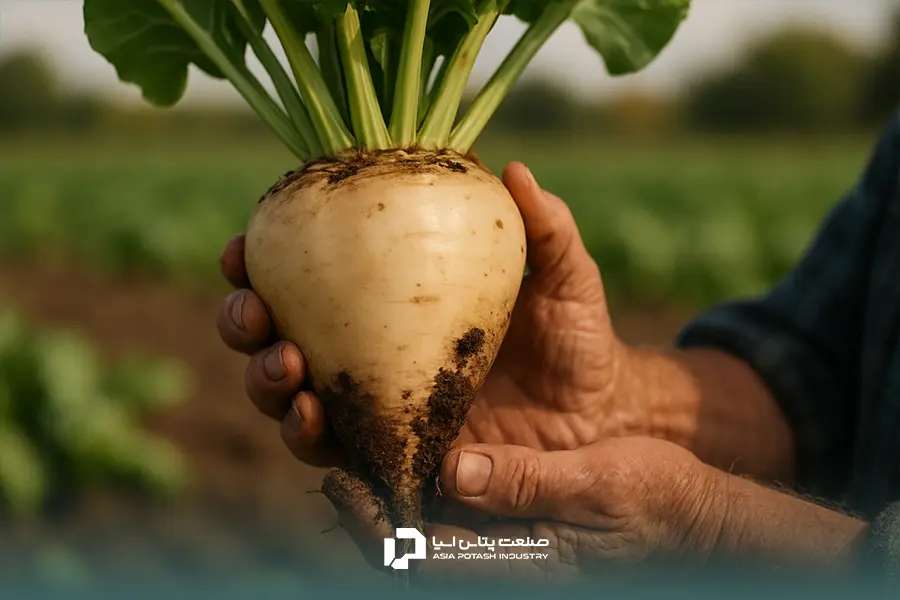
Pest and disease management
Pests and diseases are major factors reducing sugar beet yield and quality. Early identification, prevention, and control are essential.
Important sugar beet diseases
- Root rot (Rhizoctonia and Fusarium): Causes root decay and reduces yield and quality.
- Powdery mildew: Reduces photosynthesis by affecting leaves.
- Leaf curl virus: Reduces leaf size and sugar accumulation in roots.
Using resistant varieties, field hygiene, and removing infected residues are key prevention methods. Proper fungicide application also helps control spread.
Common pests and control methods
- Aphids: Feed on plant sap and weaken growth.
- Root worms: Damage roots and reduce yield.
- Whiteflies: Damage leaves and reduce photosynthesis.
Control methods include insecticides, biological control, and mechanical management. For example, ladybugs are recommended for aphid control as natural predators.
Harvest timing and method
Harvesting is a critical stage that directly affects yield and sugar quality.
Effect of harvest timing
Early harvesting reduces yield and sugar content, while late harvesting may lead to root decay and quality loss.
Use of harvesting machinery
Modern harvesting machines reduce labor costs and minimize root damage, improving efficiency and reducing losses during extraction and transport.
Asia Potash Industry supports you toward high-quality harvests
High-quality sugar beet production requires scientific knowledge and experience. Asia Potash Industry provides expert consultation throughout all cultivation stages. As one of the leading producers of potassium sulfate in Iran, the company offers high-purity, low-impurity, and low-chlorine products.
Asia Potash Industry products provide reliable potassium sources that improve plant health, resistance, and final crop quality. For consultation, contact us.
Final words
Increasing sugar beet yield requires a combination of scientific knowledge and practical experience. Proper seed selection, soil preparation, stage-based nutrition, irrigation management, weed control, pest and disease management, and accurate harvest timing all play essential roles.
Following these principles and using expert guidance can increase sugar content and maximize profitability and product quality.
Comments (0)
Be the first to comment!